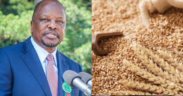
Why CS Kagwe Has Set Tough Conditions for Uganda Maize Imports
Share

Kenya and Uganda are seeking to expand maize trade under the African Continental Free Trade Area (AfCFTA), with Agriculture Cabinet Secretary Mutahi Kagwe calling for stronger food safety measures before Ugandan maize enters the Kenyan market.
Uganda is well positioned to supply part of Kenya’s maize requirements, Kagwe said, while urging the country to strengthen measures that enable farmers to properly dry their maize and address aflatoxin concerns before the grain crosses the border.
Speaking during a luncheon meeting with Uganda’s Parliamentary Committee on Agriculture, Kagwe said better post-harvest handling would open more market opportunities for Ugandan farmers while ensuring Kenyan consumers receive safe and quality food.
“We need a system in Uganda where maize is dried before it crosses the border,” Kagwe said. “We can buy, but we need aflatoxin-free maize,” he said
Kenya Seeks Safer Maize Imports
However, moisture and aflatoxin concerns have made some Kenyan millers reluctant to buy maize from Uganda.
Kagwe said addressing the problem at source would help facilitate increased cross-border trade between the two countries.
At the same time, Kenya will continue protecting consumers by ensuring food entering the country meets established safety and quality standards as it works with neighbouring countries to expand regional trade.
Beyond maize, the discussions also focused on the wider AfCFTA agenda, with Kagwe urging African countries to work together to remove practical obstacles that limit agricultural trade and prevent farmers from accessing wider markets.
“We have to ease off these small tariff and non-tariff barriers. We have to look for ways in agriculture where it is a win-win situation,” Cs Kagwe said.
Also Read: Relief for Farmers as Fertiliser Price Falls to KSh2,000, Maize Seed Cost Halved
Moreover, Kagwe said different African countries have different agricultural strengths and should use them to complement one another, particularly when one country has the capacity to supply commodities needed by another.
Uganda Seeks Easier Regional Farm Trade
Meanwhile, Uganda’s Parliamentary Committee on Agriculture called for greater intra-African agricultural trade, noting that African countries are still not trading sufficiently among themselves despite the establishment of AfCFTA.
To address the challenge, the Ugandan delegation called for harmonisation of agricultural and trade protocols, including within the East African Community, to facilitate the movement of produce while maintaining appropriate safety and quality standards.
The legislators also identified climate change, water for production, pest and disease control, energy, cold storage, extension services, weak markets, value addition and agribusiness as areas requiring greater investment and regional cooperation.
Also Read: Govt to Import 25 Million Bags of Maize as CS Kagwe Unveils New Programme
Agriculture Funding Emerges as Key Concern
Alongside trade, agricultural financing emerged as a shared concern, with legislators from both countries warning that the sector remains underfunded despite its role in food security, employment and rural livelihoods.
According to the Ugandan delegation, agriculture receives about 2.2% of the country’s national budget, which remains inadequate given the sector’s importance to the economy.
National Assembly Agriculture and Livestock Committee Chairperson John Mutunga said Kenya also needs to increase investment in agriculture if the sector is to realise its potential as a major creator of jobs.
“If we fund education at 24.7%, we are putting more resources to create demand for jobs. If we fund agriculture at less than 5%, we are constraining the sector that would create those jobs,” Mutunga said.
Mutunga added that countries that successfully transformed their economies deliberately organised and invested in agriculture before developing agro-processing, value addition and industries that created employment.
Follow our WhatsApp channel for instant news updates

A group photo of Agriculture Cabinet Secretary Mutahi Kagwe, members of Uganda’s Parliamentary Committee on Agriculture, and Kenyan agricultural officials after a luncheon meeting on regional maize trade and food safety at the Nairobi Serena Hotel on September 8, 2026. PHOTO/ CS Kagwe X