It’s Sunny, So Where Is the El Niño Rain? Here’s What Kenya’s Weather Forecast Actually Means
Share
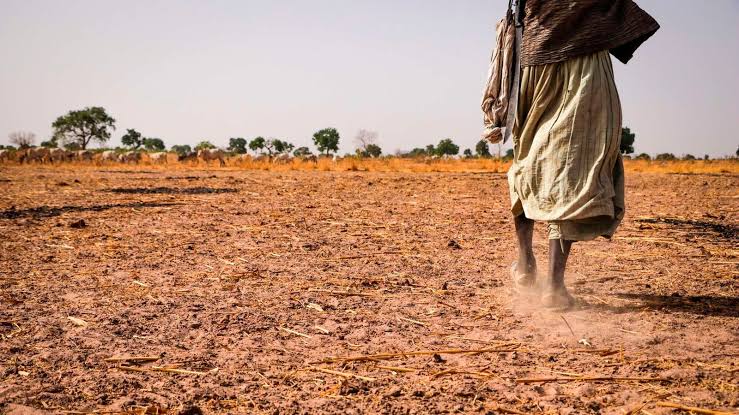
If you have stepped outside in parts of Kenya in recent days, you could be forgiven for wondering what happened to the much-discussed El Niño rains.
The skies have been bright, temperatures have been high in some areas and in places where people expected the heavens to open, the rain has yet to arrive.
That has fueled questions online about whether the El Niño forecast was wrong.
It wasn’t. There is a popular idea that El Niño means Kenya should be experiencing rain every day.
El Niño is a large-scale climate phenomenon that affects atmospheric and oceanic conditions around the world. It can influence rainfall and temperatures, but it does not work like a switch that turns rain on across an entire country.
And Kenya’s latest forecast is about a season, not a particular day.
El Niño is already here
The first point to clear up is the timing.
According to the World Meteorological Organization, El Niño is already firmly established and is expected to strengthen further in the coming months. WMO forecasts put the likelihood of the phenomenon persisting through February 2027 at nearly 100%.
The event is associated with unusually warm sea-surface temperatures in the central and eastern tropical Pacific Ocean. Those changes affect atmospheric circulation and can alter rainfall and temperature patterns far beyond the Pacific.
But the effects are not identical everywhere.
A strong El Niño can increase the likelihood of extreme rainfall in some regions while contributing to dry conditions or higher temperatures elsewhere.
That is why simply looking out the window and seeing sunshine cannot determine whether El Niño exists.
So where are Kenya’s rains?
Kenya’s much-discussed October-December season has not been forecast as a period of continuous rainfall.
The latest outlook from the IGAD Climate Prediction and Applications Centre, or ICPAC, points to an increased likelihood of wetter-than-normal conditions across much of the Greater Horn of Africa during October, November and December.
Also Read: Kenya Met Reveals Counties Set for Heavy Showers as Temperatures Soar to 38°C
For Kenya, ICPAC identifies particularly strong rainfall signals in parts of the country, including central Kenya and the Lake Victoria Basin. It also gives a 90% chance of enhanced rainfall over northeastern Kenya and surrounding areas.
But there is an important sentence in the forecast that is easy to overlook:
The timing of the rains will vary across the region.
In other words, the forecast does not say that every Kenyan county will become wet at the same time, nor does it say that every day between October and December will be rainy.
A seasonal forecast is not a daily forecast
This is where much of the confusion comes from.
A weather forecast might tell you whether rain is expected in Nairobi tomorrow afternoon.
A seasonal forecast asks a different question: Is a particular three-month period more likely to be wetter, drier or around normal compared with the historical average?
Those are very different forecasts.
A place can experience several sunny days or even a prolonged dry spell during a season that eventually records above-average rainfall.
For example, a month could begin with little rainfall before several heavy storms later push the month’s total above normal.
The opposite is also possible.
This is why a sunny afternoon cannot, by itself, prove that a seasonal rainfall forecast has failed.
Rainfall does not fall evenly
Kenya’s geography makes the situation even more complicated.
Rainfall varies significantly from one part of the country to another. Mountains, elevation, proximity to large water bodies, winds and local atmospheric conditions can all affect whether a particular area receives rain.
Two places relatively close to each other can therefore experience very different weather on the same day.
Even within the same county, one area can receive a heavy thunderstorm while another remains dry.
That makes social media observations such as “It hasn’t rained here” useful as personal experiences, but not as evidence that Kenya as a whole is experiencing a failed rainfall forecast.
El Niño is only part of the equation
There is another climate system that matters particularly for East Africa: the Indian Ocean Dipole, or IOD.
The IOD describes differences in sea-surface temperatures between the western and eastern parts of the tropical Indian Ocean.
The latest WMO outlook expects a positive IOD phase to develop alongside the strong El Niño. WMO notes that these large-scale climate drivers can reinforce, weaken or alter typical El Niño impacts in different regions.
ICPAC likewise expects a positive IOD during the October-December season and says the combination of El Niño and the IOD normally favours enhanced rainfall over the Greater Horn of Africa.
That is one reason meteorologists do not simply look at the Pacific Ocean and declare what will happen in Nairobi, Kisumu or Garissa.
Then why has there been so much sunshine?
Sunshine and high temperatures are not necessarily inconsistent with the current forecast.
In fact, ICPAC expects warmer-than-average conditions across much of the Greater Horn of Africa during October-December, with particularly high probabilities over eastern Kenya and neighbouring parts of the region.
Also Read: Life-Saving Heating System Boosts Newborn Care at Pumwani Maternity Hospital
So Kenyans should not assume that wetter-than-normal rainfall automatically means permanently cloudy or cool weather.
The same season can contain hot conditions, sunny periods, heavy storms and dry spells.
The concern for authorities is therefore not simply whether Kenyans will see clouds every day.
It is how much rain eventually falls, when it falls, where it falls and how intense individual rainfall events become.
Why meteorologists are still watching the situation closely
ICPAC’s June outlook warned of a contrast between unusually dry conditions in parts of the Greater Horn during July-September and wetter-than-normal conditions later in the year.
It specifically warned that the expected October-December rainfall could improve water supplies and agricultural conditions while also increasing the risk of flooding, flash floods and landslides in vulnerable areas.
That distinction matters.
A season can contain both dry spells and dangerous rainfall events.
The absence of rain today does not eliminate the possibility of heavy rainfall later.
And heavy rainfall after a dry period can create its own problems, particularly in areas with poor drainage, settlements in flood-prone locations or degraded slopes.
What should Kenyans actually watch?
Rather than asking whether it has rained today, meteorologists recommend following the shorter-range forecasts as the season develops.
ICPAC says its seasonal outlook should be used together with weekly and monthly forecasts and updates from national meteorological services.
That is because seasonal forecasts provide the broad picture, while shorter-range forecasts become increasingly useful for determining what is likely to happen in a particular location.
So if your neighbourhood is sunny today, that is a fact about today’s weather.
It is not evidence that El Niño has disappeared.
And if heavy rain arrives tomorrow, that would not necessarily mean the entire season will be exceptionally wet.
The bigger picture is what matters.
The bottom line
The claim that “there is no El Niño because there is no rain” confuses weather with climate.
El Niño is already established and is forecast to strengthen, according to WMO. At the same time, regional forecasters expect Kenya and other parts of the Greater Horn of Africa to have an increased likelihood of wetter-than-normal conditions during the October-December season.
But that forecast does not mean rain every day. It does not mean every county will receive the same amount of rain.
And it does not mean every sunny day is evidence that the forecast has failed.
Follow our WhatsApp channel for instant news updates
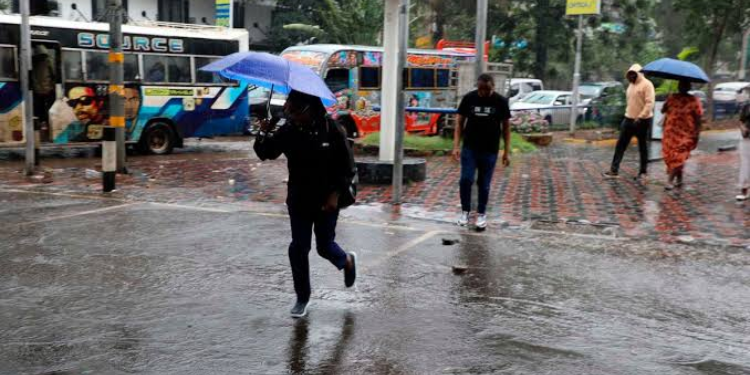
Nairobi residents shield themselves from the rain in the city centre on February 22, 2026. PHOTO/NMG