WHO Issues Guidance to Kenya Following Ebola Case Detection
Share
The World Health Organization (WHO) has issued additional guidance on the measures countries should take after detecting an Ebola case, as Kenya continues to investigate its first confirmed Ebola infection.
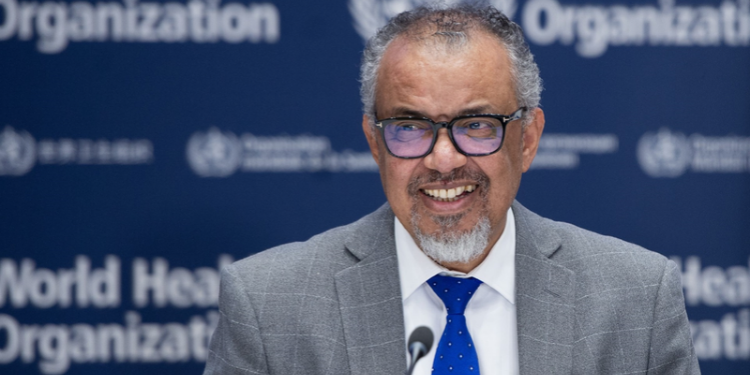
During a media briefing on the Ebola outbreak on Wednesday, October 7, WHO Director-General Dr. Tedros Adhanom Ghebreyesus cautioned countries against imposing sweeping travel bans or trade restrictions in response to Ebola outbreaks.
“WHO advises against blanket travel or trade restrictions which are less effective than screening, contact tracing, and other measures. Transparency should be rewarded, not punished,” Dr Tedros said.
Dr. Tedros said broad restrictions on movement could interfere with the work of response teams and medical workers and disrupt the movement of critical medical supplies.
Instead, the WHO Director emphasized targeted public health measures such as screening, surveillance, contact tracing and infection prevention.
WHO Urges Rapid Emergency Coordination
He also highlighted several pillars that countries should activate after detecting an Ebola case, beginning with an emergency coordination framework.
Also Read: Ruto Reveals Number of People Isolated After Contact With Kenyan Ebola Victim
This includes establishing a clear command structure and deploying rapid response teams to coordinate surveillance, investigations and containment measures.
Additionally, Dr. Tedros called for immediate response and containment through contact tracing and surveillance, alongside stronger infection prevention and control and increased laboratory capacity.
He recommended immediate infection prevention and control measures, particularly in healthcare facilities.
These include screening at hospitals and clinics and ensuring healthcare workers use comprehensive personal protective equipment when dealing with suspected or confirmed Ebola patients.
The guidance also called for safe and dignified burials because Ebola remains highly infectious after death.
Calls for Stronger Screening at Points of Entry
The organisation also urged countries to strengthen screening measures at international points of entry, including airports, seaports and land border crossings.
Dr. Tedros said the measures should include non-contact temperature checks and health questionnaires to identify travellers who may require further assessment.
Kenya’s first confirmed Ebola patient was screened at Jomo Kenyatta International Airport (JKIA) after arriving in the country.
Also Read: REVEALED: Duale Names 20 Kenyan Counties at High Risk of Ebola, Including Mombasa
During the briefing, WHO’s representative in Kenya said the patient’s temperature was normal when he was screened at the airport.
“When the patient was at the airport in Nairobi, his temperature was normal,” the official said.
The official added that the patient appeared normal to people who encountered him during his journey, highlighting the limitations of relying on a single temperature reading.
Meanwhile, WHO identified risk communication and community engagement as a key part of the Ebola response.
The organisation said governments should work with local community leaders and health volunteers to provide accurate information in public spaces, including schools, markets, places of worship and other areas where people gather.
It recommended establishing hand-washing and hygiene stations, conducting door-to-door sensitisation and using mobile outreach to deliver information in local languages.
Follow our WhatsApp channel for instant news updates
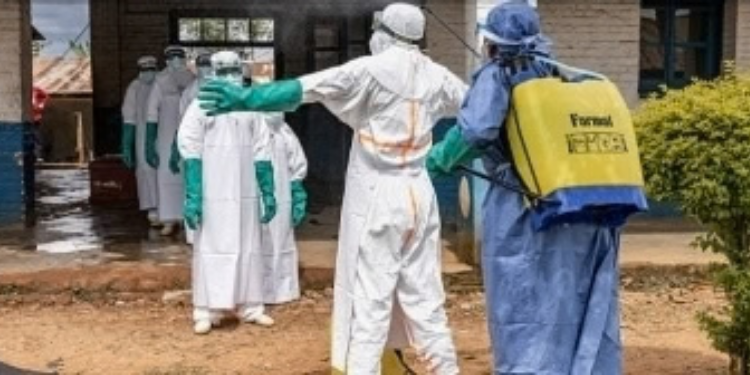
A photo of Ebola PPE. PHOTO/Talk Africa