
BBL Explained: Risks, Recovery and What You Need to Know Before Surgery
Share

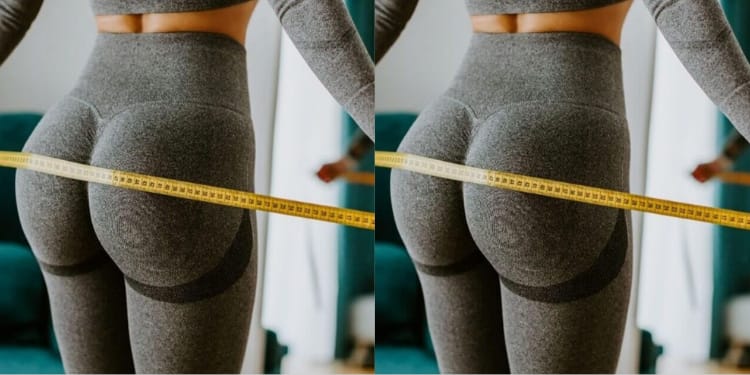
Brazilian butt lift, commonly known as BBL, has become one of the most talked-about cosmetic procedures, using a person’s own body fat for a fuller and more curved body shape.
This cosmetic procedure has gained popularity through celebrities, influencers, and social media, making it a highly popular beauty trend across many countries.
Unlike implants, a BBL involves removing fat from areas such as the abdomen, thighs, or back through liposuction before injecting it into the buttocks to enhance shape and volume.
While many people are attracted by the promise of natural-looking results and a nice figure, the procedure is more complex than it may appear online.
What Is A BBL
Speaking to hivileo.co.ke Surgical Technologist Lynton Kibet says that a Brazilian Butt Lift is a form of gluteal fat grafting that uses the patient’s own fat to increase the size and shape of the buttocks.
“A Brazilian Butt Lift is a form of gluteal fat grafting. Unlike a traditional buttock implant, it uses the patient’s own fat to increase the size and improve the shape of the buttocks,” he said.
He describes the procedure as a two-stage process. In the first stage, doctors use liposuction to remove excess fat from areas such as the abdomen, thighs or back.
Also Read: Why Mental Health Challenges Are Increasing Among Gen Z
“The procedure generally has two stages. The first stage is where fat is removed from areas where the patient has excess fat, commonly the abdomen, flanks, thighs, or back, using liposuction. The harvested fat is then processed, and an appropriate portion is transferred into the buttocks,” he says.
However, he mentions a critical safety issue about where the fat is injected: it should be injected in the appropriate subcutaneous tissue rather than deep into the gluteal muscle.
“Fat should be placed in the appropriate subcutaneous tissue rather than deep into or beneath the gluteal muscles, where injury to blood vessels and potentially fatal fat embolism can occur,” he said.
BBL is considered a very risky procedure because of fat embolism, which occurs if fat enters or damages a large blood vessel during the injection and can travel to the lungs, which could cause death.
He says that “I’ll say that the major concern with BBL is fat embolism, particularly pulmonary fat embolism. This can occur if fat enters or damages a large blood vessel during injection and subsequently travels to the lungs. In severe cases, this can cause cardiovascular collapse and death.”
According to him, other complications include infection, bleeding, fluid collections, skin or tissue necrosis, adverse reactions to anaesthesia, blood clots and deep-vein thrombosis or pulmonary embolism.
An Ideal Candidate For A BBL
Kibet describes an ideal candidate as someone who is medically and psychologically suitable and has enough fat to transfer.
Additionally, before the surgery is performed, the patient should undergo a full-body medical assessment and review their medical and surgical history.
“This may include reviewing their medical and surgical history, medications, allergies, smoking status, previous anaesthetic problems and risk factors for blood clots or other complications,” he added.
Additionally, the expert says doctors must conduct thorough investigations to determine the appropriate course of action, with the patient’s safety remaining the top priority.
“Conditions that significantly increase surgical or anaesthetic risk may need to be optimized before surgery, and in some cases the procedure may be inappropriate altogether,” he says.
Recovery
“Some of the transferred fat is naturally reabsorbed by the body. The amount that survives varies considerably between individuals and depends on factors including the quality of the harvested fat, the technique used, the amount transferred, and the patient’s healing process,” he said.
Misconceptions About BBL
A BBL is a surgical procedure that involves liposuction, tissue manipulation, anaesthesia and fat transfer, rather than simply a way to achieve a bigger figure.
Dr Kibet warns that social media has created misconceptions about BBLs by focusing heavily on the size and appearance of the results.
The procedure carries potentially serious complications, making proper medical care, realistic expectations and patient safety essential.
Also Read: EXCLUSIVE: Do You Really Need to Eat Breakfast Every Morning?
He reminds patients that social media pictures and videos can be misleading and unrealistic, so they should consult a good surgeon and be realistic with the results they want.
“Another misconception is that the bigger the buttocks, the better the result. A responsible surgeon should consider the patient’s anatomy, proportions, available fat, and safety limits rather than simply trying to reproduce a photograph from social media,” he added.
Further, he advises people who would want a BBL to look for a qualified surgeon in an accredited facility with enough equipment and emergency capabilities to avoid complications.
Follow our WhatsApp channel for instant news updates
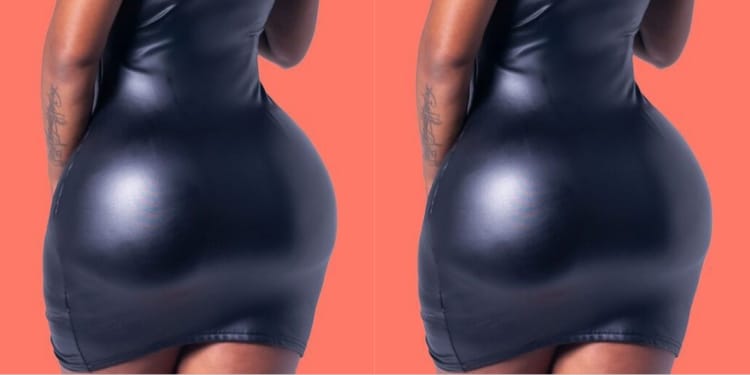
A photo of someone who has done a BBL
PHOTO/AKM