
EXCLUSIVE: Can Edwin Sifuna’s Fundraising Strategy Build Trust and Win the 2027 Presidential Election?
Share
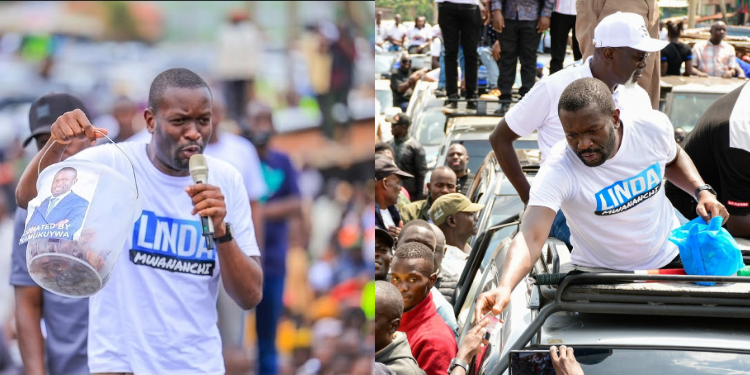
Nairobi Senator Edwin Sifuna’s decision to ask ordinary Kenyans to contribute to his political ambitions has sparked debate over whether small citizen contributions can build the trust, accountability and grassroots support he needs to compete for the presidency in 2027.
He has promoted a fundraising model to fund the Linda Mwananchi movement, encouraging Kenyans to contribute what they can rather than rely entirely on wealthy political financiers.
The approach has gained momentum, with the movement reporting Ksh 3,000,617.28 raised on July 31 alone through public donations, partly through its Ksh100 Friday Challenge.
The strategy became more pronounced after Sifuna rejected an offer from COTU Secretary-General Francis Atwoli to help raise Ksh1 billion for his political ambitions.
Sifuna argued that he would rather depend on many ordinary Kenyans than owe his political future to one wealthy financier.
“We are a different generation of leaders, and we are going to do this politics differently. I would rather be indebted to 10 million Kenyans because they gave me 10 shillings each than to one person who gave me Ksh1 billion,” Sifuna stated.
The statement captures the central idea behind Sifuna’s fundraising strategy: replace dependence on a few powerful financiers with contributions from many ordinary citizens.
However, whether that approach can build lasting trust and translate into votes remains a subject of debate among political analysts.
The Fundraising Strategy of Edwin Sifuna and Political Trust
Speaking to hivileo.co.ke, Political analyst Maimuna Mwidau believes Sifuna’s people-funded campaign starts with the confidence citizens place in a leader and their belief that he can deliver the change they want.
“A people-funded campaign is based on trust that the leader will bring the change that the same people want,” she said.
However, Mwidau cautioned that Sifuna’s current support must reach beyond his traditional political base if the fundraising strategy is to demonstrate nationwide appeal.
“In Sifuna’s case, it is his ethnic group that has shown trust for their own son. How this will pan out across the country is yet to be seen,” she added.
She said the Linda Mwananchi team must maintain transparency and accountability because those factors could determine whether the current goodwill turns into meaningful electoral support in 2027.
“Factors to be needed is transparency and accountability from Sifuna and group, which will translate into meaningful electoral support come 2027,” she said.
Her counterpart, political analyst Dismas Mokua, however, takes a more cautious position. While Kenyans may contribute to Sifuna’s campaign, he argues that donating does not automatically prove that citizens trust the candidate.
“Contrary to popular belief, small contributions hardly move the political needle nor create trust,” he said.
Instead, Mokua said Sifuna must demonstrate his leadership ability through his record, capacity and the results he has delivered to citizens.
“Trust is earned when you demonstrate character, capacity and competence anchored in a track record of success of citizen centric interventions,” Mokua said.
The analyst also distinguishes supporting Sifuna’s political cause and personally trusting him as a potential president.
“Folks making small contributions do not necessarily trust the personalities, but they identify with the cause,” he said.
Mwidau, on the other hand, sees the contributions to Sifuna’s campaign as an investment by supporters who will expect him to deliver on the hopes attached to his candidature.
“This is an investment the people have decided to fund collectively and in return they expect he will meet their expectations,” she said.
She added that those contributing to Edwin Sifuna’s campaign could develop a stronger stake in his political journey.
“Furthermore, by contributing towards his candidature, the people will carry him to the ballot unless something drastic changes with the leader himself,” she said.
Also Read: Can Ruto Win in 2027 With Edwin Sifuna as His Running Mate? Analysts Weigh In
Can Sifuna’s Small-Donor Model Fund a Presidential Campaign?
The trust question also leads to a practical challenge: whether Edwin Sifuna’s fundraising model can generate enough resources for a nationwide presidential campaign.
IEBC has set the 2027 presidential campaign spending limit at Ksh 6,112,543,133, equivalent to about Ksh 6.11 billion.
The figure highlights the scale of the financial and organisational challenge facing any candidate seeking to mount a serious presidential campaign.
Sifuna’s fundraising has nevertheless grown quickly. The Linda Mwananchi campaign initially raised Ksh 519,144 from 9,419 contributors, with individual donations ranging from Ksh 1 to Ksh 5,000. Sifuna later said the movement had received Ksh 6.5 million through its paybill.
Mokua argues that the senator needs more than a steady stream of small donations because a presidential campaign requires structures across the country, including grassroots networks, political candidates and a strong party.
“A successful presidential campaign is anchored by a national grassroots infrastructure, political candidates and a strong political party. To organize a national campaign infrastructure that is supported by political candidates and buttressed by a political party requires massive financial resources that cannot be supported by small donors,” he said.
Mwidau accepts the financial challenge but believes Sifuna’s model could reduce the burden if citizens across the country embraced it.
“The Presidential campaign can be reduced to be the most effective and less expensive if the whole country follows suit in support of Sifuna,” she said.
She described the potential impact of the Linda Mwananchi strategy as a broader change in how Kenyans participate in political campaigns and shape their political future.
“This is a revolution of the mind that is more powerful than any other revolution, an emancipation of a people, whose time has finally come to decide their future,” she stated.
Mokua, however, believes the former ODM Secretary General must first establish himself as a credible presidential contender before seeking major financial support from wealthy individuals and other political interests.
“That is why Mr Sifuna must demonstrate character, capacity and competence for the presidency before seeking financial support from political donors, wealthy individuals and special interest groups,” he stated.
He said potential financiers would also demand evidence that he has a realistic chance of winning the presidency before committing significant resources.
“Political donors, wealthy individuals and special interest groups will want a compelling reason before they cut cheques in favour of Mr Sifuna. He has to demonstrate that he has positive net present value,” he said.
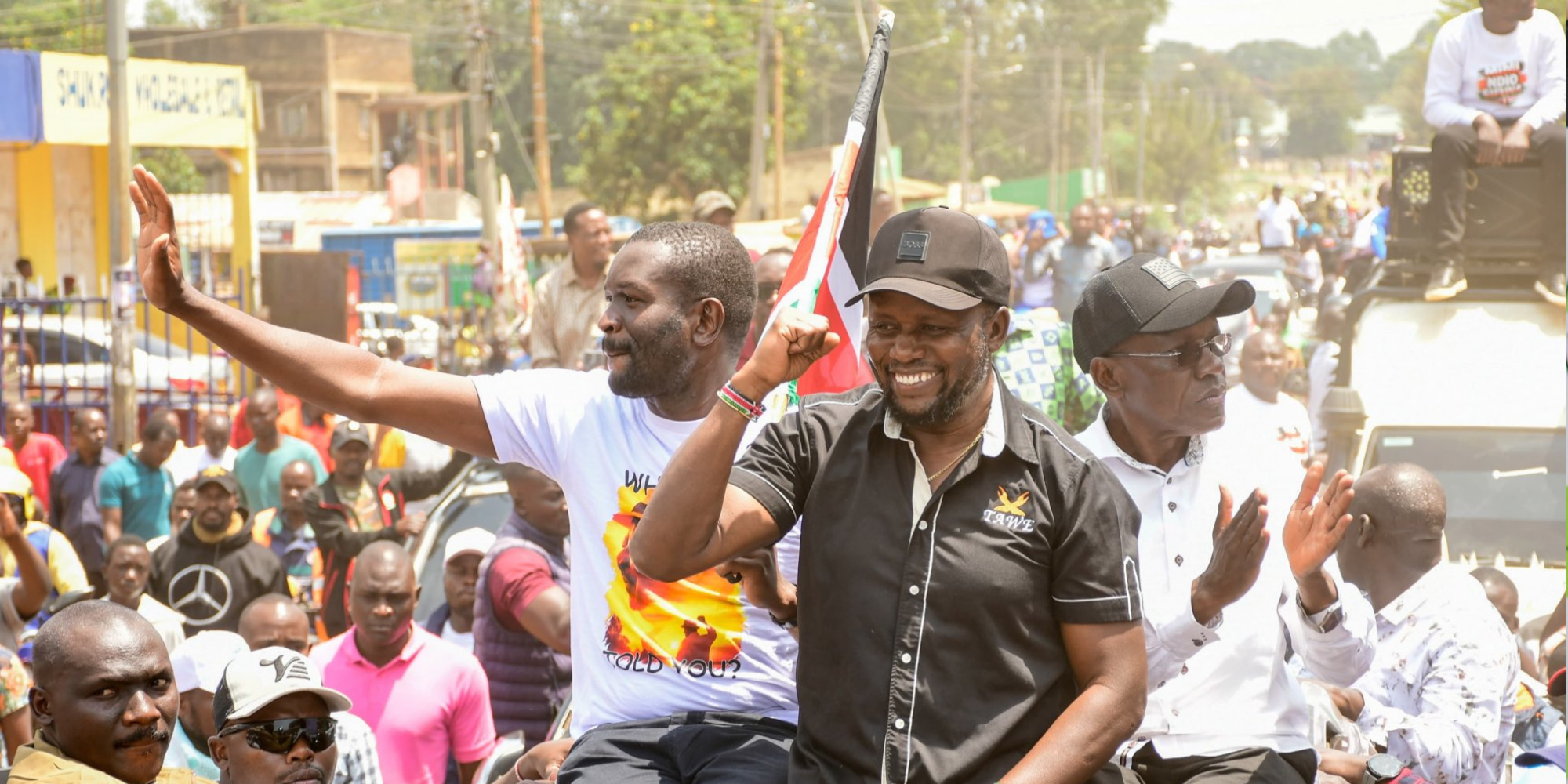
A photo of Nairobi Senator Edwin Sifuna and Trans Nzoia governor George Natembeya during a Linda Mwananchi rally in Mumias, Kakamega County on August 9, 2026. PHOTO/ Linda Mwananchi X
What Does Ngotho’s 10-Shilling Suit Campaign Tell Edwin Sifuna?
The result has since raised questions about whether strong connections with voters can sometimes matter more than the financial resources available to a candidate.
For Mwidau, the comparison is useful, although she stresses that the two fundraising campaigns pursued different objectives.
“The two funding strategies are different in the sense that one fundraises for an outfit while the other is fundraising to enable him to reach as many people as possible,” she said.
She explained that Sifuna’s strategy focuses on reaching more citizens and discussing his political agenda rather than simply creating a symbolic campaign moment.
“It’s not about what he has to wear to meet his supporters but to meet them and discuss what he can do that will benefit the people,” she said.
Mwidau also pointed to the Ol Kalou contest as an example of voters making their own choices despite the availability of campaign resources.
“Sometimes the people decide to make change without the financial burden for their candidate. A good case in point is Ol Kalou; the finances were massive and yet the people chose the one they felt would represent them better, and they still took funds from the opponent and did not vote for him,” she said.
She believes the goodwill surrounding Sifuna’s fundraising could create a similar emotional bond between the candidate and his supporters.
“With Sifuna, the goodwill gesture of receiving small monies is a bond between the leader and his people of which no amount of money can change that,” she added.
Also Read: Sifuna Is Arrogant, Ruto Will Win 2027 Election – Gaucho
What Could Strengthen or Weaken Edwin Sifuna’s Political Trust?
As the 2027 election approaches, the biggest test for Sifuna may be whether the trust created through his fundraising campaign can survive the pressures of a presidential contest.
Mwidau believes people who contribute to his campaign will expect him to remain accountable, while the senator will need to maintain a relationship based on mutual expectations.
“The relationship between Sifuna and ordinary Kenyans will be mutual respect and expectations on either side will be respectful given each side plays a crucial role to bring forth the much-needed change,” she said.
She sees this as a key difference between Edwin Sifuna’s model and campaigns backed by wealthy donors or established political networks.
“Unlike a campaign funded by wealthy people, donors and established political networks that buy support which sometimes never works, that of Sifuna, he will be directly accountable to the people. It’s a win- win for the leader and his supporters,” she said.
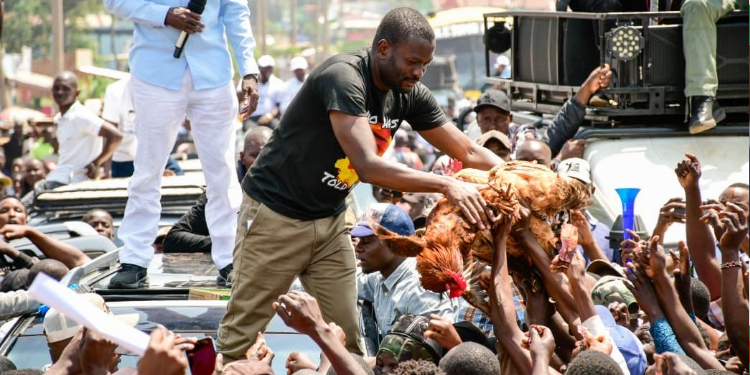
A photo of Nairobi Senator Edwin Sifuna being gifted chicken at Sabatia, Kakamega County as part of fundraising on August 8, 2026. PHOTO/ Edwin Sifuna X
Mokua, however, argues that Sifuna still needs to strengthen his political brand beyond his role as Nairobi Senator and demonstrate that he has the credentials required to lead the country.
“In brand building, Mr Sifuna must demonstrate that he has leadership credentials anchored in solid appreciation of statecraft and policy architecture. He must abandon political slogans and inspire confidence by presenting his leadership credentials outside his parliamentary roles,” he stated.
He also said the senator must prove that his presidential bid has a realistic path to victory if he wants to attract both small and large contributors.
“Mr Sifuna has to demonstrate that he has a realistic chance at the presidency and if he wants to attract both small contributions as well as big time contributions from political donors, wealthy individuals and special interest groups,” he added.
Mwidau, meanwhile, said transparency and accountability will ultimately determine whether the trust associated with Edwin Sifuna’s fundraising grows or declines.
“See, the answer lies in accountability and transparency will either strengthen or weaken the trust bestowed upon Sifuna by the people,” she said.
“In a nutshell, Sifuna has given hope to those who had no hope and in return they are enabling him to achieve that dream for them,” she added.
Follow our WhatsApp channel for instant news updates.
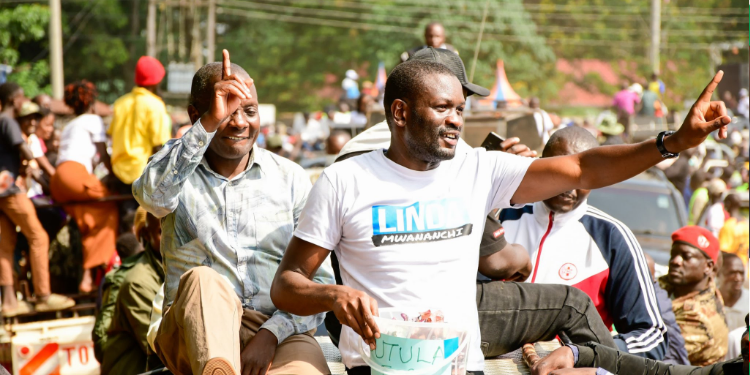
A photo of Nairobi Senator Edwin Sifuna and Funyula MP Wilberforce Oundo during a Mwananchi Rally in Busia County on August 7,2026. PHOTO/ Linda Mwananchi X