
EXCLUSIVE: Why Employers Prefer Diploma Graduates Over Degree Holders
Share


A university degree is often viewed as an important qualification when seeking employment. However, diploma graduates are also attracting attention from employers, with organizations placing greater focus on practical skills and the ability to meet the demands of the role.
Against this background, questions have emerged over why employers may choose diploma graduates over degree holders when recruiting for similar positions.
Joan Omwenga, human resource manager at Hivileo, said salary expectations can influence an employer’s decision when hiring.
“It is about salary expectations as degree holders expect higher rate payment than diploma graduates,” she said.
According to Omwenga, employers may consider a candidate’s expected pay when assessing applicants for available positions.
However, Linda Wangore, a human resource professional, said employers do not automatically base their decision on whether a candidate has a diploma or a degree, but requirements of a particular position can guide the hiring decision.
“I would not automatically choose someone based on whether they have a diploma or a degree. I look at how well the candidate matches the specific requirements of the position. I consider their experience, communication, problem-solving ability, attitude and understanding of the role. Sometimes a diploma holder may be the stronger candidate, while in another position a degree holder may be more suitable. It depends on what the organisation needs,” she said.
Diploma Graduates Bring Hands-On Skills
Beyond salary expectations, Omwenga said employers also assess the practical skills candidates bring to a position.
“We usually look at the hands-on skills, like what can you do? You know, degree holders basically come with the theoretical knowledge, fields like IT and graphic design require skills,” she said.
Similarly, Wangore pointed to the need for students to gain workplace exposure before completing their studies.
“Universities need to create more opportunities for students to interact with the actual workplace before they graduate. Academic knowledge is important, but students also need exposure to real projects, internships, industry mentorship, and emerging technologies,” she said.
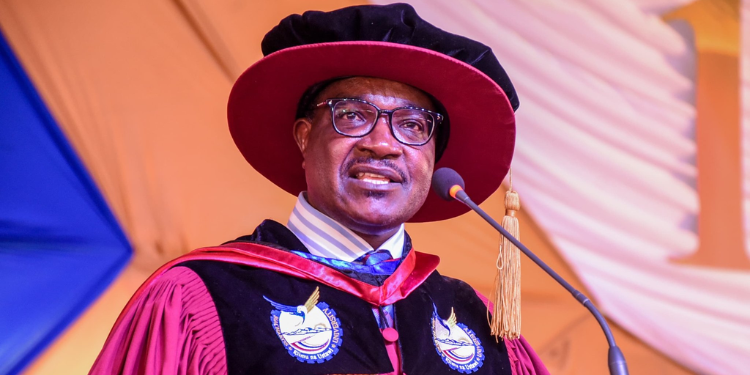
Education Cabinet Secretary Julius Migos Ogamba during the 10th Graduation Ceremony of Machakos University held on November 7, 2025, where he presided over the event. PHOTO/MoE
Also Read: Why Job Hunting in Kenya Feels Like a Full-Time Job
Retention Becomes A Hiring Consideration
Beyond skills, Omwenga raised employee retention as another issue that can affect hiring decisions.
“The problem with degree holders is that retaining them is difficult; they usually leave quickly if they find better-paying opportunities, so very unreliable. Then some loyalty comes with diploma graduates; they are available and humble when needed. And there is more possibility that they can be retained,” she said.
At the same time, Wangore said employers also assess whether candidates can handle the demands of the position, especially when they face heavy workloads.
“Workload can influence hiring because employers need someone who can manage the responsibilities of the position. When the workload is high, we look for people who can prioritise tasks, work under pressure, and collaborate with others. It is not necessarily about whether someone has a diploma or degree,” she said.
Salary Should Reflect Job Responsibilities
Meanwhile, salary remains an important part of the discussion between employers and graduates.
Wangore said employers should base salary discussions on the responsibilities of the job rather than the academic qualification alone.
“The conversation about salary should be based on the responsibilities of the position rather than simply the academic qualification, so graduates should understand that having a degree does not automatically determine their salary. Both sides should be willing to negotiate based on the value and responsibilities involved,” she said.
Also Read: OPINION: Why Is the System Blocking Employment and Black Business Growth?
Graduates Asked To Build Skills Before Employment
Wangore also addressed how fresh graduates can prepare for the job market by building their skills, CVs, portfolios, and professional networks before securing their first jobs.
“I would tell them not to wait until they get a job to start developing themselves. They should identify the skills that are in demand in their field and deliberately build them. They should also learn how to present themselves professionally, develop a strong CV and portfolio, network with people in their industry, and remain open to learning. Their first job may not be their perfect job, but they should use every opportunity to gain experience and build their capabilities,” she said
As employers continue to assess candidates based on the needs of each position, the debate over diploma graduates and degree holders remains part of the wider discussion on skills and employment.
Follow our WhatsApp channel for instant news updates.

Photo of students Graduating. PHOTO/NPU