
EXCLUSIVE: Why People Delete Posts After Low Engagement
Share


Low Engagement on social media can leave users questioning their content when their posts receive fewer likes, comments and shares than expected.
While some creators leave their posts online, others delete them, change their captions or upload them again in the hope of attracting more reactions.
Speaking to Hivileo, digital creator May Jerono and media practitioner Denzel Kimani explained why online reactions influence users’ decisions and how creators assess the performance of their content.
Why Low Engagement Makes People Delete Posts
According to Jerono, many social media users’ desire for acceptance and appreciation can influence how they respond when their posts attract fewer reactions than expected.
Some may question whether their content interests their audience, while others worry that poor performance could make their profiles appear less appealing.
“Low engagement can make people question themselves or wonder whether others find their content interesting,” Jerono explained.
Beyond the immediate disappointment, Jerono noted that concerns about social media algorithms can also influence these decisions.
Some creators fear that a post with Low Engagement could affect the reach of their future content.
However, Kimani linked this behaviour to how users perceive their relevance online.
“I think people delete posts when low engagement makes them feel like the content didn’t perform or makes them look less relevant. Seeing the numbers can also create a sense of ‘worthlessness’,” he said.
Also Read: How to Start a Podcast With Just Your Phone: A Simple Guide for Beginners
Why Creators Repost Content
Rather than leaving an underperforming post online, some creators change its caption, publish it at another time or upload it again.
Jerono explained that these decisions reflect the belief that presentation and timing can influence how audiences respond.
“People may change captions or repost at different times to see whether the content performs better,” Jerono said.
In addition, Kimani observed that this behaviour reflects the importance people attach to online reactions.
“People often repost or change captions when a post does poorly. It shows how much engagement has become a measure of whether content is considered successful, even though timing and the algorithm can play a big role,” he said.

An AI generated image of a creator deleting a post after low engagement.
How a Large Following Shapes Expectations
For creators who regularly receive high engagement, a sudden drop in reactions can feel particularly disappointing.
Jerono explained that someone accustomed to receiving 1,000 likes might view 100 likes as poor performance, although another creator could consider the same number encouraging.
“Someone used to getting 1,000 likes may feel disappointed by 100, even though that number could be good for someone else,” Jerono explained.
As a result, some users connect their online performance to their sense of success.
They may delete or archive posts that fall short of their expectations instead of leaving them visible on their profiles.
Also Read: From Painkiller to Meat Tenderizer? Why Some People Are Adding Panadol to Meat
Meanwhile, Kimani noted that creators with large followings may experience greater pressure because they have grown accustomed to receiving numerous reactions.
“For people with large followings, the reaction can be stronger because they’re used to high engagement. A post getting significantly fewer likes can therefore feel like a bigger deal,” he said.
What Experts Say About Measuring a Post’s Success
Instead of judging content by likes alone, Jerono advised users to examine other signs of audience interest, including shares, saves, direct messages, and profile visits.
These indicators can reveal whether content reached or interested people even when it attracted Low Engagement in the form of likes and comments.
“People should look beyond likes and consider shares, saves, direct messages, and profile visits when evaluating a post,” Jerono said.
Publication time, audience activity, and the purpose of the content also matter.
For instance, educational posts, product promotions, and personal experiences may achieve their intended objectives without attracting numerous public reactions.
Similarly, Kimani encouraged creators to consider several performance indicators before concluding that their content had failed.
“Likes aren’t everything. Reach, views, shares, saves, timing, and the audience should also be considered. Sometimes a post simply doesn’t reach enough people, and that doesn’t necessarily mean the content failed,” he said.
Follow our WhatsApp channel for instant news updates
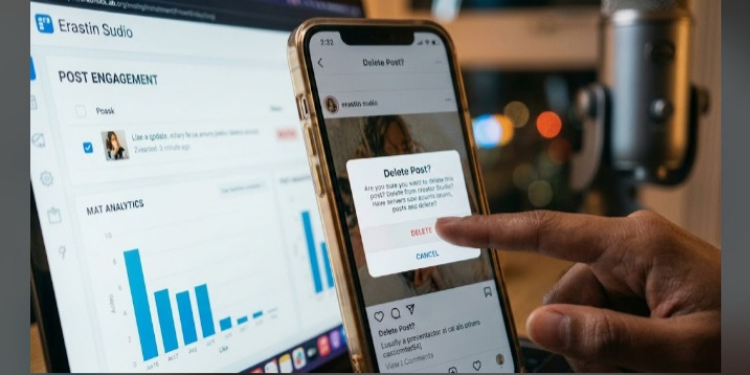
An AI generated image of a creator deleting a post after low engagement.