

Explained: Why Thousands of Migrants Are Crossing Into Spain Through Ceuta
Share

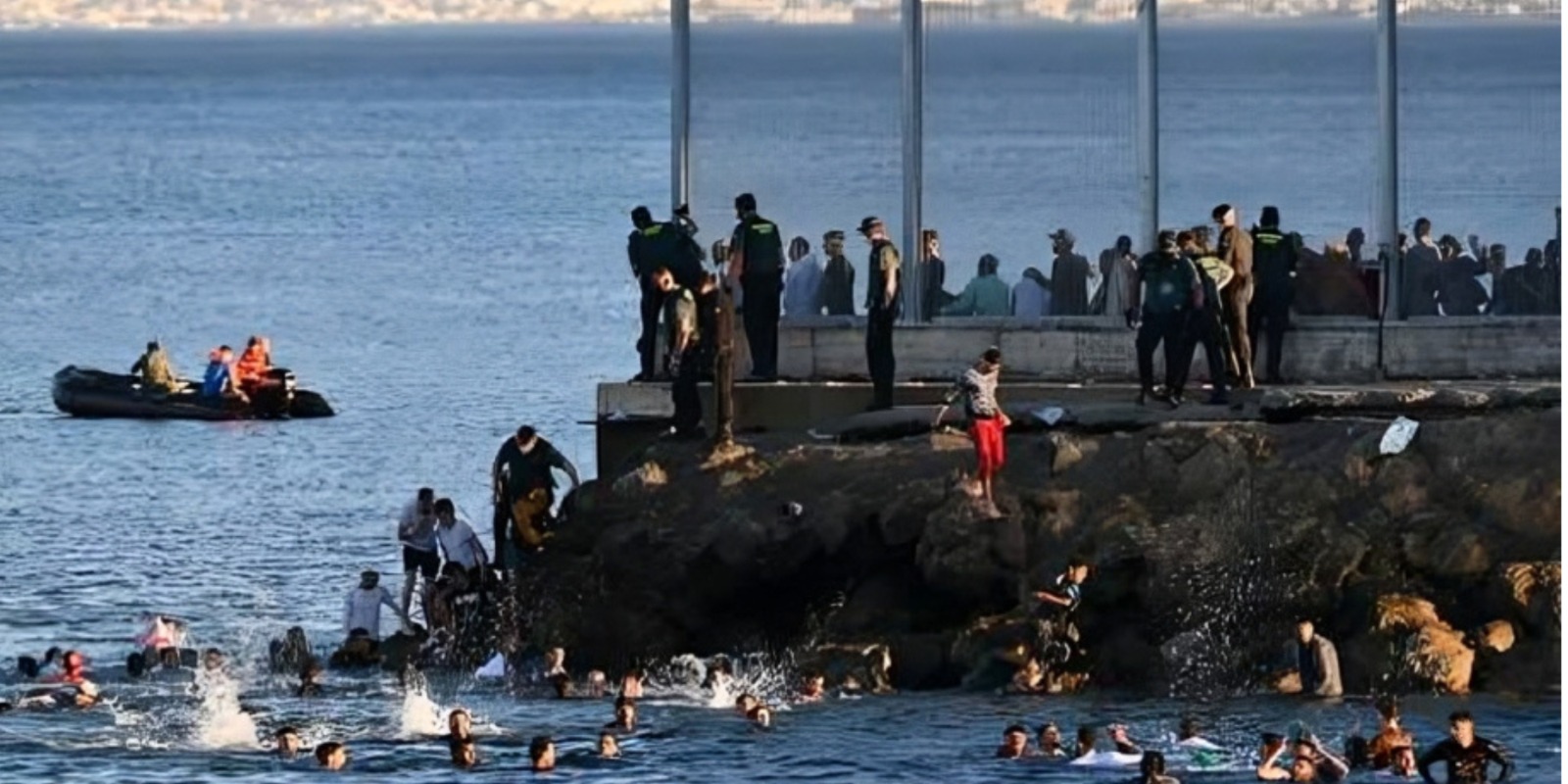
Thousands of migrants have crossed into Spain through Ceuta in recent days, raising a debate over what is driving the sudden surge.
Ceuta is a small Spanish territory located on the northern coast of Africa, sharing its only land border with Morocco.
Although geographically in Africa, it is part of Spain and therefore part of the European Union, making it one of the main entry points for migrants seeking to reach Europe.
As a result, Ceuta has become one of the main entry points, with migrants getting into Spain either by attempting to scale the heavily fortified border fence or by swimming around it from the Moroccan coastline.
Spain Ceuta Migrant Crisis Explained: What’s Driving the Surge?
However, while no factor has been confirmed as the cause, officials have pointed to a combination of geopolitical tensions, legal developments, human trafficking networks and economic pressures as possible explanations.
One theory links the increase to geopolitical tensions involving Morocco, Spain and Algeria. Shortly after Spanish Prime Minister Pedro Sánchez visited Algeria, the two countries announced closer diplomatic and economic cooperation.
Also Read: Blow to Trump as Spain Bars U.S. Military Planes from Its Airspace
Meanwhile, some analysts believe Morocco viewed the move unfavourably, given its long-standing rivalry with Algeria and competition for regional influence.
This is after a similar situation occurred in 2021 when relations between Spain and Morocco deteriorated over the disputed territory of Western Sahara, resulting in Moroccan border controls being reduced as around 6,000 migrants entered Ceuta in a single day.
The following year, Spain shifted its position and backed Morocco’s autonomy proposal for Western Sahara.
Migration Figures in 2026
The increase in the number of migrants is coming shortly after the court ruled that migrants intercepted while swimming into Ceuta or Melilla cannot be immediately returned to Morocco without due legal process because they did not cross the official land border infrastructure.
However, legal experts have argued that the judgment has been widely misunderstood as the ruling does not give migrants the right to remain in Spain permanently. Instead, authorities must carry out a brief legal procedure before deportation.
Also Read: Sierra Leone Receives Migrants Deported From the US Amid Trump Immigration Crackdown
Under a 1992 bilateral agreement, Morocco can still accept the return of migrants who entered Spain irregularly through Moroccan territory.
Spanish Prime Minister Pedro Sánchez and other officials argue that human trafficking networks have misrepresented the ruling, convincing migrants they cannot be deported if they enter Spain by swimming.
According to migration data released on July 15, 2026, Spain had recorded 14,479 migrant arrivals since the start of the year.
- 10,039 arrived through the Western Mediterranean route.
- 7,048 arrived by sea.
- 2,991 entered via land routes, including Ceuta and Melilla.
- 4,440 migrants reached Spain through the West Africa Atlantic route.
Follow our WhatsApp channel for instant news updates.
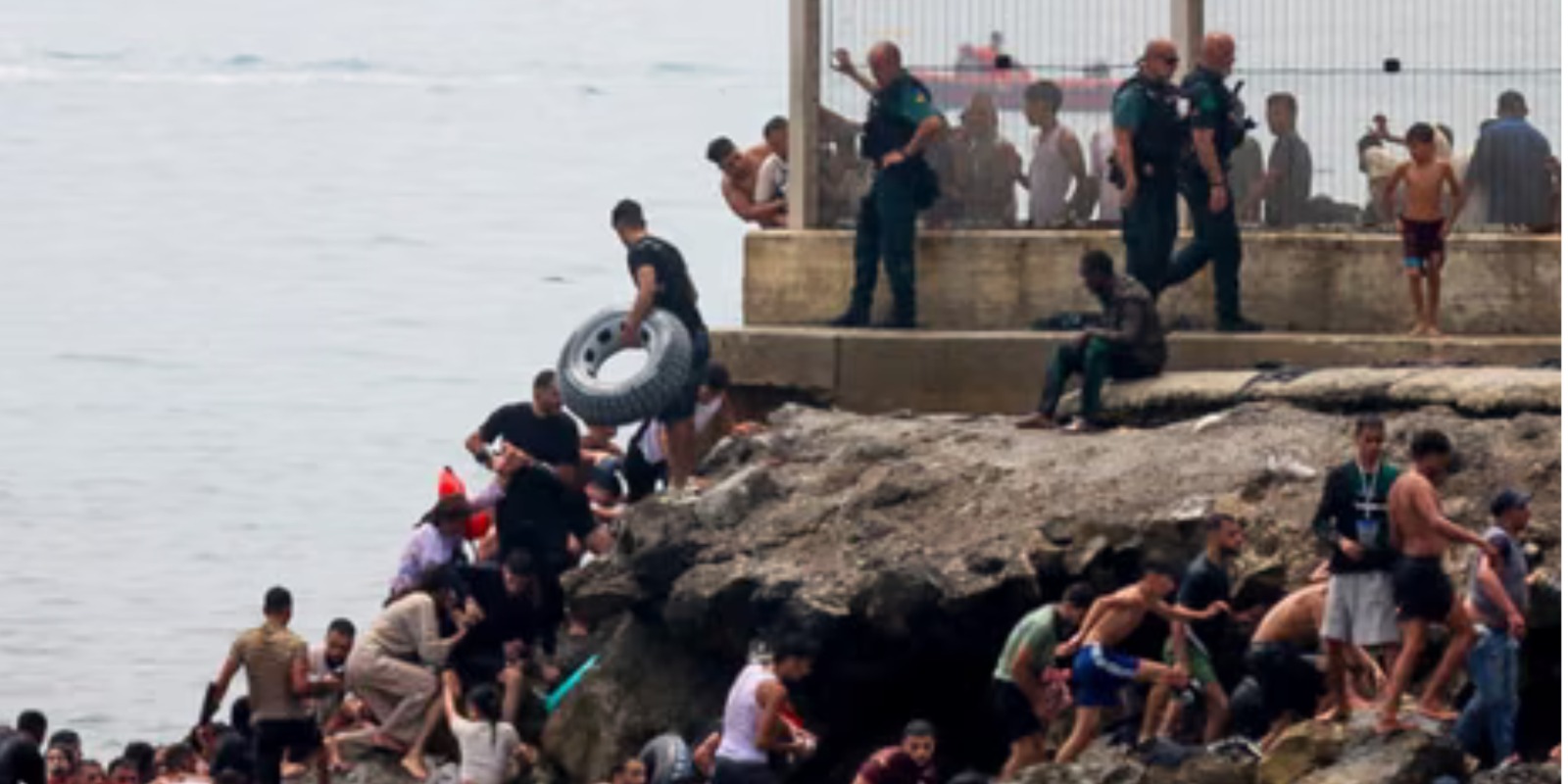
A photo showing migrants swimming to spain . Photo/ File