
FACT CHECK: Truth Behind Viral Claims on Kenya’s Oil Refinery and Railway Deals
Share

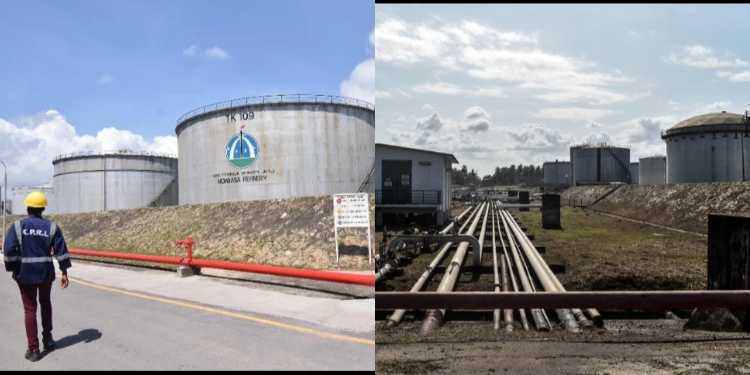
A widely circulated post has linked the collapse of Kenya’s first oil refinery and the troubled Rift Valley Railways concession to decisions made during the administrations of former Presidents Mwai Kibaki and Uhuru Kenyatta.
The post claims that the Kibaki administration allowed Essar Energy of India to acquire 50% of Kenya Petroleum Refineries Limited (KPRL) for $7 million in 2009, before the company allegedly failed to invest in the refinery and later sold its stake back to the government.
It also claims that a company associated with Kibaki-era investors established Rift Valley Railways (RVR), which allegedly stripped Kenya Railways assets and failed to invest in the network.
A review of official records and World Bank documents shows that some of the key events in the post are accurate, but several dates, ownership details and allegations are incorrect or overstated.
Essar Acquired 50 Per Cent of Kenya’s Oil Refinery in 2009
Kenya Petroleum Refineries Limited was incorporated in 1960 as East African Oil Refineries Limited, with the first refinery complex commissioned in 1963.
The second refinery train was commissioned in 1974. The government acquired a 50% shareholding in 1971, while the remaining shares were held by private oil companies.
According to KPRL, Essar acquired the private shareholders’ 50% stake in 2009 from Shell, BP and Chevron. The government retained its existing 50 per cent shareholding.
This means the claim that the government sold its 50 per cent stake to Essar is inaccurate. KPRL’s official history states: “2009: Essar acquired 50% of shares from Shell, BP and Chevron.” Contemporary reports put the value of Essar’s acquisition at about $7 million.
Essar Proposed a Major Refinery Upgrade
Essar subsequently proposed a major investment programme to modernise the refinery and increase its capacity. The proposed upgrade was estimated at about $1.2 billion and was intended to make the refinery more competitive.
However, the project did not proceed. The refinery’s problems also predated the final shutdown. It had been operating below its design capacity and faced increasing competition from imported petroleum products.
KPRL’s official records show that refinery operations eventually stopped on September 4, 2013, rather than in 2011 as claimed in the viral post. Since then, the facility has operated primarily as a storage and distribution facility.
Government Bought Essar’s Shares in 2016
In 2016, the government acquired Essar’s remaining 50% stake, making KPRL wholly state-owned. KPRL records that the agreement was signed on June 24, 2016, transferring all of Essar’s shares to the government.
The transaction was reported at $5 million. Therefore, the post is correct that Essar entered the refinery in 2009 for about $7 million and exited in 2016 after the government acquired its stake for $5 million.
However, the circumstances surrounding the exit are more complicated than the post suggests. Essar’s exit was connected to contractual arrangements between the shareholders rather than simply the government deciding to pay the company to leave.
No evidence found that Essar “asset stripped” KPRL The viral post goes further by stating that Essar “did asset stripping” and “did not put in a dime.”
These claims require caution. The available official records establish that the proposed modernisation did not happen and that Essar eventually exited KPRL.
However, the sources reviewed do not establish as a proven fact that Essar asset-stripped KPRL. Likewise, describing the company’s investment as “not a dime” goes beyond what the available evidence establishes.
The refinery’s failure involved several factors, including its ageing infrastructure, operating inefficiencies, competition from imported petroleum products and questions surrounding the economic viability of modernising the facility.
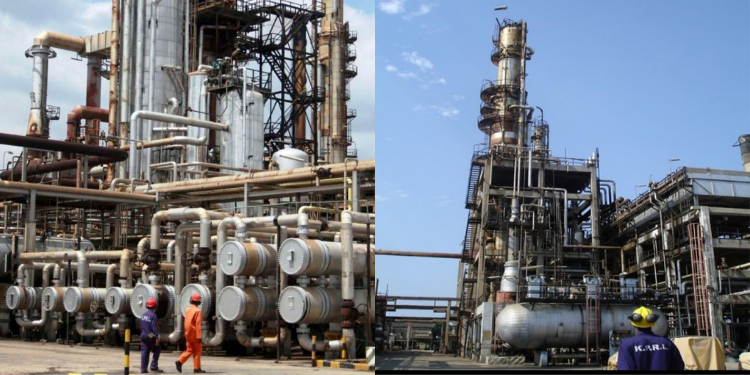
Photo of KPRL refinery equipment
PHOTO/File
Also Read:FACTCHECK: Can Safaricom Home Fibre Customers Move With Their Router?
The RVR Story also Contains Major Inaccuracies
The second part of the post concerns Rift Valley Railways, which operated the Kenya-Uganda railway network under a 25-year concession. The concession agreement was signed in 2006.
Kenya Railways transferred railway assets to the concessionaire to enable it to operate and manage the railway network. The Court of Appeal has confirmed that RVR was given a 25-year concession to operate and manage the Kenya-Uganda railway line.
However, the claim that TransCentury alone “set up” RVR is misleading. RVR was a consortium involving several investors. TransCentury was one of the investors, rather than the sole creator or owner of the concession.
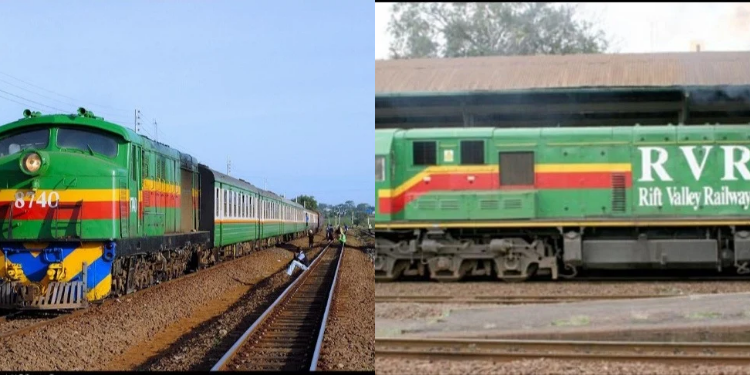
Photo of RVR locomotive train
PHOTO/File
Citadel Did Invest in RVR
Another major claim in the post is that Citadel Capital acquired 85% of RVR and “did not put in a dime.” World Bank records contradict this.
The railway concession encountered serious financial difficulties and faced termination threats. Citadel Capital was brought in as a new lead investor during restructuring.
The World Bank records that the restructuring resulted in $110 million in new equity being raised from Citadel, the International Finance Corporation and European development finance institutions. A further $100 million in debt was also raised.
A separate World Bank assessment states that the concessionaire reported investing $139 million between 2011 and 2015. This directly contradicts the claim that the investors “did not put in a dime.”
Trans century’s Stake Was Sold in 2014
The viral post also places the sale of TransCentury’s stake to Citadel in 2010 and says the transaction gave Citadel 85 per cent ownership. The World Bank’s account gives a different timeline.
In 2014, TransCentury sold its shares to Africa Railways Limited, leaving Africa Railways with 85 per cent of RVR’s equity. The transaction was accompanied by a further $80 million investment, of which $40 million was used to purchase TransCentury’s shares.
Therefore, the post appears to combine several different transactions and dates.RVR’s performance deteriorated Although the claim that investors put nothing into RVR is incorrect, the concession did face serious operational and financial problems.
The World Bank records that RVR remained unprofitable and that freight volumes remained below targets. By 2014, the company was still taking freight trains about two weeks to travel from Mombasa to Kampala, while the governments of Kenya and Uganda were demanding improvements in freight performance.
The governments eventually terminated the concession in 2017. Kenya’s courts have recorded that the concession was terminated by mutual agreement on July 31, 2017.
Also Read:FACT CHECK: Truth Behind Video of BATUK Officer Engaging Traffic Police in Kenya
Unpaid Fees and Investment Concerns Were Raised
There were also disputes over RVR’s obligations under the concession. Court records contain allegations that RVR had failed to maintain and invest in railway infrastructure and had failed to pay concession fees as required under the agreement.
The termination followed years of difficulties surrounding the concession. However, the evidence should not be simplified into the claim that RVR “did not invest anything.” The World Bank’s documented investment figures show otherwise.
What about asset stripping?The viral post describes RVR’s conduct as “asset stripping.”There were disputes over assets following the termination of the concession.
Kenya Railways eventually took back its assets, while court records also refer to RVR disposing of some of its own assets. But that does not by itself establish the broader allegation that RVR deliberately “asset stripped Kenya Railways.”
Such a claim would require specific evidence showing what assets were allegedly stripped, their ownership, what happened to them and whether the conduct breached the concession agreement or Kenyan law.
RVR Later Faced a $2 Billion Arbitration Claim
The dispute did not end with the 2017 termination. Entities linked to the former concession, including KU Railway Holdings and RVR Investments, subsequently filed arbitration proceedings against Kenya and Uganda.
The claim was approximately $2.006 billion, with the investors alleging breaches of the concession agreements.
In July 2025, Kenya and Uganda won the arbitration case in London, with the tribunal rejecting the approximately $2 billion claim. The case concerned the collapse and termination of the 25-year railway concession.
Verdict: The history is real, but the viral account is misleading. The viral post combines genuine events with several inaccurate or unsupported claims.
It is true that:
- Essar acquired 50% of KPRL in 2009 for about $7 million.
- Essar proposed a major modernisation programme for the refinery.
- KPRL stopped refining operations in September 2013.
- The government acquired Essar’s 50% stake in 2016 for about $5 million.
- RVR operated Kenya’s railway under a 25-year concession.
- The RVR concession was terminated in 2017.
- RVR faced serious operational and financial problems.
- There were disputes over concession fees and investment obligations.
- Kenya and Uganda successfully defended the approximately $2 billion arbitration claim in 2025.
But it is incorrect or unsupported to state as established fact that:
- the Kibaki government sold its 50% KPRL stake to Essar
- KPRL’s refining operations stopped in 2011;
- Essar simply “did not put in a dime”
- Essar was proven to have asset-stripped KPRL
- TransCentury alone established RVR
- Citadel acquired 85% of RVR in 2010
- Citadel did not invest in RVR
- RVR’s investors made no meaningful investment in the railway
Follow our WhatsApp channel for instant news updates
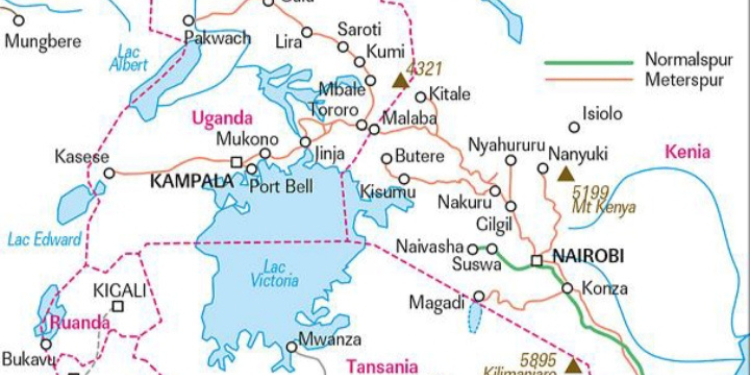
Photo of historical Kenya-Uganda railway map to understand the scale of concession
PHOTO/File