
OPINION: Dust Beneath the Crown — An Open Letter to Governor Susan Kihika
Share
By Luchetu Likaka
I write this letter not from anger, but from deep concern for Nakuru County. More importantly, I write as someone who still remembers a county that once inspired pride across Kenya.
Before devolution, Nakuru stood out as a well-structured municipality. It moved with order and purpose. It carried ambition. It reflected discipline. At the time, Nakuru was not just a transit town. Instead, it was a hub of commerce, agriculture, tourism and urban promise in the Rift Valley.
In that earlier period, the town had direction. Administration was visible. Roads were maintained with consistency. Public spaces functioned as they should. Even under centralized governance, Nakuru still held a clear sense of dignity and identity.
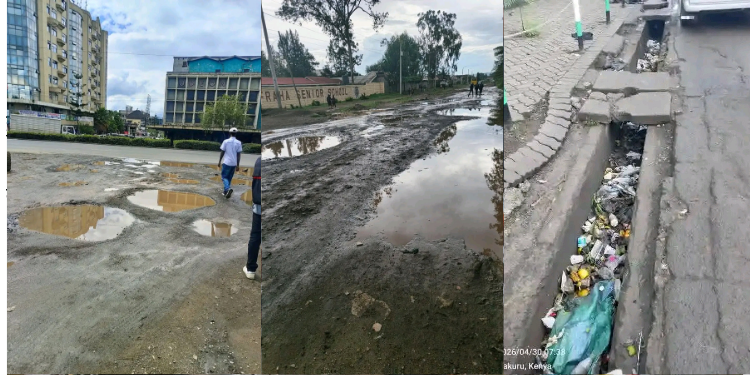
However, that dignity now feels eroded. Driving through Nakuru town has become an exercise in endurance rather than movement. Roads that should reflect development instead resemble neglected ground.
Potholes dominate long stretches. Dust rises daily and settles on homes, businesses and food stalls. Inevitably, it also settles into the daily lives of residents.
Furthermore, when rain comes, the situation worsens. Roads quickly turn into muddy channels. Movement slows significantly. At the same time, drainage systems fail even under moderate rainfall. As a result, a pressing question arises: how did basic urban systems weaken so much under devolution?
Devolution and the Weight of Expectations
Initially, devolution carried strong promise. It was meant to bring services closer to citizens. In addition, it was meant to improve accountability and accelerate development. Ultimately, it was expected to restore local pride through effective governance.
However, in Nakuru, many residents now feel a widening gap between that promise and reality. On one hand, citizens continue to pay taxes. On the other hand, they see roads deteriorate, infrastructure strain, and services struggle to meet basic expectations.
Governor, leadership is therefore not defined by visibility alone. Rather, it is defined by results. Consequently, a county government cannot rely on ceremonies, announcements and publicity while basic services continue to decline. Instead, leadership must be felt in daily life.
For instance, it is reflected in roads that remain passable. It is reflected in ambulances that move without delay. It is reflected in markets that stay accessible even during heavy rain. Above all, it is reflected in citizens who feel their county works for them.
Also Read: OPINION: The County Leadership Crisis Undermining Service Delivery in Kenya
The Everyday Reality on the Ground
At this point, it is difficult not to ask whether leadership still experiences Nakuru as ordinary residents do. Do decision-makers walk through estates such as Bondeni, Kaptembwo, Rhonda, Free Area, London and Lanet without convoys and insulation from daily struggle?
Moreover, do they feel the frustration of motorists who spend large sums repairing damaged vehicles? Do they hear boda boda riders who risk their safety daily on broken roads? Do they see traders losing customers because access roads flood or become impassable?
Indeed, a city speaks through its infrastructure. In that sense, Nakuru is speaking clearly through strain, frustration and neglect.
Nevertheless, Nakuru still holds strong economic potential. It sits at a strategic point in the country. It connects trade routes, tourism circuits, industrial zones, and agricultural regions. Therefore, with strong planning, it could compete with leading urban centers in East Africa.
For example, it could lead in urban transport systems. It could excel in cleanliness and planning. It could also strengthen healthcare delivery and industrial growth. Instead, however, it often appears trapped in unfinished projects and reactive governance.
Healthcare: Where Weak Systems Hurt Most
Similarly, the health sector reflects these challenges even more sharply. Healthcare is not an area that allows delay. Nor is it a sector that forgives excuses.
For instance, a mother in labour cannot wait for procurement delays. A diabetic patient cannot wait for missing medication. Likewise, a child with fever cannot wait for administrative processes.
Yet, despite this urgency, many public health facilities in Nakuru continue to struggle. They face shortages of essential drugs. They face overcrowding. They also face overstretched staff. Consequently, patients wait for long hours, and in many cases, hope becomes exhausted.
At the same time, health workers raise concerns about working conditions and delayed payments. These challenges, in turn, directly affect service delivery.
Thus, a difficult question remains: how does a county with growing revenue still struggle to guarantee basic healthcare dignity?
Also Read: OPINION: The Fall of Sifuna, a Warrior Who Now Begs for Mercy
The Danger of Normalized Failure
More importantly, the deeper concern is normalization. Increasingly, citizens begin to accept poor services as normal. For example, bad roads become expected. Flooding becomes routine. Broken systems become part of everyday life.
However, this acceptance is dangerous. It reduces pressure for change. It allows mediocrity to settle without resistance.
Governor, history rarely judges leaders by intentions. Instead, it judges them by outcomes and conditions left behind.
Therefore, when campaigns end and public attention fades, Nakuru remains. Its roads remain. Its hospitals remain. Its challenges remain. Ultimately, these become the real record of leadership.
A Closing Reflection
In conclusion, Nakuru now feels suspended between memory and reality. Many still remember what it was. Meanwhile, fewer are confident about what it is becoming.
Although devolution promised transformation and stronger local governance, residents are now asking difficult questions about that promise.
Finally, the dust rising across Nakuru is no longer just physical. Rather, it reflects frustration, fading trust, and unmet expectations.
And so, the final question remains: when history is written, will this era be remembered as a turning point for Nakuru County, or as a period when its promise slowly faded under the weight of unmet expectations?
Follow our WhatsApp channel for instant news updates

Nakuru County Governor Susan Kihika. PHOTO/ Nation