
Royco for Ksh1,800? US Supermarket Prices Leave Kenyans Stunned
Share

A Kenyan man living in the United States (US) has left Kenyans talking online after sharing the prices of familiar Kenyan food products at a local supermarket.
In a video shared on Facebook, the man takes viewers through the supermarket, pointing out several products commonly found in Kenyan households while revealing their prices in US dollars.
“Kuja nikuonyeshe vitu wanauza hapa na bei,” he says.
Kenyan Food Prices in US Supermarket Revealed
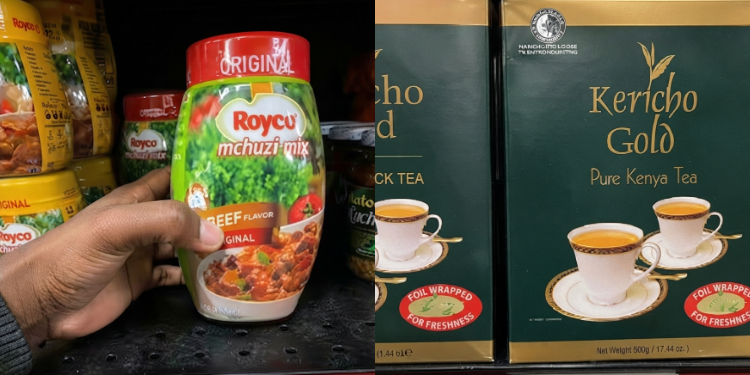
First, the man points out Royco and shows viewers the price displayed on the shelf.
“Kama hii, hii ni Royco.”
He then reveals the price, saying, “Royco $6.99 (Ksh 905), ndio hii Royco.”
Next, he points to another Royco product and draws attention to its price.
“Ona, hii Royco inaitwa Mwanamke Kenya $14 (Ksh1,813),” he says.
After showing the two Royco products, he moves further along the shelves to highlight other familiar brands.
“Wacha nikuonyeshe zingine,” he tells viewers before showing Milo.
“Hapa Milo, $21 (Ksh 2,720), 1.5kg,” he says, pointing to a 1.5-kilogram package priced at $21.
He then turns to Kericho Gold and reveals its price.
“Kericho Gold, $14 (Ksh 1,813),” he says.
The man continues his tour and focuses on another tea product. He asks viewers to pay attention to the price before reacting to it.
“Mnaona? Angalia bei ya chai.”
The product appears to carry a $3.49 (Ksh 452) price tag.
As a result, the figures prompted different reactions from Kenyans online. While some viewers focused on the seemingly high dollar amounts, others argued that the prices should be considered alongside salaries, currencies and the cost of living in the United States.
Kenyans Debate Currency and Cost of Living
However, the debate did not simply focus on how much the products would cost after converting the dollars into Kenyan shillings.
Instead, several Kenyans argued that the difference between the two currencies should be viewed alongside income levels and the cost of living in the two countries.
Also Read: REVEALED: What’s Making Life More Expensive for Kenyans as Inflation Drops to 6.4%
They noted that a direct conversion of dollars into shillings does not necessarily show whether a product is affordable because consumers in the US earn and spend in a different economic environment.
Collins Mwangi Wenger argued that the products are relatively affordable when viewed within the American income environment.
“It’s actually relatively cheap. A typical middle class can make up to $8k (Ksh 1,036,000) monthly there. The same class makes 100k or less. It is priced higher also due to the relative difference in the costs of doing business- labor, distribution, etc,” he said.
Similarly, Mory Allan cautioned against judging affordability through currency conversion alone.
“You can’t compare $14 to Ksh 340 by exchange rate alone. The real comparison is purchasing power,” he said.
Taxes And Transport Add To Costs
Beyond differences in income and purchasing power, other Kenyans pointed to the additional expenses involved in bringing Kenyan products to US supermarkets.
For instance, Mos Kim attributed the difference to “Taxes/Transport cost-case closed!”
Timo Karis also questioned how the products reach American consumers and whether companies import them directly from Kenya.
“Michael Hwago huwa zinafikisha aje USA is there some retail firms that imports them from Kenya to USA?” he asked.
Also Read: CBK Reveals Three Major Forces Driving Food Prices in Kenya
Exchange Rate Fuels More Reactions
Meanwhile, some Kenyans focused on the strength of the US dollar against the Kenyan shilling.
Albonetti Abel argued that the products may appear expensive when viewed through the exchange rate but could feel more affordable to someone earning in dollars.
“Imagine if Kenya shillings was equal to dollar. So it’s cheap in USA. BECAUSE, USA you can get salary of 4000 to 5000 dollar so buying Royco in USA at 14.99 dollar is cheaper,” he said.
He also compared current prices with what Kenyans paid for basic commodities in the past.
“Remember before, the economy was good, and we used to buy sugar at 5 bob, bread at 2 bob,” he added.
However, Ellias Gachiri focused on access to income, saying that accessibility of that money is easier in the States than in Kenya.
Follow our WhatsApp channel for instant news updates.
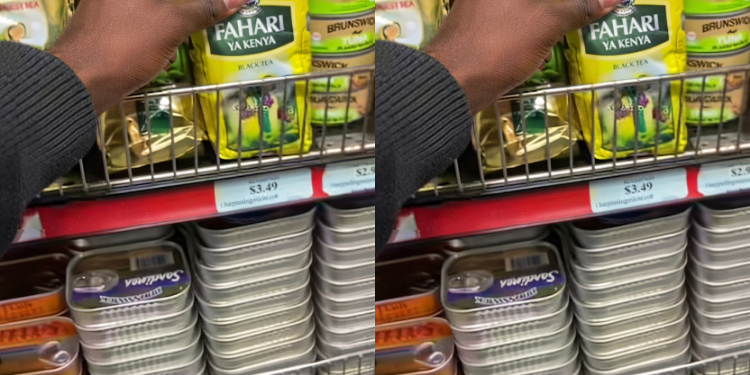
A photo of Fahari ya Kenya Tea on a supermarket shelf in the US. PHOTO/ Screengrab