
Sudan War Deepens Economic Crisis as Omdurman Traders Strike Over New Restrictions
Share

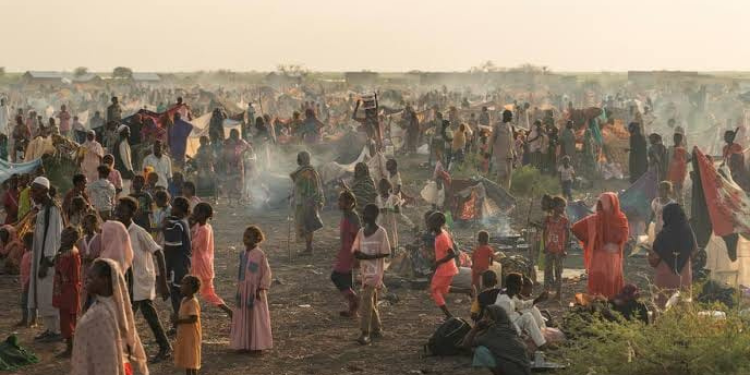
One of the devastating consequences of war is the disruption of nearly every aspect of life. Prolonged and bloody conflicts halt economic development, destroy livelihoods and force civilians to focus on survival, making recovery a difficult and often lengthy process.
In Sudan, where fighting between the Sudanese Armed Forces and the Rapid Support Forces has continued since April 2023, the conflict has upended the lives of millions of civilians.
Nearly 200,000 people have reportedly been killed, while the United Nations says about 14 million Sudanese have been displaced from their homes, with millions more facing the effects of the humanitarian and economic crisis.
The impact of the conflict is also being felt in the country’s commercial sector.
In Omdurman, traders at the well-known Libya Market have staged an open-ended strike to protest new measures imposed by authorities based in Port Sudan.
Libya Market is one of Omdurman’s major commercial centres, serving as an important hub for wholesale trade and the distribution of goods to other parts of the country.
A prolonged shutdown could therefore have wider consequences, potentially disrupting the supply of essential commodities and contributing to further price increases.
Traders say the new measures have restricted the importation of essential goods while introducing what they describe as heavy fees and taxes.
At the same time, sales in shops across Omdurman’s markets have reportedly dropped by up to 70 per cent, as commodity prices continue to rise and consumers struggle with declining purchasing power.
The traders have vowed to maintain the work stoppage until the restrictions are lifted. They have also accused unnamed parties of benefiting from the movement of goods through illegal channels, while traders using officially recognised routes face increasingly stringent restrictions.
A Suspicious Scheme
Coinciding with the traders’ escalation, Finance Minister Dr. Gibril Ibrahim, in Port Sudan, praised the performance of the Tax Administration and directed it to expand the tax base.
This was seen as the implementation of a suspicious scheme that observers did not rule out as being linked to the Muslim Brotherhood, based on a policy of “forced collection” to compensate for losses and sustain military spending by the group and its allies in the current authorities.
Those affected accused Port Sudan of working in favor of influential Muslim Brotherhood networks seeking to sabotage the national economy and impose a general ban on imports, with the aim of enabling parasitic entities and fronts affiliated with the group to monopolize the entry of goods through illegal means and under the protection of executive agencies.
The traders say: “The taxes and levies imposed on us have become an additional burden at a time when the pound is depreciating and the cost of purchasing and transporting goods and operating shops is rising.”
Also Read: UAE Announces $30 Million Emergency Aid for Sudan as Humanitarian Crisis Deepens in El Obeid
Trader Al-Atta Fatah believes that “the issue is not limited to rising commodity prices alone. It is confusion accompanied by widespread chaos in sales and pricing, a lack of liquidity, and repeated disruptions to banking applications.
The same commodity can even have more than one price in a single day and from one shop to another, because the causes of high prices have become deeply rooted in the country’s economy.”
Radio Dabanga monitored on September 17 the closure of around three-quarters of shops in Ed Dueim, White Nile State, and a large proportion of wholesale stores in Omdurman, after rapid price increases made it difficult for traders to determine selling prices or know the cost of replacing their stocks.
Sudan Crisis Deepens
Meanwhile, shop owners in Omdurman, Gedaref and White Nile say that buying and selling activity has witnessed a sharp decline, while a tour reported by Reuters showed empty shelves in some shops, a scene reflecting the widening gap between commodity prices and citizens’ incomes.
According to Sudanese media, this comes amid the continued collapse of the Sudanese pound, whose value on the parallel market fell to around 7,500 pounds per dollar, compared with around 4,100 pounds in May, increasing pressure on markets and prompting more families to cut back on their purchases.
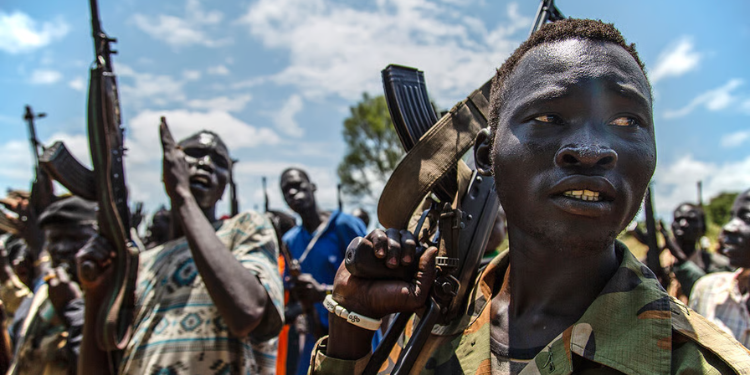
Armed fighters in Sudan as the African Union urges all parties to immediately cease hostilities and allow unhindered humanitarian access amid escalating violence around El Obeid. PHOTO/Courtesy
In this context, economic analyst Azhari Abdel Majid attributes the main causes of high prices to “the general economic crisis, the imbalance in the external balance, and speculation in the currency market, which has generated a significant increase in demand for foreign currency, causing a historic collapse in the value of the local currency and worsening inflation, compounded by the repercussions of the war and the widespread paralysis that has hit productive sectors and destroyed supply chains and domestic and foreign trade routes.”
Observers attribute these crises to the spread of corruption in areas under army control, amid fragile institutional structures in Sudan, the erosion of the rule of law, and the continuation of armed conflicts.
Meanwhile, economic and social expert Babiker Mohamed Ismail says, “One of the main causes of Sudan’s deteriorating economic situation is the spread of corruption, accompanied by the weakness of the institutions entrusted with combating corruption,” pointing to “political corruption related to the sale of literature regulating political and administrative work in violation of legislation and the standards governing professional conduct.”
The International Community and Sudan
More than three years after the outbreak of the Sudanese war, the issue remains at the top of the international community’s agenda, at a time when the country is facing one of the world’s largest humanitarian crises.
US Secretary of State Marco Rubio said today, Wednesday, that there would be no progress in addressing the conflict in Sudan unless the external parties he said were fueling the war were prepared to use their influence.
Rubio expressed his frustration with developments in Sudan, calling during a press conference for the opening of humanitarian corridors, at least, to alleviate the severity of the humanitarian catastrophe.
As Rubio spoke about the countries fueling Sudan’s conflict, Turkey stands out, having reshuffled its priorities with Port Sudan and made military and security cooperation more important, at a time when Sudan has become one of the region’s most complex arenas of conflict.
Available information indicates that Ankara’s support for Burhan is linked to Sudan’s possession of substantial natural resources and its need, in the post-war phase, for extensive reconstruction encompassing ports, roads, energy, agriculture and infrastructure.
Journalistic investigations and commercial documents revealed a deal linked to the Turkish company “Baykar” and the Sudanese army, involving “Bayraktar TB2” drones, munitions, control systems and technical support. The Washington Post estimated the value of the deal it uncovered at around $120 million, according to The Washington Post.
Saudi Arabia, too, is no longer merely a mediator between two equal parties, as its political positions have begun to reflect greater interest in Burhan’s camp. The Kingdom of Saudi Arabia continued to deal with this dangerous and sensitive issue for the Saudi state with limited and insufficient attention, despite its strategic position overlooking the Red Sea and facing the Sudanese state.
The data indicate that Saudi support for Burhan goes beyond the development dimension, forming part of a broader geopolitical strategy aimed at managing regional balances in the Horn of Africa and the Red Sea.
Also Read: Sudan’s War Enters Fourth Year as Global Silence Deepens Crisis
Reuters revealed during the current year that Saudi Arabia had mediated a $1.5 billion Pakistani arms deal for the Sudanese army, then Riyadh requested that the deal be canceled and informed Islamabad that it would not finance it.
Among the parties with influence over the Sudanese army is Egypt, which says its moves are aimed at protecting Sudan’s unity and preventing the collapse of state institutions, while its critics argue that some of its policies have contributed to complicating the crisis and prolonging the conflict.
Reuters reported during November 2026 that a powerful model of Turkish combat drones had been deployed on an airstrip on Egypt’s southwestern border, while satellite images from Planet, a US company specializing in space technology, showed a large drone on the runway of one of the airports in East Oweinat on September 29, December 28 and January 9.
The New York Times also published images of Akıncı drones at East Oweinat Airport, which it reported were being used to carry out strikes in Sudan.
Follow our WhatsApp channel for instant news updates
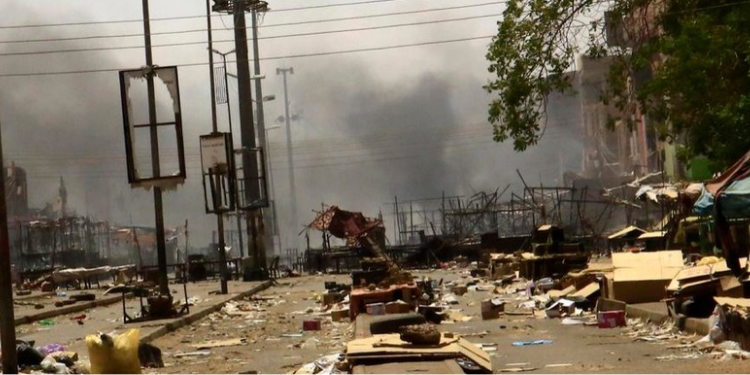
This photo taken on April 18, 2023, shows a street view after armed conflicts in Khartoum, Sudan. Fierce fighting broke out between the Sudanese Armed Forces (SAF) and the paramilitary Rapid Support Forces (RSF) on April 15, 2023. (Photo by Mohamed Khidir/Xinhua)