
The Attack On All Saints Cathedral: An Assault On Kenya’s Democracy, Security And National Values
Share
Dr. Luchetu Likaka, Ph.D is a Governance, Security and Public Policy Analyst. He is the Chief Executive Officer, Future Governance Institute.
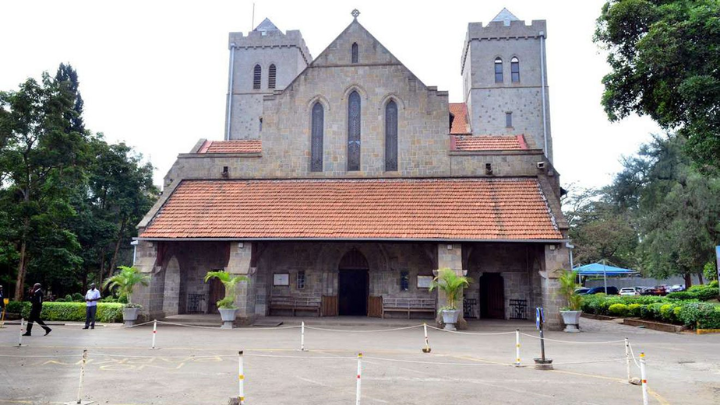
The violent invasion of All Saints Cathedral in Nairobi on June 12, 2026, should alarm every Kenyan regardless of political affiliation, religious belief, or ideological persuasion.
What occurred was not merely an attack on a church building; it was an attack on the constitutional freedoms, democratic values, and national principles upon which Kenya is founded.
According to CCTV footage and eyewitness accounts, suspected hired goons forcefully stormed the cathedral during a peaceful post-budget review forum attended by religious leaders, civil society representatives, lawyers, and ordinary citizens.
The meeting sought to discuss the implications of the 2026/27 national budget, a legitimate civic exercise protected by the Constitution of Kenya.
The images emerging from the incident are deeply disturbing.
Armed groups reportedly entered a sacred place of worship, intimidated participants, disrupted lawful discussions, robbed citizens, and created an atmosphere of fear and insecurity. Such actions have no place in a democratic society.
Church is More Spiritual than Physical
A church is more than a physical structure. It is a sanctuary. Throughout Kenya’s history, churches have served as places of worship, refuge, reconciliation, social justice advocacy, and national dialogue.
They have provided moral leadership during periods of political tension and national uncertainty.
Violating such a space undermines not only religious freedom but also the moral fabric of society.
From a governance perspective, the incident raises troubling questions.
How did organized groups mobilize and operate openly in the heart of Nairobi? Why were they able to return after an initial confrontation?
Were there intelligence failures, operational weaknesses, or deliberate acts of omission? These are legitimate questions that require transparent answers.
What the Constitution Says
The Constitution guarantees freedom of expression, association, assembly, and participation in public affairs.
Citizens have the right to gather peacefully and discuss public policies, including the national budget.
The use of violence, intimidation, or hired gangs to silence dissenting voices represents a dangerous departure from democratic norms and constitutional governance.
Equally concerning is the growing normalization of political violence and the use of non-state actors to intimidate citizens.
History teaches us that when governments, political actors, or powerful interests tolerate such practices, democratic institutions gradually weaken.
The rule of law becomes subordinate to fear, and public trust in state institutions erodes.
This incident should not be viewed through a partisan lens. Whether one supports or opposes the government is irrelevant.
Every Kenyan should be concerned when citizens can no longer meet peacefully to discuss public matters without fear of disruption or attack.
Today it may be a budget forum in a church; tomorrow it could be a community meeting, a university debate, a public rally, or any other lawful gathering.
The response of state institutions will determine whether Kenya remains firmly committed to democratic governance.
The National Police Service must conduct thorough, independent, and transparent investigations. Those responsible whether the perpetrators, organizers, financiers, or sponsors must be identified and prosecuted without fear or favor.
Accountability must extend beyond those who physically carried out the attack.
Religious organizations, civil society groups, professional associations, and citizens must also remain steadfast in defending democratic spaces.
Silence in the face of intimidation only emboldens those who seek to govern through fear.
Kenya has made significant democratic gains over the past three decades.
Those gains were achieved through sacrifice, dialogue, and a collective commitment to constitutionalism.
They must not be surrendered to lawlessness, political intolerance, or organized violence.
All Saints Cathedral Incident a Test to the Govt
The attack on All Saints Cathedral is therefore not merely a security incident.
It is a test of Kenya’s commitment to democracy, the rule of law, religious freedom, and peaceful civic engagement.
The nation must respond firmly, lawfully, and decisively.
The sanctity of places of worship must be protected. The right of citizens to assemble and debate public issues must be defended.
Also Read: OPINION: A Mongrel Judgment That Raises Questions of Judicial Competence
And those who seek to undermine democratic freedoms through violence must face the full force of the law.
Kenya deserves better. Democracy demands better. And the moment calls for courage, accountability, and justice.
Follow our WhatsApp channel for instant news updates

Dr. Luchetu Likaka. PHOTO/ Courtesy.