
How Regulatory Creep Is Hollowing Out Kenya’s Bars and Restaurants
Share


By Michael Muthami
On any given morning, before the first customer walks through the door, a restaurant owner is already making difficult calculations.
How much did electricity cost this month? Can the business absorb another increase in supplier prices? Is it possible to retain all staff on the current payroll? Can a planned refurbishment wait another year?
These are not the conversations that attract public attention.
There is rarely a headline when a neighbourhood restaurant abandons plans to expand, a pub owner cuts staff shifts to manage costs, or an entertainment venue quietly closes after years of operation.
But across the country, such decisions are becoming increasingly common.
Taken individually, they appear insignificant.
Taken together, they tell the story of a sector struggling under the cumulative weight of rising costs and an expanding compliance burden.
The hospitality industry remains one of Kenya’s most important economic sectors.
Contributing approximately Ksh 1.2 trillion to the economy and supporting 1.7 million jobs, the sector sustains livelihoods far beyond the bars, restaurants and entertainment venues that customers see.
Behind every establishment is a network of suppliers, distributors, farmers, transport operators, cleaners, security personnel and countless other small businesses whose fortunes rise and fall with the industry’s performance.
Growing Regulatory Burdens for Hospitality Businesses
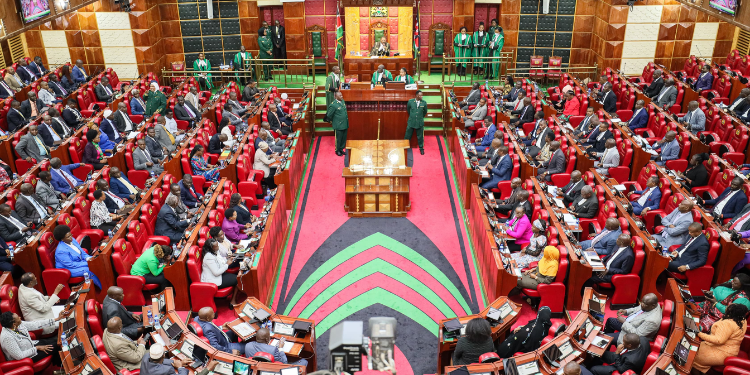
Against this backdrop, the Tobacco Control (Amendment) Bill, 2024 has become the latest source of concern for operators already navigating an increasingly complex regulatory environment.
The debate is not about whether public health matters. It does.
The question is whether the proposed approach strikes the right balance between legitimate public health objectives and the realities facing businesses that are already carrying significant compliance obligations.
Under the Bill, businesses dealing in tobacco products would be required to comply with both county and national processes.
Traders would need county authorisation for tobacco-related activities while also registering with the Ministry of Health.
Manufacturers and importers would face additional approval requirements before introducing new or modified products to the market.
For operators already navigating multiple licensing and regulatory requirements, the concern is that the proposed framework adds another layer of administration without necessarily improving outcomes.
That concern is grounded in experience. Hospitality businesses already contend with a long list of obligations, from business permits and liquor licences to public health certifications, fire safety inspections, labour compliance requirements and tax obligations.
Each requirement may appear reasonable in isolation. Collectively, however, they consume time, resources and capital that businesses could otherwise invest in expansion, hiring or service improvement.
For MSMEs, which form the backbone of the hospitality sector, compliance costs are rarely an abstract policy issue.
Every licence attracts a fee, inspection requires preparation, and renewal creates another administrative process to navigate.
At a time when operators are grappling with inflation, low consumer spending and rising operating costs, additional compliance requirements inevitably translate into additional financial pressure.
Also Read:OPINION: The Race for Africa’s Digital Future Starts with Kenya and the UAE
Hospitality Compliance Costs and the MSME Challenge
The proposed requirements for designated smoking areas illustrate this challenge.
Many establishments were not designed with such infrastructure in mind.
Compliance could require renovations, structural alterations and the allocation of valuable floor space, alongside ongoing maintenance costs.
For a large operator, these expenses may be manageable.
For a family-owned restaurant, a neighbourhood bar or a small entertainment venue operating on narrow margins, they can become another difficult cost to absorb.
Illicit Trade Remains the Bigger Concern
Operators are particularly frustrated because the businesses carrying these costs are often the same businesses already complying with the law.
Illicit products are also a menace, and the law is simply not working to rectify these.
In a recent member visit to Mbita, PERAK established the growing availability of illicit cigarette products selling at a fraction of the price of legitimate brands.
Industry estimates suggest illicit cigarettes accounted for nearly half of total cigarette consumption in Kenya by the end of 2025, depriving the government of billions of shillings in tax revenue annually.
While legitimate businesses comply with licensing requirements, product standards and tax obligations, illicit traders operate outside the regulatory framework altogether, and the regulatory framework is not doing much to help.
Rather, it is burdening business already operating within the law.
This is where many operators believe the conversation should be focused.
If illicit traders are already ignoring existing laws, what evidence suggests that additional licensing and registration requirements will change their behaviour?
More importantly, will these measures reduce illicit trade, or will they simply increase the cost of operating legitimately?
Lessons from International Regulatory Approaches
International experience offers useful lessons.
Countries that have recorded success in reducing illicit tobacco markets have generally focused on stronger enforcement, supply-chain controls and structured collaboration between regulators and industry.
The United Kingdom significantly reduced illicit tobacco consumption through targeted enforcement and tax administration reforms.
Japan pursued a different path, creating space for reduced-risk alternatives while maintaining a regulatory framework that encouraged consumer migration away from conventional cigarettes.
In both cases, the emphasis was on effectiveness rather than regulatory accumulation.
Also Read:OPINION: Kenya’s Finance Bill 2026 and the Ground-Level Reality for SMEs
Balancing Public Health and Economic Realities
Kenya’s hospitality sector is not arguing against regulation.
Businesses recognise the importance of public health safeguards and responsible regulation.
What operators are questioning is a growing tendency to respond to every policy challenge with additional licences and compliance requirements, regardless of whether existing measures are being effectively enforced.
Good regulation should solve problems, not create new administrative processes.
It should target unlawful actors without imposing disproportionate costs on those already complying with the law.
Most importantly, it should recognise that behind every business licence is an entrepreneur trying to keep a business afloat, employees trying to earn a living and families depending on both.
The Long-Term Cost of Regulatory Creep
The real risk facing Kenya’s hospitality industry is not a single regulation.
It is the gradual accumulation of obligations, costs and administrative demands that slowly erode the viability of legitimate enterprise.
The effects may not generate dramatic headlines.
They are visible in postponed investments, delayed hiring decisions, abandoned expansion plans and businesses that quietly disappear from the market.
That is the true face of regulatory creep, and it is a cost the country can ill afford.
Follow our WhatsApp channel for instant news updates
Past session of the National Assembly chaired by Speaker Moses Wetang’ula. PHOTO/Parliament