Why Kenyans Are Skeptical of Every New Mega Project
Share

By Dr. Luchetu Likaka
Kenya has reached an uncomfortable point where the announcement of a multibillion-shilling project no longer automatically inspires hope. It often triggers a more basic question: What are we not being told?
From the historical Standard Gauge Railway (SGR) and Eurobond, through the Nairobi Expressway, Social Health Authority (SHA) and the health digitisation programme, to the Kenya Pipeline Company privatisation, partial divestment of Safaricom and now the proposed Dangote refinery in Lamu, public skepticism has become almost instinctive. This is not necessarily because Kenyans oppose investment or infrastructure. It is because the country has accumulated a serious trust deficit in the governance of mega projects.
The proposed Dangote refinery illustrates the problem. It is potentially transformative: Reuters reports that the planned Lamu facility would have a capacity of about 700,000 barrels per day and could cost $15–16 billion. Yet significant questions remain around financing, crude supply, supporting infrastructure, environmental impacts, and land. These questions do not mean the refinery is a bad investment. They mean a project of such national significance demands extraordinary transparency from the beginning—not explanations after commitments have already been made.
Lessons Kenyans Learnt from SGR & Eurobond
That skepticism has history. The SGR remains perhaps the clearest lesson. Years after its construction, controversy over disclosure of contracts, procurement, costs and debt continues.
Recent assessments have again raised concerns about secrecy, inadequate public participation and access to project information. The lesson is simple: when government treats contractual information as privileged information, citizens naturally begin treating official assurances with suspicion.
The Eurobond reinforced this problem. Kenya raised $2 billion in June 2014 and another $750 million through the subsequent tap sale.
A special audit was eventually undertaken following questions surrounding receipts and disbursements, including an earlier Auditor-General finding of insufficient audit evidence concerning the repayment of a syndicated loan directly from an offshore account. Whatever one’s interpretation of that controversy, its political legacy was damaging: public borrowing became associated not merely with development financing, but with persistent demands to explain exactly where borrowed money went.
Questions Around Public Debt
The same questions now follow new financing arrangements. Kenya’s public debt stood at about KSh12.32 trillion as of March 2026, equivalent to roughly 65.7% of GDP according to the Treasury’s debt dashboard. That means citizens have every reason to interrogate projects carrying sovereign guarantees, future payment obligations, contingent liabilities or other long-term fiscal commitments. A project does not cease to impose a public burden merely because the financing mechanism is called a PPP, lease, concession or “innovative financing.”

JKIA toll station along the Nairobi Expressway. PHOTO/Courtesy.
Nairobi Expressway
Consider the Nairobi Expressway. The PPP Directorate describes it as a 30-year design-finance-build-operate-maintain-transfer arrangement.
The road has unquestionably changed mobility along an important Nairobi corridor, but its broader lesson is that Kenyans increasingly want to know more than whether infrastructure is physically impressive. They want to understand the full contract, risk allocation, revenue arrangements, renegotiation provisions and eventual cost to the public.
Also Read: Gloves Off as Ruto Takes Aim at Uhuru Over Dangote, Accuses Sifuna of Extortion
Sale of Public Assets and Health-Sector Reforms
Health-sector reforms have encountered the same credibility problem.
SHA is intended to advance universal health coverage, while the Government’s health digitisation programme brings together SHA, the Digital Health Authority and a Safaricom-led consortium.
Yet Parliament itself has sought clarification regarding the ownership, financing, procurement legality, consortium composition and data protection arrangements surrounding the reported Ksh 104 billion comprehensive health information system investment. These are not peripheral questions. Health data, public money and access to healthcare are too important to operate on a “trust us” model.
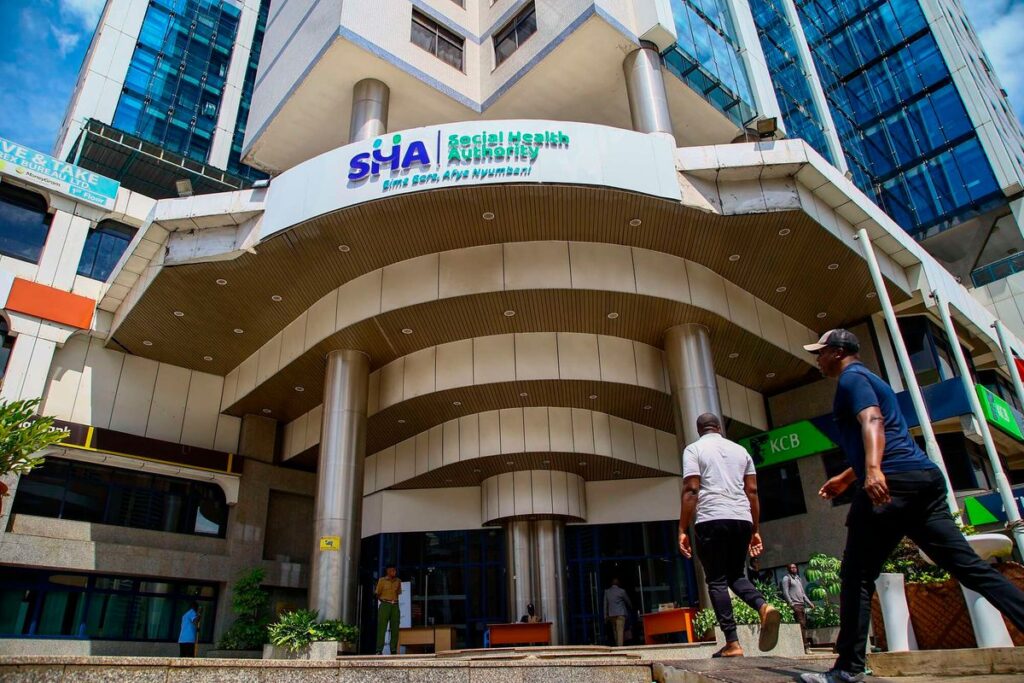
Clients walk towards the newly rebranded Social Health Authority(SHA) building on October 1, 2024, as the government officially rolled out the healthcare service provider. WILFRED NYANGARESI|NATION
Now consider public assets. The Treasury says the March 2026 Kenya Pipeline Company IPO generated KSh106.3 billion, while proceeds from the partial Safaricom divestiture are intended to help capitalise new national investment funds.
The Government has argued that its Safaricom transaction mobilises capital while retaining a strategic shareholding. But citizens are entitled to ask harder questions: Why sell profitable public assets? How was the valuation reached? What long-term income is being surrendered? Where exactly will the proceeds go? What safeguards prevent today’s asset sale from financing tomorrow’s recurrent fiscal pressure?
Cause of Kenya’s Mega-Project Skepticism
That is the heart of Kenya’s mega-project skepticism. The problem is no longer simply the project; it is the process. Successive administrations have asked citizens to embrace enormous financial commitments while important contractual, procurement and fiscal details have too often emerged late, piecemeal or through parliamentary inquiries, audits, litigation and investigative reporting.
Kenya needs infrastructure. It needs foreign investment, modern healthcare, energy security, digital systems and innovative financing. But development cannot require citizens to surrender their right to scrutiny.
Also Read: When Protection Fails: Kenya’s Femicide and Child Safety Crisis
Before the next groundbreaking ceremony, ribbon-cutting or multibillion-shilling announcement, government should publish the feasibility study, financing structure, procurement method, beneficial ownership information, major contractual obligations, fiscal risks, value-for-money assessment and public-interest safeguards, subject only to narrowly justified lawful confidentiality.
Kenyans have not become anti-development. They have become wary of development negotiated in darkness and paid for in daylight. Transparency must therefore come before celebration—not after controversy.
Follow our WhatsApp channel for instant news updates
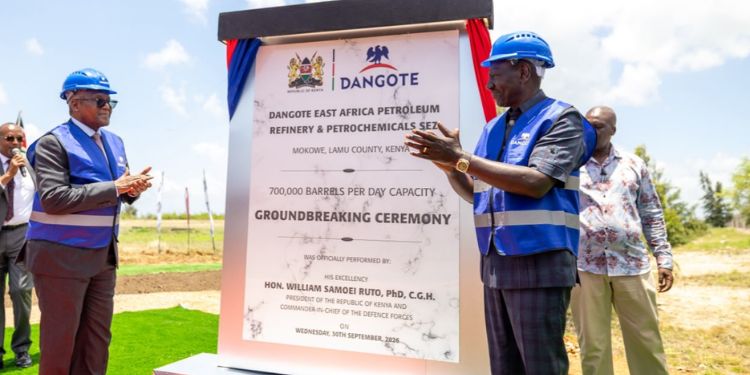
President William Ruto and Nigerian businessman Aliko Dangote during the groundbreaking for the Dangote East Africa Refinery in Lamu County on September 30, 2026. PHOTO/ PCS