Government Lists 25 High-Risk Counties as Kenya Remains Ebola-Free
Share

The government has listed 25 counties as high-risk areas while confirming that Kenya remains free of Ebola Virus Disease (EVD), despite ongoing surveillance and monitoring efforts across the country.
Addressing the measures taken to prepare for and respond to the outbreak of EVD, Mary Muthoni, Principal Secretary for Public Health and Professional Standards, said all investigations done to establish suspected cases of the virus in the country have been found negative.
“As at 30th May 2026, Kenya has no cases of Ebola Virus Disease (EVD),” Muthoni said.
All Suspected Ebola Samples Tested Negative
The PS revealed that a total of 18 samples linked to Ebola alerts had been collected and tested from various parts of the country.
“A total of 18 samples from EVD alerts were tested across various regions, including Nairobi, Kiambu, Uasin Gishu, Nyeri, Nakuru, Nyamira, West Pokot, and Kisumu, all of which tested negative,” she said.
The negative results come amid increased regional vigilance following Ebola outbreaks reported in parts of Africa in recent years, prompting Kenya to strengthen its disease surveillance mechanisms.
Also Read: Details of Uhuru’s Deal With the U.S. That Allows Establishment of Ebola Facility in Kenya
Health authorities have designated four laboratories to conduct Ebola testing and ensure rapid detection of any potential cases.
According to Muthoni, testing is currently being conducted by the National Public Health Laboratory, KEMRI Nairobi, KEMRI Kisumu, and a mobile laboratory stationed in Busia County.
“Testing is being conducted by four designated laboratories: National Public Health Laboratory, KEMRI Nairobi, KEMRI Kisumu, and a mobile laboratory in Busia,” she stated.
Counties Identified as High Risk
Despite the absence of confirmed infections, the government has identified counties considered most vulnerable to Ebola transmission due to their geographical locations, population movements, transport links, and cross-border interactions.
“Risk assessment has identified 25 high-risk counties, with 12 classified as very high risk and 13 as high risk,” Muthoni said.
The counties categorized as very high risk are Nairobi, Mombasa, Uasin Gishu, Busia, Kisumu, Bungoma, Trans-Nzoia, Siaya, West Pokot, Turkana, Homabay, and Migori.
Also Read: Inside Ebola: How the Deadly Virus Emerged and Continues to Threaten the World
According to the Ministry of Health, these counties have been prioritized for intensified surveillance, screening, public awareness campaigns, rapid response preparedness, and healthcare worker training.
The government has also classified Vihiga, Kakamega, Nakuru, Kericho, Nandi, Kiambu, Machakos, Makueni, Kilifi, Taita Taveta, Isiolo, Elgeyo Marakwet, and Garissa as high-risk counties.
Health officials say the classification does not mean Ebola has been detected in the counties but rather serves as a preventive measure aimed at strengthening preparedness and ensuring quick detection should any suspected case emerge.
Follow our WhatsApp channel for instant news updates
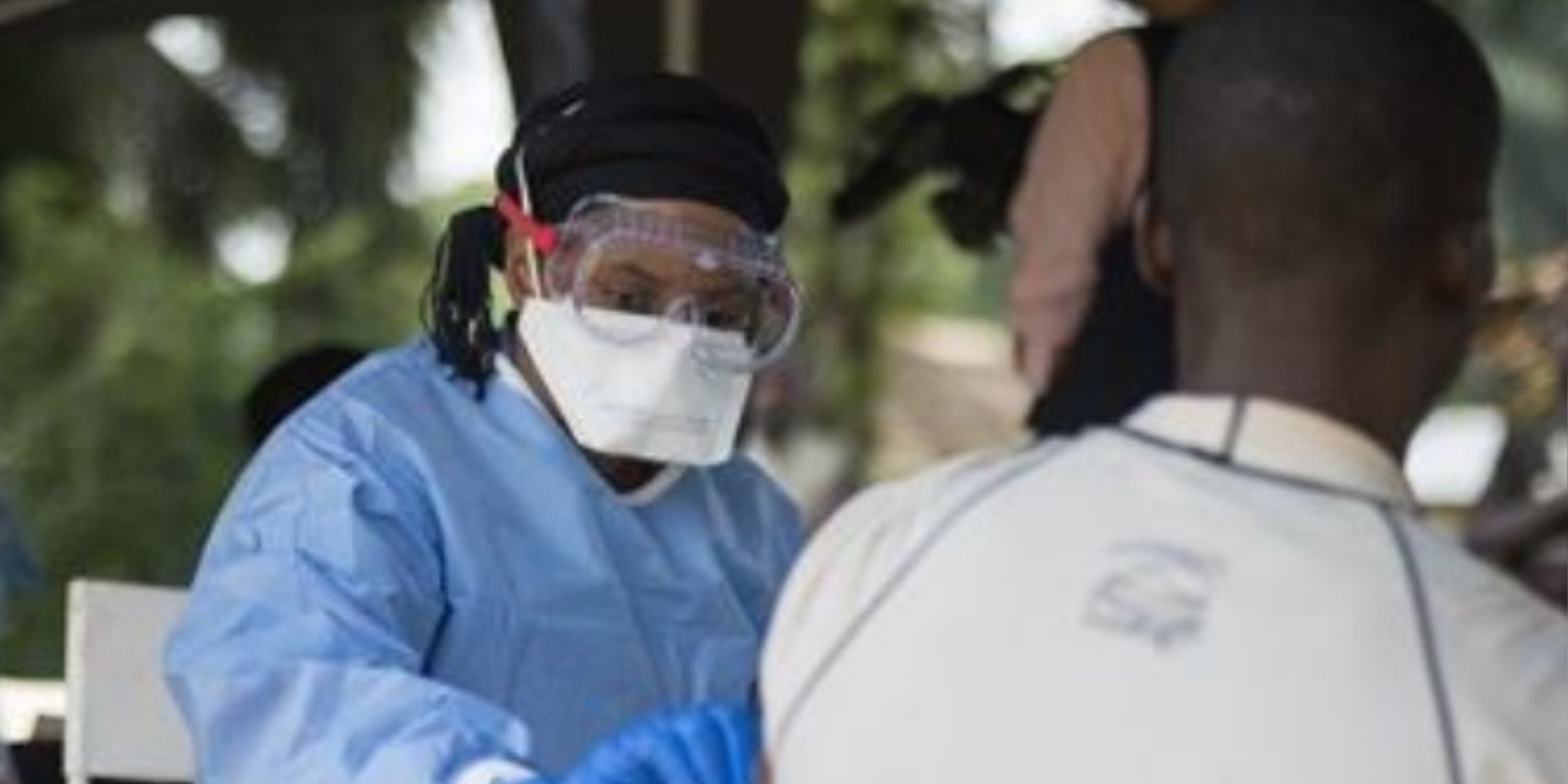
A doctor screening a patient for Ebola. PHOTO/ WHO