

Govt Moves to Change HELB Loans and Student Bursaries — What It Means
Share


The government is planning major changes to how student loans, bursaries, and scholarships are managed. The move aims to reduce duplication, improve accountability, and ensure education funding reaches the learners who need it most.
This follows ongoing discussions by the National Assembly Departmental Committee on Regional Development on a proposal to harmonise student financing across the country.
On Friday, June 5, 2026, the committee, chaired by Sigor MP Peter Lochakapong, met with stakeholders from various government agencies to discuss proposed Intergovernmental Partnership Agreements (IPAs) to guide the management of bursary and scholarship programmes between the national and county governments.
Among those represented at the meeting were the Office of the Controller of Budget, the Office of the Attorney General, the Ministry of Education, the National Treasury, the Council of Governors, and the State Department for Higher Education and Research.
Currently, higher education funding is provided through multiple channels, including the Higher Education Loans Board (HELB), NG-CDF bursaries, county government bursaries, foundations, non-governmental organisations, banks, and private sponsors.
Lawmakers heard that the lack of coordination among these funding sources has created inefficiencies, accountability concerns, and instances in which some students receive support from multiple programmes while others miss out.
Plan for a Central Student Funding Registry
One of the key proposals under consideration is the creation of a centralised student funding registry that would track all financial support received by learners.
According to Lochakapong, the system would record funding from national and county governments, NG-CDF, NGAAF, foundations, banks, and other organisations supporting education.
“There is a need to have one kitty and a centralised registry that will track what every student receives from national and county governments, NG-CDF, NGAAF, banks, foundations and other institutions supporting education in the country,” he said.
Also Read: Why Some Students Receive Less HELB Money Than Others
The proposal is also backed by Controller of Budget Margaret Nyakang’o, who has recommended establishing an Automated Higher Education Students Financing Central Registry.
The system is expected to help prevent double allocation of funds, improve transparency, and ensure fair distribution of bursaries and scholarships.
HELB, Bursaries and Scholarships to Be Harmonised
Principal Secretary for Higher Education and Research Beatrice Inyangala said the government plans to develop a harmonised policy framework for student loans, bursaries, and scholarships within the next year.
Also Read: How HELB Sends Money to University and TVET Students in Kenya (Bank and M-Pesa)
She revealed that the national government, county governments, and NG-CDF had agreed to establish the centralised registry within the next three months.
“We have had productive discussions and agreed that within the next three months, we shall establish a centralised registry that captures funding allocated to every student by various stakeholders,” she said.
According to Inyangala, the system could reduce student funding gaps by at least 50 % once fully operational.
The PS also clarified that reforms to the student-Centred Funding Model have removed the previous categorisation of students.
Instead, every learner is now assessed based on their family’s financial capacity, with funding allocated according to individual need.
Follow our WhatsApp channel for instant news updates
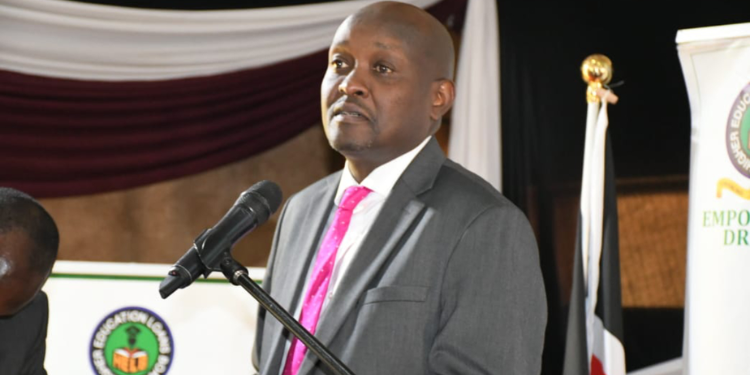
HELB CEO Geoffrey Monari speaking at a past function. PHOTO/HELB