Court Rules on Whether Kenyans Can Recall MPs
Share
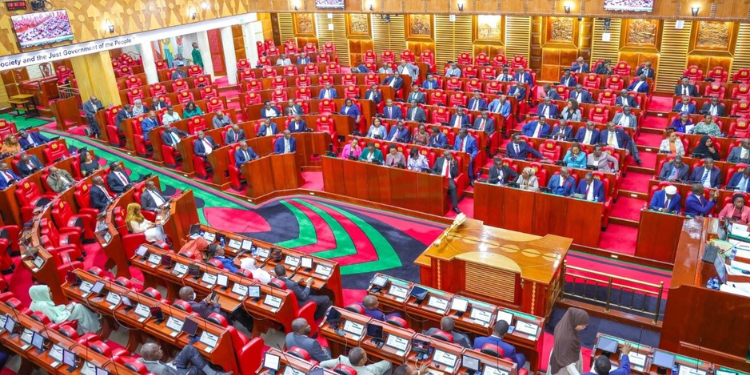
The High Court has rejected a constitutional petition challenging Parliament’s failure to enact the necessary laws providing for the recall of members of parliament by the electorate.
According to a judgment read by Justice Roselyne Aburili at Milimani Law Courts on Tuesday, July 7, 2026, the court rejected the petition as being brought too early since Parliament is already in the process of enacting legislation implementing the constitutional provisions on recall.
Justice Aburili concluded that the case was interfering with the constitutional duty of the legislative body to create laws.
Justice Aburili pointed out that the members of Parliament are currently considering the Elections (Amendment) (No. 2) Bill, 2024, meant to provide the statutory provisions for the recalling of members of parliament.
As such, it was agreed that Parliament should be allowed to exercise its legislative function before a determination could be made regarding the alleged violation of the constitution.
“This petition is premature and not ripe for determination and that the petitioners as well as the Court should let Parliament legislate and wait for the outcome,” Justice Roselyne Aburili said.
Constitutional Dispute For a Long Time Now
This dispute has been going on since the pronouncement of a High Court judgement made on July 14, 2017, following a petition that was brought by Katiba Institute against some provisions in the Elections Act and the County Governments Act.
It should be noted that in the judgement, it was pronounced that those two laws are unconstitutional because they provided discriminatory and overly restrictive provisions that lacked any legal means to recall all kinds of elected persons including MPs and MCAs.
After the judgement was passed, the County Governments Act was amended in 2020 so that it creates an effective mechanism for the recall of MCAs.
However, nothing has been done about the recall of MPs and thus there is a constitutional gap which has been there for many years now.
In view of that, a number of petitioners have asked the Independent Electoral and Boundaries Commission (IEBC) to give clarification on the process of the recall of Tharaka Nithi Senator Mwenda Gataya Mo Fire.
Also Read:Parliament Reviews New Plan to Track Every Police Firearm in Real Time
Response from IEBC and Legal Challenge
Following the response by the IEBC on September 9, 2024, that the recall of Members of Parliament cannot be facilitated since the commission was not constituted then and also due to the fact that the enabling law was not enacted in Parliament, as per the provisions of the Constitution,
After the constitution of the commission through the appointment of the new commissioners, the petitioners sent a second letter on July 23, 2025, requesting a review of the stand of the commission.
The commission did not change its position in a public statement by stating that the commission does not have the powers to conduct a recall without an enabling law.
Dissatisfied with the position taken by the IEBC, the petitioners, consisting of Newton Mugambi, Dennis Mwaki, Agnes Mwende and three others, took the matter to the High Court.
The IEBC, National Assembly, and the Office of the Attorney General were made the respondents in the case.
According to the petitioners, the non-implementation of the legislation meant that the rights of the people had been violated through the infringement of their right to recall as provided in the Constitution.
Also Read:More Cash for Counties: MPs Approve Ksh 13 Billion Funding Increase
Court Reaffirms Parliamentary Role in Making of Laws
As a result of the final decision, the High Court ruled that the constitutional right to recall under Article 104(1) is non-self executing and that the right will only come into force following the passage of an enabling legislation by the Parliament.
Additionally, Justice Aburili also stated that the IEBC could not put in place any substantive recall processes since the institution would have exercised the power that only the Parliament can exercise.
The court ruled that Parliament must be allowed to conduct itself without hindrance from the court concerning the ongoing deliberations on the Elections (Amendment) (No. 2) Bill, 2024.
Follow our WhatsApp channel for instant news updates

Court Rules Property Buyers Must Pay Balance After Receiving Title Deeds
PHOTO/DPP