
Report Reveals Why Most Kenyans Oppose Government Control of Matatu Fares
Share

A new TIFA survey report has revealed the reasons behind growing opposition to government regulation of ride-hailing fares.
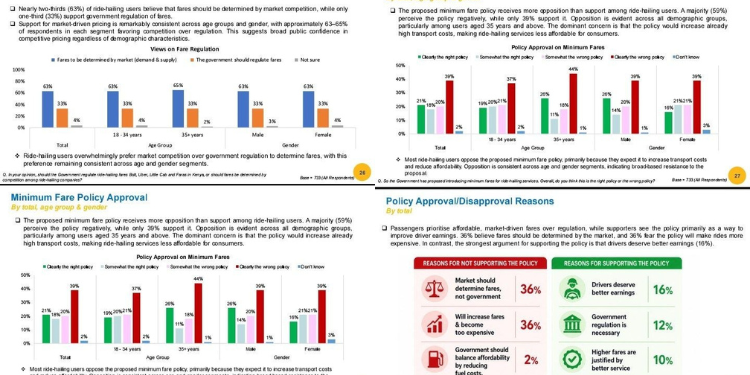
According to the survey, 36% of respondents who opposed the proposed minimum fare policy said fares should be determined by market forces rather than the government, while an equal 36% feared the policy would make rides more expensive.
However, another 2% said the government should instead focus on reducing fuel costs to keep transportation affordable.
The findings come amid proposals to introduce minimum fares for ride-hailing services such as Uber, Bolt, Little Cab and Faras in Kenya.
TIFA Says Majority of Users Want Market Forces to Determine Fares
TIFA stated that those opposed to the proposal mainly feared that minimum fares would increase the cost of using ride-hailing services.
It highlighted that 36% of opponents said the market should determine fares instead of the government, while another 36% said the policy would increase fares and make rides too expensive.
In addition, the opposition to government regulation is also reflected in users’ broader views on how ride-hailing fares should be set.
Overall, 63% of ride-hailing users said fares should be determined by market competition based on demand and supply, while only 33% supported government regulation.
Also Read: Why Most Kenyans Are Not Supporting Any Political Party
According to the survey report, the preference for market-driven pricing was consistent across age and gender groups.
Among users aged 18 to 34, 63% preferred market-based pricing, compared with 65% among those aged 35 and above. The same preference was recorded among both male and female respondents, at 63%.
Only 4% of respondents were unsure about whether fares should be determined by the market or regulated by the government.
Higher Driver Earnings Main Reason for Supporting Fare Regulation
Furthermore, the research stated that opposition to the proposed minimum fare policy was higher than support.
This is because 59% of ride-hailing users viewed the proposal negatively, while 39% considered it the right policy.
Opposition was recorded across different demographic groups, with users aged 35 and above showing particularly strong resistance.
About 44% of respondents in this age group viewed the proposal negatively, compared with 37% among those aged 18 to 34.
Also Read: Bolt Responds to Claims It Is Leaving the Kenyan Market
While most respondents opposed the proposal, the survey also identified the main reasons among those who supported government regulation.
16% of supporters said drivers deserve better earnings, making it the leading reason for backing the policy.
Another 12% said government regulation was necessary, while 10% said higher fares could be justified if they resulted in better services.
Follow our WhatsApp channel for instant news.
A screenshot showing the TIFA report on why kenyans oppose Government Fare Regulation . Photo/ File