
Why Some Gen Zs Are Calling Out Relatives During Family Meetings and Burials
Share

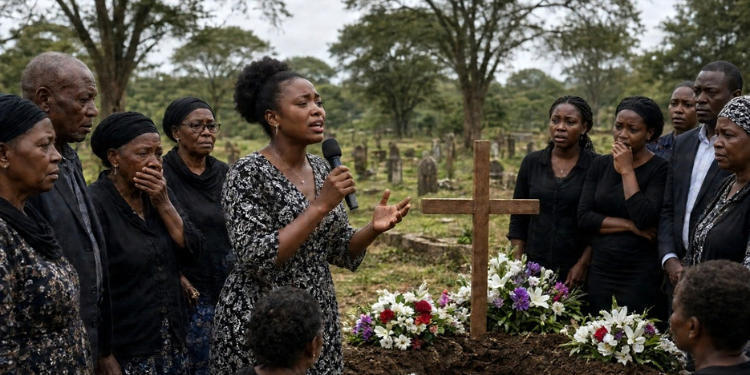
Family meetings and burials have long been viewed as spaces where relatives come together to mourn loved ones, maintain family ties, and, in some cases, address differences within the family.
However, the young people are increasingly using these gatherings to speak openly about grievances that may have remained unresolved for years.
The confrontations can involve disagreements over family relationships, perceived exclusion, unequal treatment, and other longstanding grievances.
Speaking to Hivileo, psychologist Isaac Maweu and Public Health Officer Clare Akoth offered different perspectives on why some young people are choosing to speak out about family conflicts during funerals and burials.
Why Family Grievances Surface During Burials
According to the psychologist, the emotional intensity surrounding the death of a loved one can influence how people respond during funerals and burials.
He noted that losing a parent or close relative can be emotionally overwhelming, meaning some people may express feelings they might have suppressed in other circumstances.
“Grief and bereavement are emotionally devastating.Chances are they wouldn’t have said those words if it had been in a different place. So, the fact that they lost their close person is already a significant issue,” Maweu said.
Maweu explained that the nature of relationships between relatives can also shape how people react when tensions arise.
He said strong emotional reactions may sometimes point to a deeper disconnect between family members, including issues that existed long before the funeral.
The psychologist said younger people’s willingness to openly address family grievances also points to changing attitudes toward family relationships and communication.
Maweu noted that some young people may choose to express their dissatisfaction rather than continue keeping their feelings private. However, he said family conflicts can sometimes be addressed privately through conversations or therapy.
“Sometimes, we acknowledge the conflicts, but we don’t shout them out in public,” he said.
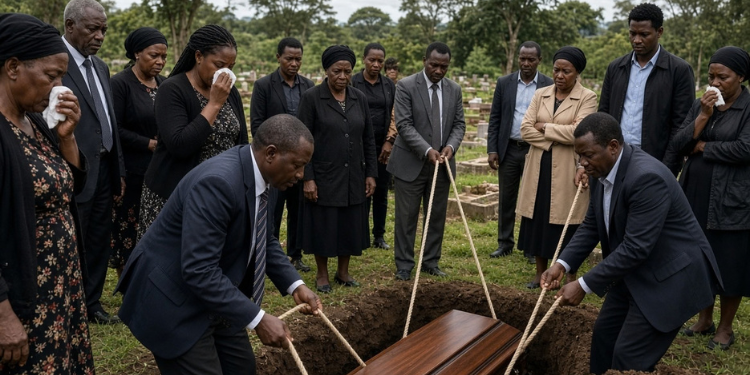
A photo showing Coffin being lowered into the grave . Photo/ Grok
Is Speaking Out a Form of Accountability?
On the other hand, Public Health Officer Clare Akoth argues that young people should not necessarily be expected to remain silent about harmful or toxic family dynamics simply to maintain appearances.
Akoth said the willingness of younger people to speak about difficult family experiences could signal a departure from a culture of silence around family problems.
She argued that young people should not have to endure harmful family dynamics simply because they are expected to preserve the family’s image.
“I think it’s a very good sign that young people have decided not to die in silence or pretend everything is fine, just to maintain appearances. Toxic family dynamics and exclusion have long been less common,”
However, the Public health officer distinguished between speaking out and choosing the appropriate time and platform to address a grievance.
Clare said serious family conflicts are better addressed before a death occurs rather than waiting until a funeral or burial, when emotions are already heightened.
“ I feel that timing and platform are important, because I believe the best ways to respond to and address these conflicts should occur even before death,” Clare said.
According to Akoth, bringing family disputes into the public domain during a burial or through social media can expose those involved to public scrutiny, judgment and further conflict.
Also Read: Linda Ashley Kebati Breaks Silence on Viral Funeral Outburst, Opens Up on Family’s Polygamy
She argued that while accountability remains important, using a funeral as the setting for confronting family members can complicate the grieving process and create additional disputes.
“ I mean, bringing these abuses to the public eye, whether at the funeral or on social media exposing the entire family, makes everyone vulnerable to public scrutiny, judgment, and online drama,”
The Risk of Damaging Family Relationships
Maweu similarly cautioned that public confrontations can have consequences for family relationships, even when they emerge from genuine pain.
He warned that words spoken during emotionally charged moments can have lasting effects even after the immediate conflict has ended.
“Words hurt. Words linger,” he said
He added that the aftermath can include emotional distance between relatives, with some family members choosing to withdraw from one another.
Maweu also stated that those who feel targeted can be emotionally affected by what is said.
Therefore, the psychologist recommended a family-centred approach that allows relatives to examine what led to the confrontation, how those involved felt afterwards and how the incident affected other family members.
“So, for me, from a professional standpoint, this family needs a family-centered approach just to see, okay, what made you react the way you did? How do you feel now that you’ve reacted? How do the people listening feel?” Maweu said.
Follow our WhatsApp channel for instant news updates.
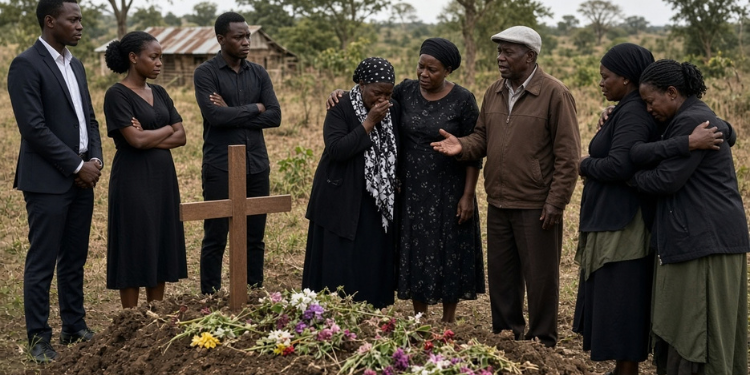
Photo showing family greaving during burial . Photo/ Grok