
High Court Makes Key Ruling on Removal of CJ Koome and Other Supreme Court Judges
Share
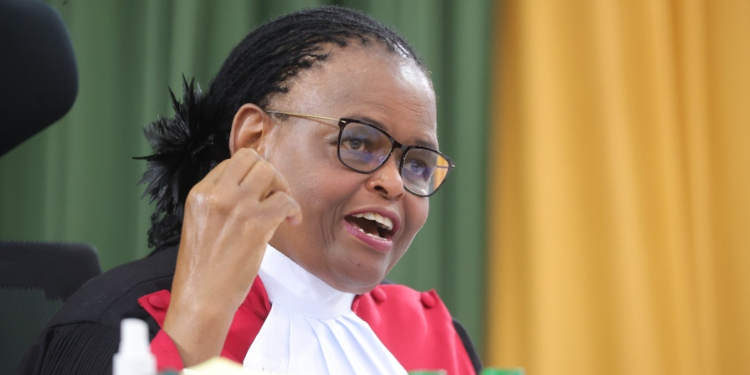
The High Court has quashed proceedings by the Judicial Service Commission (JSC) seeking the removal of Chief Justice Martha Koome, Deputy Chief Justice Philomena Mwilu and other Supreme Court judges, ruling that key steps in the process were unconstitutional.
A three-judge bench comprising Justices Charles Kariuki, Lawrence Mugambi and Bahati Mwamuye found that JSC had failed to demonstrate that it first screened the complaints to establish whether they met the constitutional threshold for removing a judge.
The ruling arose from consolidated petitions challenging how JSC handled complaints filed under Article 168 of the Constitution, which sets out the procedure for removing judges from office.
Why the Court Stopped the Removal Process
JSC was required to assess the allegations before asking the affected judges to respond, with the judges saying this preliminary stage was necessary to separate complaints that disclose grounds for removal from those that do not.
“JSC must undertake preliminary threshold review of the allegations made against a Judge before requiring a Judge to respond to a complaint,” the bench ruled.
Such screening, according to the judges, protects judicial officers from being subjected to frivolous or malicious complaints. No evidence was presented showing that this assessment had been carried out before notices were issued.
Also Read:JSC Fights Back After Court Ruling ‘Constrains’ Its Mandate on Judges
The bench also questioned the legality of a JSC meeting held on January 24, 2025, which authorised issuance of the notices. It found that the Commission had not demonstrated that the meeting was lawfully convened.
Another issue concerned complaints that challenged decisions made by Supreme Court judges. While JSC has a constitutional role in handling allegations against judges, it cannot assume the role of an appellate court and determine whether a judicial decision was legally or factually correct.
A decision may only be examined as evidence where it is relevant to an allegation of gross misconduct, incompetence or another constitutional ground for removal.
Court Rejects Joint Removal Petitions
The bench also addressed the manner in which removal petitions had been filed against Supreme Court judges.
Although the Constitution does not prevent removal proceedings from being brought against several or even all Supreme Court judges at the same time, individual judges must still be treated separately in removal petitions.
Also Read: High Court Stops SBM Bank from Auctioning Widow’s Home, Declares Mortgage Invalid
Participation in a collective decision by the Supreme Court does not, however, shield an individual judge from accountability where a proper constitutional ground for removal exists.
The judges therefore found that collective or omnibus petitions seeking the removal of Supreme Court judges as a group were incompatible with Article 168, which consistently refers to the removal of an individual judge.
What Happens to the JSC Petitions
As a result of those findings, notices and proceedings arising from JSC Petitions 72 of 2024, 35 of 2024 and 3 of 2025 were declared unconstitutional, null and void.
The High Court quashed the notices and related proceedings and prohibited JSC from taking further action on the defective complaints or petitions arising from the same facts.
In a related determination, the bench held that the Constitution does not require removal proceedings involving several Supreme Court judges to be staggered.
Such proceedings can therefore run at the same time, even where their temporary absence could affect the Court’s ability to sit.
The judges, however, noted that JSC may consider the need to preserve the Supreme Court’s functionality when managing such proceedings.
Also Read: Major Win for Contractors as High Court Declares Procurement Deposits Unconstitutional
The bench also found that temporary absence of JSC members does not automatically make the Commission improperly constituted. What matters is whether a meeting is lawfully convened and meets the required quorum.
On the January 24 meeting, however, the position was different. The Chief Justice and the Supreme Court representative on JSC had been excluded before being given an opportunity to consider whether their recusal was necessary.
The bench found that this violated Article 47 of the Constitution and declared the meeting, as well as decisions flowing from it against them, invalid and null and void.
Follow our WhatsApp channel for more updates

High Court quashes JSC proceedings seeking removal of CJ Martha Koome and six other Supreme Court judges. PHOTO/ FILE
![Ruto, Koome Announce New State Appointments [FULL DETAILS]](https://hivileo.co.ke/wp-content/uploads/2026/05/Ruto-Koome-Appointments-183x96.png)

![Ruto, Koome Announce New State Appointments [FULL DETAILS]](https://hivileo.co.ke/wp-content/uploads/2026/05/Ruto-Koome-Appointments-80x80.png)
