
Inside Big Kenyan Projects Whose Costs, Promises and Status Remain Unclear Years Later
Share

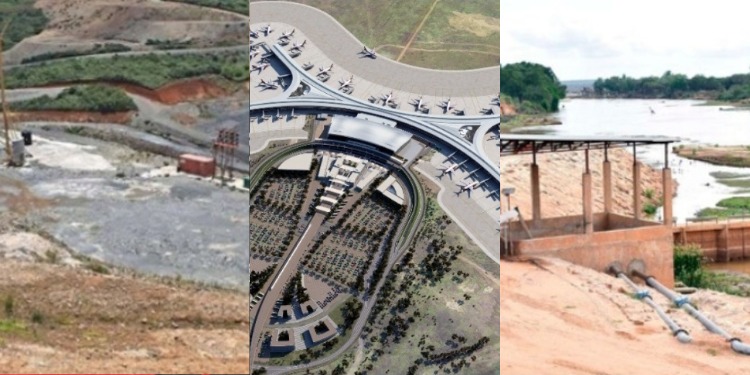
Over the years, successive governments have announced major Kenyan projects meant to transform transport, education, agriculture, water supply, and other sectors.
Some projects were completed but recorded major changes in their costs, while others were redesigned, stalled or cancelled.
Several have also remained under effort to revive them years after their original completion dates.
Here are some of the major Kenyan projects whose costs, promises, or current status changed or remained unclear years after they were announced.
SGR Cost Rose as Kenyan Projects Expanded
The Standard Gauge Railway (SGR) traces its roots to plans developed during the Mwai Kibaki administration, with Kenya entering into an agreement with China Road and Bridge Corporation (CRBC) in 2012 concerning the development of a new railway.
The project was later taken forward by the Uhuru Kenyatta administration after Kenya secured financing arrangements with China.
The Mombasa-Nairobi section was ultimately contracted at an Engineering, Procurement and Construction (EPC) cost of about Ksh 327 billion, according to a 2014 National Assembly report. Parliament said the figure represented the total EPC cost of the project.
However, businessman and politician Jimmy Wanjigi has given a different account of the project’s original concept and cost.
Wanjigi has said the SGR project was conceived in 2008 as a private project running from Mombasa to Malaba, with an estimated cost of about Ksh 55 billion. He said the plan involved China Road and Bridge Corporation and that the government was initially expected to provide land rather than finance the railway.
According to Wanjigi, the project changed after the 2013 General Election, with the railway becoming a government-funded project covering only the Mombasa-Nairobi route at a cost of more than Ksh300 billion.
“What I recall of the project cost was something like Sh55 billion, from Mombasa to Malaba. After 2013, it came to my attention that it was now not a project worth Sh300 billion just from Mombasa to Nairobi. And I said this does not make sense to me. This is where we differed on policy,” Wanjigi said in a 2021 interview.
Wanjigi said the change in the project’s financing and implementation was among the issues over which he disagreed with the Jubilee administration.
The official parliamentary record, however, puts the EPC cost of the Mombasa-Nairobi SGR at Ksh 327 billion. Parliament said the project was financed through a combination of a China Exim Bank loan and Kenya’s contribution through the Railway Development Fund.
The Mombasa-Nairobi SGR eventually became operational in June 2017, becoming one of the major infrastructure projects completed during the Jubilee administration.
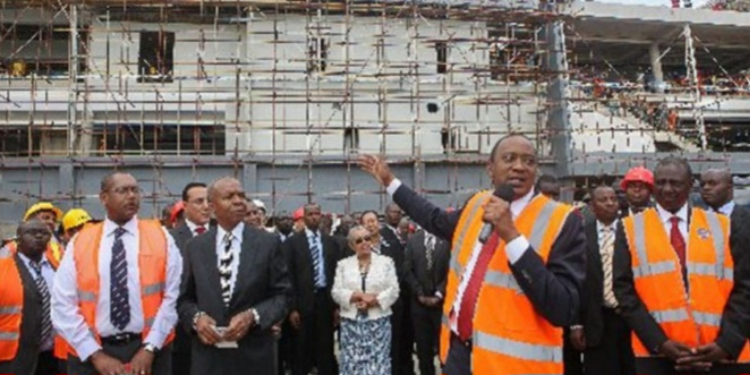
President Uhuru Kenyatta tours the construction site of JKIA’s expansion project. Photo/PSCU
Also Read: Ruto’s Affordable Housing Plan Faces Funding Challenges as 176 Projects Stall
Laptop Project Changed as Kenyan Projects Evolved
The Digital Literacy Programme began in 2013 with the government promising digital devices for primary school pupils.
However, the original approach changed after the government restructured the programme in 2015.
Government records show that the initiative initially involved several components requiring different state agencies to implement them.
The revised structure assigned the Ministry of Education policy responsibilities, KICD digital content development, TSC teacher training, Kenya Power and the Rural Electrification Authority electrification duties, while ICTA handled devices and coordination.
As a result, the laptop promise evolved into the broader Digital Literacy Programme rather than remaining solely a laptop distribution project.
Meanwhile, the Galana-Kulalu irrigation project began in 2014 under the Uhuru administration as a 10,000-acre model farm.
The project initially carried an estimated cost of about Ksh 14 billion, with the contract value reported at around Ksh 14.5 billion.
Authorities expected completion by March 2017.
A subsequent review reduced the project cost to Ksh 7.2 billion after the government removed components considered non-essential.
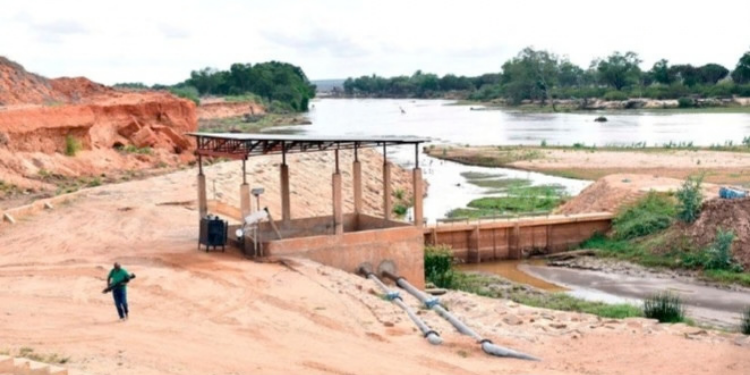
A photo of a section of the Galana-Kulalu pumping station. PHOTO/ NMG
Water Projects Stalled After Billions Were Paid
Several Kenyan projects in the water sector encountered delays despite substantial government spending.
The Arror and Kimwarer dam projects were contracted in 2017 under the Engineering, Procurement, Construction and Financing model.
The Arror project was valued at US$277.4 million, while Kimwarer was valued at US$224.4 million.
The contracts were scheduled to run from December 28, 2017, to December 27, 2022.
However, an audit found that by February 2022, the contractor was not on site and no work was in progress.
The Auditor-General reported that advance payments amounting to Ksh 7,778,151,688 had been made for the multipurpose projects.
“In the circumstances, value for money has not been realized on the advance payments on the multipurpose projects of Kshs.7,778,151,688,” the Auditor-General reported.
Another major project, Itare Dam in Nakuru County, also stalled after construction began in 2016.
The dam was designed to store 27 million cubic metres of water and supply 100,000 cubic metres of clean water daily to Nakuru and surrounding areas.
Also Read: Government Announces Ksh139 Billion Plan to Pay Contractors and Revive Road Projects
By October 2025, the Ministry of Water reported that construction had stalled at 32%.
The ministry said it was working with the contractor and the Italian government to fulfil outstanding conditions before negotiating a commercial contract.
“Resolving these issues is critical in paving the way for the negotiation of the commercial contract and the eventual resumption of works on this vital project,” the ministry said.
Ksh 56 Billion Greenfield Terminal Was Cancelled
The Greenfield Terminal at Jomo Kenyatta International Airport was launched in 2013 as another major Kenyan project under the Jubilee administration.
The proposed terminal was estimated to cost Ksh 56 billion and was expected to increase the airport’s capacity to up to 20 million passengers annually.
However, the government cancelled the project in March 2016 and shifted its focus towards constructing a second runway and improving existing airport facilities.
“We have stopped the Greenfield project because it has no value for money,” Tansport Cabinet Secretary James Macharia said at the time.
The government subsequently pursued plans for a second runway, although the proposed investment also faced delays and reviews over its economic value.
These changes have left the projects at different stages, with some operational, others restructured and several still subject to government efforts aimed at resolving outstanding issues.
Follow our WhatsApp channel for instant news updates
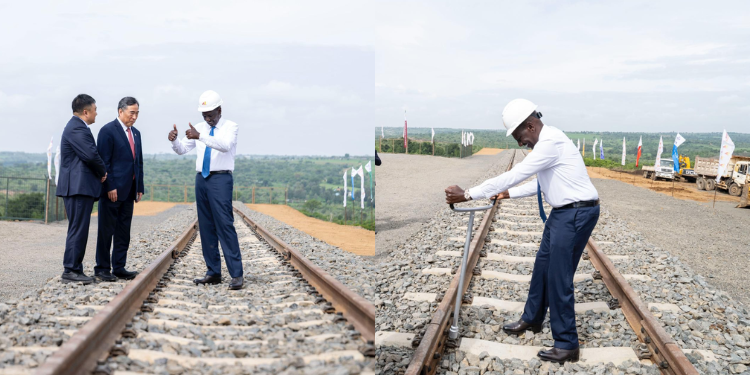
Collage photo of President William Ruto overseeing the launch of SGR extension to Malaba. PHOTO/PCS