
Breakthrough in Science Could Allow Humans to Live for Up to 1,000 Years
Share

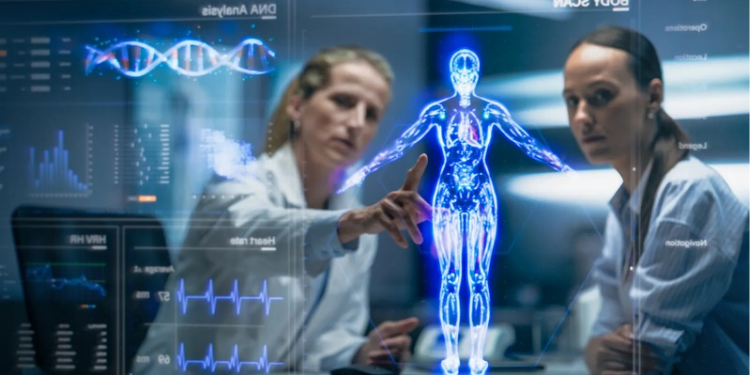
The notion of long-lived humans was considered the subject of the science-fiction industry for many decades.
But now, futurists, biomedical scientists, and specialists in modern technologies consider that a huge number of innovations related to artificial intelligence, genetic modification, robotics, and regeneration techniques will make it possible for humans to live as much as one thousand years.
The audacious assumption gains popularity within scientific circles dedicated to the studies of longevity and new medical technologies.
As conventional scientists work on slowing down the aging process and increasing people’s health while aging, some futurists assume that the era of “practical immortality” will soon come, when aging itself becomes reversible.
One of the most enthusiastic speakers about this future is the well-known futurist and computer scientist Ray Kurzweil.
He suggests that artificial intelligence will outperform human intelligence by 2029.
Then, by 2045, people might be able to integrate their brain with sophisticated brain-computer interfaces and cloud consciousness.
It can be achieved thanks to the combination of the presence of nanobots inserted inside the human body and a new approach to healthcare based on artificial intelligence.
It seems that these inventions will contribute to not only health preservation but also to maintaining consciousness.
According to Kurzweil, such developments could create “a collective human intelligence millions of times more powerful than what it is today.”
Exploring Radical Life Extension by Scientists
As advances in medical science have been made regarding the cure for diseases which were otherwise life-threatening, there has been an increase in discussion surrounding radical life extension.
Current research is focusing on the development of gene therapy, stem cell therapy, organ regeneration, nanotechnology, and cellular repair technology.
British futurologist Ian Pearson believes people under the age of 40 today may never die from natural causes if they survive long enough to benefit from future technological advances.
“One key method is renewing or replacing body parts,” Pearson said, pointing to developments in genetic engineering and 3D-printed organs designed to replace damaged tissues and failing organs.
Scientists believe these technologies could continuously repair the human body instead of allowing it to deteriorate naturally with age.
Reprogramming of human cells to maintain their youthfulness and resist disease for extended periods is also being researched.
According to Pearson, by the year 2050, the rich will be able to use robots, artificial organs, and even digital consciousness technology to live much longer lives.
He added that such innovations would likely become more affordable and accessible to the middle class over time.
“Initially, only the rich might afford these treatments, but by the 2060s, they could become available to most people,” he explained.
Questions of Ethics and Scientific Uncertainty
Though the field is optimistic about its discoveries, scientists admit that their research is speculative and raises many ethical, political, and economic questions.
Scientists have pointed out that scientific advancement will not be enough to address all human challenges.
At an academic conference held in 2024 discussing the impact of technology on society, academics argued that relying too much on technology may prove favorable only for those in power.
“There are also political, environmental and economic ramifications for holding these views,” researchers noted.
Also Read:Macron and Ruto Unveil Africa Forward 2026 Summit Declaration
“As an ideological position, it puts the interests of certain people—often those already wielding immense power and resources—over those of everyone else,” the researchers added.
Questions also remain about how humans would psychologically adapt to centuries-long lifespans.
Biomedical gerontologist Aubrey de Grey, who has long argued aging should be treated as a medical condition rather than an inevitability, dismissed concerns that people would lose motivation if they expected to live hundreds of years.
“Young people now, in their teens or 20s, aren’t driven by death or the fact that they are going to die 50 years from now,” de Grey said.
De Grey believes future medical advances could eventually “cure” aging by repairing the cellular damage responsible for disease and physical decline.
Also Read: Global Fund Moves to Increase Supply of Essential HIV Medicines
Digital Preservation of Human Consciousness
A different concept that is currently gaining popularity and drawing criticism is the prospect of digital preservation of human consciousness.
According to some futurists, the human mind could possibly be uploaded on computers or other non-biological entities in order for it to survive biological death.
Some researchers are currently investigating life forms like the so-called “immortal jellyfish” that has the capacity of reverting back to previous stages of life rather than undergoing death normally.
Follow our WhatsApp channel for instant news updates

KEMRI Headquarters in Nairobi. PHOTO/ KEMRI