
Google Introduces New Agentic Era With Gemini
Share
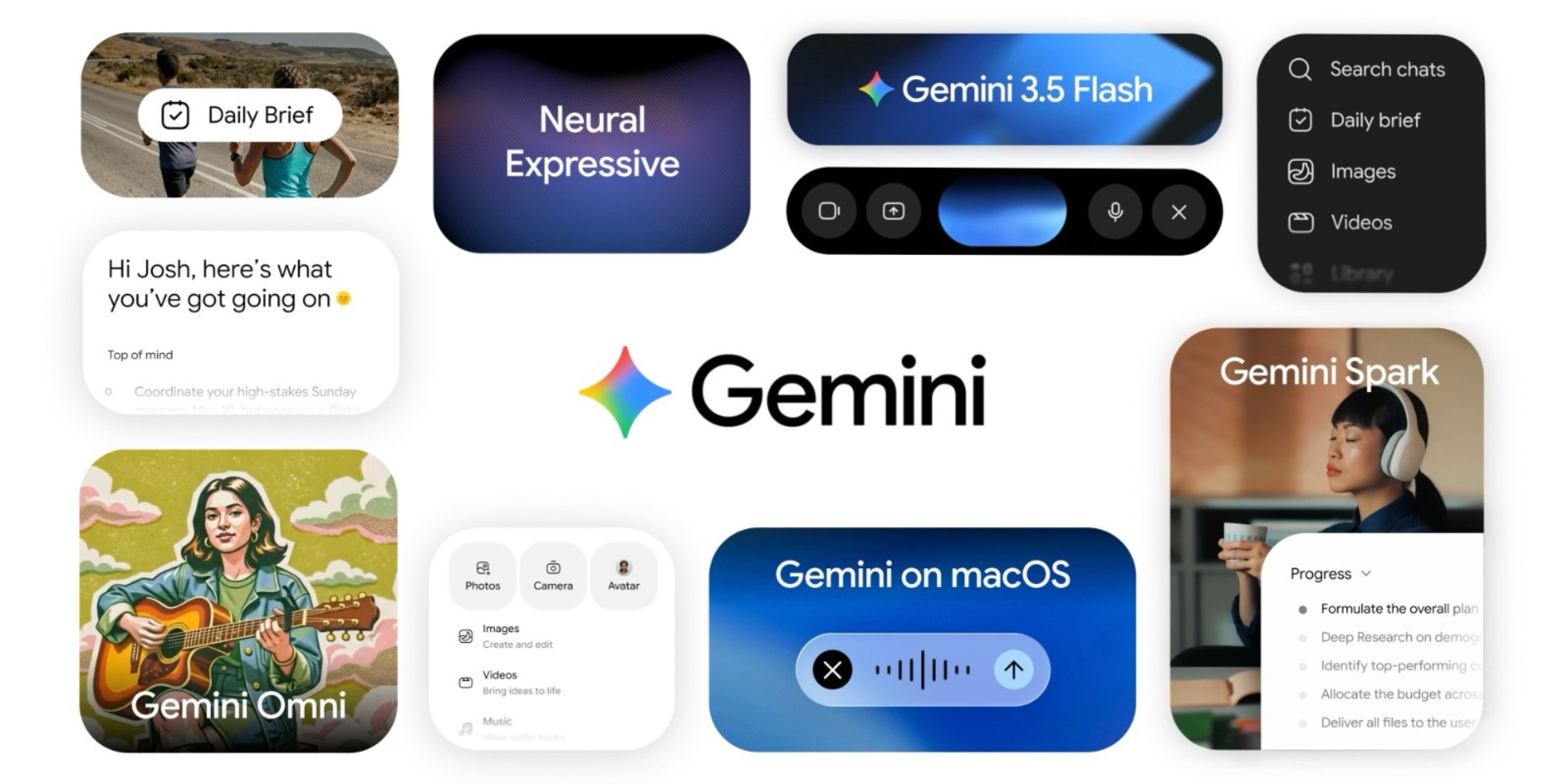
Last night May 20,2026,at Google I/O 2026, Google announced a massive wave of innovation across its technology stack, marking a decisive shift into the agentic era of artificial intelligence.
“Gemini 3.5 and Antigravity are unlocking a new world of agents and agentic capabilities. We’ve been bringing agents to developers and enterprises for a while. Now we are super focused on bringing the power of agents, safely and securely, to consumers so that it works for everyone,” Sundar Pichai, CEO of Google.
Pichai noted that this shift builds on a decade-long foundation, tracking back to when the company pivoted to be AI-first.
Google continues to see AI as the most profound way to advance its mission and improve lives at scale, which is why it has taken a differentiated, full-stack approach to AI innovation.
This strategy spans from custom silicon and secure infrastructure to world-class research, models, products, and platforms that touch billions of people, ultimately enabling the company to iterate and innovate faster in ways that are lighting up every part of the organisation.
What’s incredible is how people are using AI, whether it’s students prepping for final exams with the Gemini app, musicians and artists using generative AI models like Lyria and Veo as part of their creative flow, or developers coding and bringing their ideas to life.

AI Momentum Across the Full Stack
To understand the scale at which people are adopting AI, consider tokens, the fundamental units of data Google’s models process.
Two years ago, Google processed 9.7 trillion tokens a month. Last year, that grew to 480 trillion. Today, that number has jumped 7x to over 3.2 quadrillion per month. This scale highlights incredible demand across Google ecosystem:
● Over 8.5 million developers build experiences with Google models monthly
● Google model APIs process roughly 19 billion tokens per minute
● Over the past year, 375 Google Cloud customers each processed more than one trillion tokens
Also Read:This Is How Kenyans Are Using AI to Outlearn the World in 2026
Momentum with Google products
Today, Google has 13 products with over a billion users each, five of which cross the 3 billion user mark, driven heavily by Gemini integrations.
● Search: AI Overviews reaches 2.5 billion monthly active users. AI Mode has crossed 1 billion monthly active users within a single year, shifting Search into ongoing, conversational interactions that connect users with the vastness of the web
● Gemini App: Monthly active users have more than doubled in a year to surpass 900 million, while daily requests grew over seven times. Features like Personal Intelligence make responses deeply customized. Additionally, users have generated over 50 billion images to date using built-in Nano Banana models, proving to be a breakout success for latent creativity worldwide.

Natural, conversational AI in products
Google is bringing natural conversations with Gemini directly inside everyday products. Recently, Maps received its biggest upgrade in a decade with Ask Maps, allowing users to ask complex, long-form questions. Now, Google is expanding these intuitive conversational capabilities elsewhere.
Ask YouTube
Ask YouTube entirely reimagines video discovery, making deep video information digestible and easy to navigate.
The feature surfaces videos that best match users’ nuanced interests and jumps straight to the most relevant segment. Testing begins now, with a broad U.S. rollout scheduled for this summer.

Voice-powered Docs Live
Enabled by rapid advancements in Google audio models, Docs Live allows users to verbally “brain dump” whatever is on their mind to instantly generate documents.
Moving beyond precise typed prompts, users can create and edit files entirely with their voice. Docs Live rolls out for subscribers this summer, with voice features coming to Gmail and Keep soon after.

Google Infrastructure Supporting Innovation at Scale
Supporting this global scale requires massive infrastructure investments. Moving from $31 billion in annual capex in 2022, Google expects to spend approximately $190 billion this year, focused heavily on custom silicon.
A decade after debuting Google’s first TPU, the company has introduced its 8th generation of custom silicon: TPU 8t and 8i, utilizing a dual-chip approach optimized separately for training and inference:
● TPU 8t: Optimized for large-scale pretraining, delivering three times the raw computing power of its predecessor. Distributed across multiple data centers via JAX and Pathways, it scales across more than 1 million TPUs globally to form the largest training cluster in the world.
● TPU 8i: Tailored specifically for high-speed inference, dramatically reducing latency where it matters most.
Both chips deliver up to two times better performance-per-watt, ensuring sustainable scaling.
Gemini 3.5 Flash
Today, Google is introducing Gemini 3.5 Flash, the first in a series of models combining frontier intelligence with rapid execution.
● Performance & Speed: Outperforming 3.1 Pro across key benchmarks, 3.5 Flash shows an extraordinary jump in coding and real-world economically valuable tasks (GDPVal). It operates four times faster than other frontier models.
● Internal Scale: Paired with Google’s agent-first development platform, Antigravity, internal usage across the company’s developer tools has grown to more than three trillion tokens a day.
● Cost Efficiency: Flash delivers frontier capabilities at less than half the price of comparable models. If top enterprises shifted 80% of their workloads to 3.5 Flash, they would save over $1 billion annually.
Gemini 3.5 Flash is available today across Google’s products and APIs. Gemini 3.5 Pro is being used internally and arrives next month.


Antigravity 2.0
Google is also bringing 3.5 Flash to developers in Antigravity, transforming the ecosystem into a platform to manage cohorts of autonomous AI agents.
Antigravity 2.0, a standalone desktop application, serves as a central home for agent interaction. It utilizes a version of Flash optimized to run 12x faster than other frontier models, available for users to experience starting today.
Also Read:Africa Set for Huge Trade Win After Fresh US AGOA Move
Agents
Google is focused on delivering secure, consumer-ready AI agents that handle complex, multi-step workflows.
● Gemini Spark: Operating 24/7 on Google Cloud virtual machines, Spark is a personal AI agent built on Gemini 3.5 and the Antigravity harness. It executes long-horizon background tasks, connects with tools via MCP, and integrates with the Gemini app.
It expands to email, chat, and Chrome this summer, with real-time status tracking arriving via Android Halo later this year. U.S. Beta testing begins next week for Google AI Ultra subscribers.
● Agentic Search: Google is introducing Information Agents in Search to continuously gather insights and perform actions 24/7, rolling out this summer for AI Pro and Ultra subscribers.
Search will also feature Generative UI Capabilities to build free, customized layouts and interactive visuals for complex queries, alongside Persistent Custom Dashboards to track long-running projects.
More from Agentic Gemini Era
Google previewed additional agentic ecosystem toolsets and collaborative workflows:
● Daily Brief: A personalized, highly concise morning digest for the Gemini app that prioritizes, organizes, and suggests next actions directly from an individual’s inbox, calendar, and tasks.
● Google Flow: A collaborative workspace agent that plans, reasons, and assists with project brainstorming. It introduces “vibe coding” features, allowing users to rapidly generate creative assets like video effects and layered text.
● Google Pics: A canvas editing tool built on the Nano Banana model that isolates design elements as unique objects, letting users adjust specific details dynamically. Available now to trusted testers.
● Intelligent Eyewear: Gemini-powered audio glasses (offering spoken ear assistance, launching this fall) and display glasses designed for hands-free contextual information tracking.
● Gemini for Science: An experimental Research Lab architecture linking platforms like Antigravity to over 30 life science databases, leveraging Deep Think and Deep Research to accelerate discoveries.
Follow our WhatsApp channel for instant news updates

Google Unveils Major AI innovations during the opening session of Google 1/0 2026