

Govt Clarifies Whether Victims of Abductions Qualify for Compensation
Share
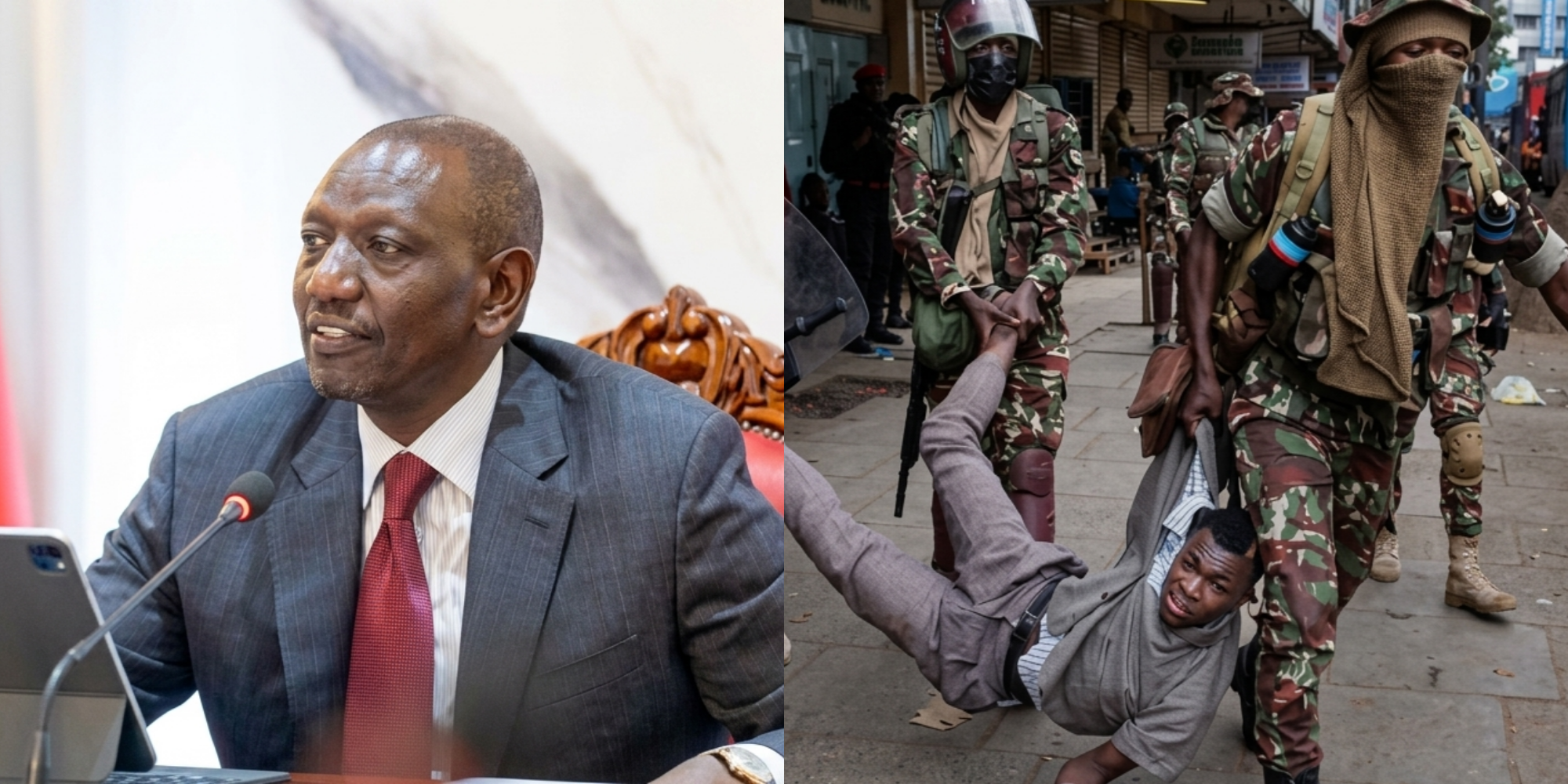
The Panel of Experts on Compensation of Victims of Human Rights Violations has clarified that victims of abductions and other human rights violations qualify for compensation under the government’s ongoing ex gratia reparations programme.
However, the Panel emphasized that the initiative does not amount to an admission of liability and does not interfere with ongoing criminal prosecutions.
The Panel issued the clarification through supplementary FAQs that outline how the Victim Compensation Programme will operate under a justice, reparations and accountability framework.
“This is an ex gratia (voluntary) act of acknowledgment, not a political tool. Compensation is not an admission of liability and does not prevent victims from pursuing other civil remedies,” the Panel of Experts on Compensation of Victims of Human Rights Violations said.
At the same time, the Panel stressed that the programme seeks to acknowledge harm suffered by victims of abductions and other violations while it preserves the independence of criminal investigations and court processes.
Also Read: Govt Issues Second Phase Update as Protest Victim Compensation Hits Ksh 674 Million
Abductions Compensation Clarified with no Immunity for Perpetrators
In addition, the Panel stressed that the compensation scheme does not shield any suspect or accused person from prosecution, even as it runs alongside ongoing accountability processes.
“All cases filed (e.g., Rex Masai) remain ongoing. Claims are assessed individually using a low evidentiary threshold (‘reasonable basis to believe’),” the panel stated.
Furthermore, the Panel explained that it will review each claim on its own merit and rely on available evidence and verification by relevant institutions.
The Panel further clarified that cases involving abductions fall under the broader category of human rights violations covered by the programme.
“Both civilians and security personnel who suffered harm while exercising or protecting constitutional rights are eligible,” the panel added.
In this regard, eligibility will depend on whether claimants meet the verification standards set out in the guidelines.
Ksh 2 Billion Allocated for Rollout
Meanwhile, the government has allocated Ksh 2 billion through the 2025/2026 supplementary budget to support the initial rollout of the compensation programme.
“Through Parliamentary appropriation in the supplementary appropriation of 2025/2026,” the panel said.
The Panel noted that Parliament approved the allocation and added that authorities may revise the figure depending on the volume of verified claims.
To access compensation, victims of abductions and other violations will present identification documents alongside supporting evidence such as police abstracts, medical reports and witness statements.
Importantly, the Panel confirmed that individuals already registered with KNCHR or IPOA will not need to submit fresh applications, as authorities will transfer their records automatically.
“No fresh application is needed – records will be transferred automatically. New claimants can apply via these agencies or at info@victimscompensation.go.ke, or by Tel +254 141441294, or visit the Panel’s Offices at KICC Ground Floor,” the panel directed.
Also Read: After the Bullets, the Cheques; or, Compensation Offered Where Justice Is Withheld
Support Services and Transparency
In addition, the programme provides free psychosocial support services, with counsellors available on-site for victims who need emotional assistance during the claims process.
The Panel also clarified that counselling remains optional and does not influence compensation decisions.
At the same time, it confirmed that payments will go directly into verified bank accounts to strengthen transparency.
“Only with consent, in line with the Data Protection Act, 2019. However, anonymized and redacted compensation details of beneficiaries of the program will be published in the Kenya Gazette for purposes of accountability,” it clarified.
Long-Term Reforms
Finally, beyond compensation for victims of abductions, the Panel recommended broader reforms that include strengthened police human rights training and full implementation of Article 37 on peaceful assembly and picketing.
It also proposed a permanent reparations system anchored in law, supported by a dedicated fund and an independent institution to manage future claims.
The Panel further noted that complex cases such as torture and enforced disappearances will undergo multi-agency verification before approval under the programme.
Follow our WhatsApp channel for instant news updates
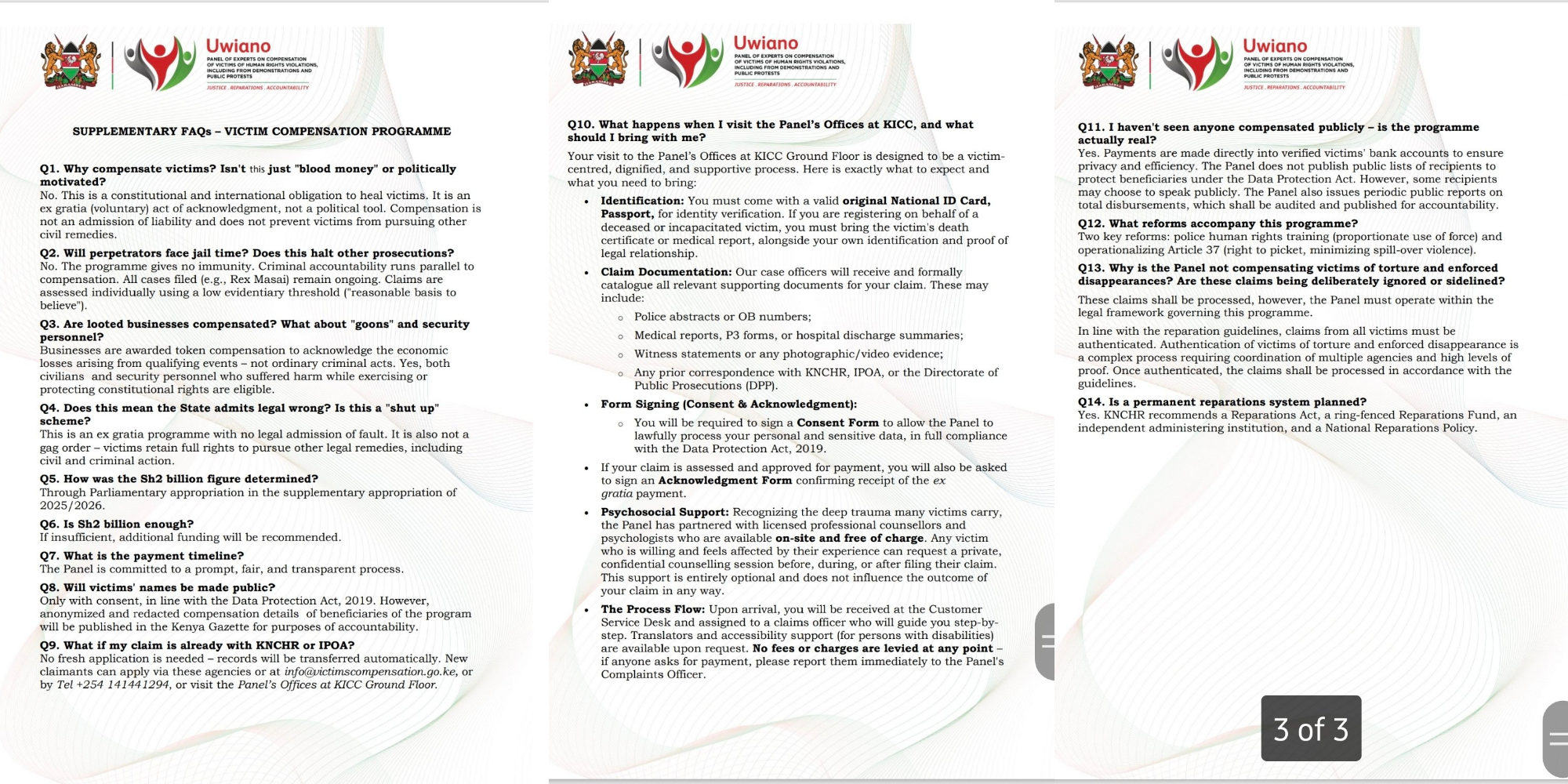
Government clarifies compensation for victims of abductions, saying payouts are ex gratia, with no immunity for perpetrators and cases proceeding in court. PHOTO/ VictimsCompensationKe X