

Inside NPS New Police Structure: Units, Commands and Formations Explained
Share


The National Police Service (NPS) has introduced a new organisational structure that reorganises police formations, units and investigative commands as part of its ongoing reforms aimed at improving efficiency, coordination, accountability and service delivery.
The changes follow the publication of the National Police Service Standing (Amendment) Orders, 2026, in the Kenya Gazette.
According to the National Police Service in a statement dated Friday, July 31, 2026, the new organisational structure is part of ongoing police reforms aimed at improving efficiency, coordination and accountability across the Service.
The reforms are also expected to create a clearer command structure and improve policing across the country.
“The changes form part of ongoing police reforms aimed at reorganising the Service to improve efficiency, coordination, accountability and operational effectiveness,” the statement said.
The new framework gives Inspector-General Douglas Kanja the authority to organise the Service into formations, units and components at the national level.
It also states that no police formation, unit or component can be created, changed or abolished without the approval of the Inspector-General.
The regulations further allow the Inspector-General to issue written directives to the Deputy Inspectors-General and the Director of Criminal Investigations (DCI) to merge, integrate or reorganise police formations and investigative commands whenever necessary.
They also require all operational guidelines and standard operating procedures to receive written approval before being implemented.
New Organisation Structure Within Office of the Inspector-General
Under the new structure, the Office of the Inspector-General will oversee four key formations, which include the National Police Service Headquarters, the National Police Airwing, the National Police Reserve and the National Police Referral Hospital.
Also Read: IG Given Power to Reorganise DCI and Police Commands
Police training institutions under the office will continue to operate in line with the National Police Service training policy.
Kenya Police Service Units
The Kenya Police Service will comprise several specialised units, including the General Service Unit (GSU), Kenya Police Traffic Unit, Presidential Escort Unit, Kenya Airports Police Unit, Kenya Railways and Ports Police Unit, K9 Police Unit, Nairobi Metropolitan Police, Diplomatic Police Unit, Tourist Police Unit, Kenya Police Marine Unit, Kenya Police Quick Response Unit and the Government Vehicle Check Unit.
The Deputy Inspector-General in charge of the Kenya Police Service will determine the command structure, deployment and distribution of these units across the country in consultation with the Inspector-General.
Administration Police Service
The Administration Police Service (APS) will include specialised formations such as the Security of Government Buildings and Very Important Persons Protection Unit, Rapid Deployment Police Unit, Border Police Unit, Anti-Stock Theft Police Unit, Critical Infrastructure Police Unit, Judiciary Police Unit, Energy Police Unit, Mining Police Unit, Water Police Unit and the National Government Administration Police Unit.
Also Read: Ruto Gives Fresh Update on Establishment of Nairobi Metropolitan Police
The Deputy Inspector-General responsible for the APS will oversee their command, deployment and operational procedures.
DCI Investigative Commands
The Directorate of Criminal Investigations has also been reorganised under the new standing orders. Its formations will include the DCI Headquarters, National Police Service Forensic Laboratory, Counter-Terrorism Bureau, National Anti-Narcotics Investigations Bureau, Crime Research and Intelligence Bureau, Kenya Airports Criminal Investigations and Kenya Railways and Ports Criminal Investigations.
In addition, the DCI will operate several investigative commands, including the Investigations Bureau, Operations Bureau, Homicide Investigations Bureau, INTERPOL National Central Bureau, Counter-Terrorism Bureau and the National Anti-Narcotics Investigations Bureau.
The Director of Criminal Investigations has also been given powers to create, review, merge or reorganise specialised investigative units, sub-units and desks to improve operational efficiency.
Follow our WhatsApp channel for instant news updates
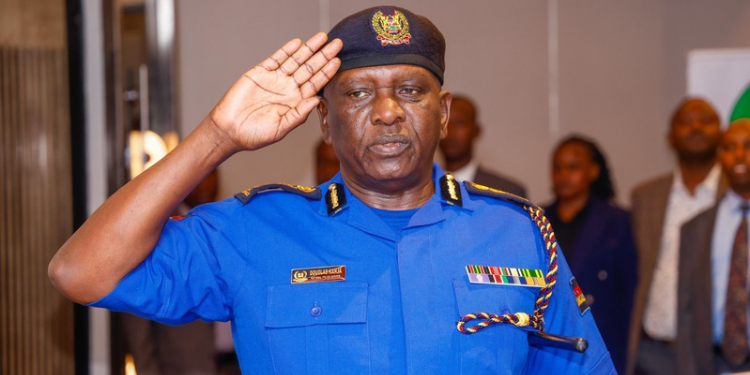
IG Kanja while attending a consultative meeting with IEBC at Westlands Nairobi on May 15,2026
PHOTO/NPS