

Manzil Towers Charges: Why ODPP is Wrong to Approve These Charges
Share

By Allan Mulama
The DPP approved charges yesterday. Manslaughter. Abuse of office under s.101(1) as read with s.102A of the Penal Code. Neglect of official duty under s.128.
Making false documents under s.357(a). Uttering false documents under s.353 as read with s.349. Commencing a project without an EIA licence contrary to s.58(2) as read with s.144 of EMCA.
Heavy charges. Emotional country. Grieving families. Political pressure. Media circus.
Here is the thing…
Emotion is not evidence. Outrage is not a charge sheet. And the Constitution does not bend because Twitter is angry.
I have been here before. Not Manzil Towers, obviously. A different matter entirely. A client was prosecuted on charges that had no evidential foundation.
The DPP refused to review the decision to charge. The investigating officers never interviewed key witnesses. The complainant was using the criminal justice system as a weapon to achieve objectives that had nothing to do with criminal justice.
We did not beg, nor did we negotiate in corridors. We filed a Constitutional Petition under Articles 22, 25(c), 27, 28, 29, 47, 50 and 157 of the Constitution.
The result? Justice P. Mulwa declared the investigations and prosecution unlawful, null and void ab initio. Issued certiorari to quash the charge sheet. Issued a prohibition stopping the DPP from proceeding. The entire prosecution collapsed. Not on a technicality. but on the Constitution.
Also Read: OPINION: Why Western Kenya Must Rally Behind Edwin Sifuna
What the Manzil Towers Accused Need to Understand
Article 157(11) is not decorative text; it requires the DPP to have regard to public interest, the interests of the administration of justice, and the need to prevent and avoid abuse of the legal process. Every single time. Not selectively. Not when it is convenient.
The National Prosecution Policy demands a Two-Stage Test before any charge is preferred.
First, the Evidential Test. Is the evidence admissible? Is it sufficient? Is there a realistic prospect of conviction?
Second, the Public Interest Test. Does the prosecution serve the public, or does it serve a political moment?
Clause (vii) of the Evidential Test is explicit. Where the case does not pass the Evidential Test, it must not go ahead, no matter how serious it may be.
Read that again.
No matter how serious.
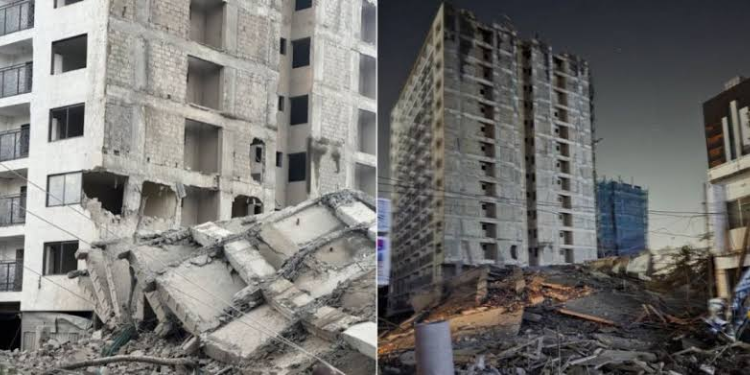
A building collapsed. People died. The nation is grieving. None of that changes the constitutional standard the DPP must meet before charging anyone.
Also Read: OPINION: Why Online Hashtags Mislead in Election Matters
The UPTC Advisory Role Question
Okowa Nashon raised something important. If the Urban Planning and Transport Committee plays an advisory role in construction approvals at City Hall, then the chain of criminal responsibility must follow the chain of decision-making authority, not the chain of advisory input.
You cannot criminalize advice. You can criminalize a decision. You can criminalize negligence in the exercise of a statutory duty. But you must identify the duty, identify who bears it, and demonstrate that the duty was breached in a manner that the Penal Code contemplates.
Charging 37 people suggests one of two things. Either the DPP has meticulously traced criminal liability to 37 distinct actors with 37 distinct evidential chains. Or the DPP cast a wide net to demonstrate seriousness and will sort it out later.
The Constitution does not permit sorting it out later. Article 50(2)(b) requires that every accused person be informed of the charge with sufficient detail to answer it. Ambiguity in the framing of a charge is not a minor defect.
It is a constitutional violation that renders the entire trial oppressive.
THE DEFENCE STRATEGY NOBODY IS TALKING ABOUT
Most defense lawyers will show up at the trial court, enter pleas, apply for bail, and prepare to cross-examine witnesses. Standard playbook. Predictable. Slow. Expensive. And it concedes the most important question: whether the prosecution should exist at all.
The constitutional petition route asks a prior question. Not whether the accused is guilty. Whether the DPP’s decision to charge was lawful. Whether the evidential test was met. Whether the public interest test was applied or bypassed. Whether Article 157(11) was honoured or ignored.
In the matter I handled, the High Court applied the test from DPP v Martin Maina & 4 Others [2017] eKLR, citing the Supreme Court of India in State of Maharashtra v Arun Gulab Gawali. The grounds for quashing a prosecution include where there is no legal evidence adduced, where the allegations taken at face value do not constitute the offence, or where continuance of proceedings amounts to abuse of process.
The court in Reuben Njuguna Gachukia v Inspector General [2019] eKLR went further. It took judicial notice that prosecutions instituted without reasonable or probable cause create the impression that courts are either ineffective or colluding with suspects. The court refused to countenance such prosecution.
And the foundational principle from Joram Mwenda Guantai v The Chief Magistrate [2007] 2 EA 170 remains good law. The High Court has inherent jurisdiction to grant a prohibition to a person charged before a subordinate court who considers himself a victim of oppression.
Also Read:OPINION: Mid-Term Elections Could Be the Missing Link in Kenya’s Democracy
THE REAL QUESTION FOR EACH OF THE 37
Every accused person must ask their Wakili one question before entering a plea
- Did the DPP meet the Two-Stage Test for my specific charge?
- Not the group.
- Not the building.
- Not the tragedy.
- My charge.
- My evidence.
- My file.
If the answer is no, then the trial court is the wrong forum. The Constitution is the right one.
What I Tell My Clients…
The law not vibes and inshallah. It is not about who shouts loudest on Twitter. It is not about which politician demands accountability on camera and forgets by Thursday. It is about whether the person charging you followed the law before charging you.
If they did not, I will make them answer for it. Not at the trial court. At the High Court. Under the Constitution. Where the DPP’s discretion meets judicial review.
Follow our WhatsApp channel for instant news updates

Allan Mulama argues the ODPP must meet the Two-Stage Test before charging 37 people over Manzil Towers. He outlines the constitutional defense route. Credits Allan X, FILES