

OPINION: Mid-Term Elections Could Be the Missing Link in Kenya’s Democracy
Share

By Luchetu Likaka
As discussions on constitutional reform gain momentum in Kenya, one issue demands urgent national attention: the introduction of mid-term elections for elected leaders.
Although the Constitution of 2010 strengthened democratic governance, experience over the past decade and a half reveals gaps in accountability that limit voters when leaders fail to deliver on their mandate.
Every election cycle, Kenyans queue for hours to elect leaders they trust with public resources, representation, and development.
However, once leaders take office, many disappear from their constituencies, abandon campaign promises, engage in political battles, or shift allegiances without consulting voters.
Consequently, citizens must wait five years before they can judge their leaders again.
This reality raises a critical question: why should voters endure poor leadership for an entire term when elections offer no meaningful mid-term accountability?
Elections and the Failure of the Recall Mechanism
Although the Constitution provides a recall mechanism for Members of Parliament, the system rarely works in practice.
Lawmakers introduced strict legal and procedural barriers that make recalls extremely difficult.
As a result, citizens treat the process as a constitutional theory rather than a practical democratic tool.
Meanwhile, frustration continues to grow across the country.
Voters regularly express dissatisfaction with absentee leaders, underperforming governors, and legislators who only return to the electorate during election seasons.
Despite this, citizens remain unable to act between elections.
Also Read: OPINION: The Fall of Sifuna, a Warrior Who Now Begs for Mercy
Mid-Term Elections and Stronger Elections Accountability
To close this gap, Kenya should consider introducing mid-term elections as a stronger accountability tool.
Under this system, voters would evaluate elected leaders halfway through their term and decide whether to retain or replace them based on performance.
This approach would reshape political incentives. Instead of focusing only on the next general elections, leaders would remain under constant pressure to deliver results.
They would prioritize development projects, improve legislative performance, respond to citizens’ needs, and manage public resources more responsibly because voters would assess them before the next election cycle.
The Challenge of Political Party Defections
At the same time, mid-term elections would help address the growing problem of political party defections.
In Kenya, politicians often abandon the parties under which voters elected them, usually for personal political advantage.
However, voters base their choices on party manifestos, ideologies, and campaign promises.
When leaders switch parties without consultation, they break the trust that underpins democratic representation. Mid-term elections would correct this imbalance
If a leader defects, voters would regain the power to approve or reject that decision through a fresh electoral mandate.
Critics argue that mid-term elections would increase the cost of governance.
However, poor governance already imposes far greater costs through corruption, stalled development projects, and mismanagement of public resources.
In contrast, stronger accountability improves efficiency.
When leaders know that voters will evaluate them midway through the electoral cycle, they focus more on performance and service delivery.
Consequently, citizens benefit from better governance and stronger institutions.
Some also argue that frequent elections may trigger instability.
However, accountability strengthens democracy rather than weakens it.
When citizens actively participate in evaluating leaders, they reinforce trust in the system and improve institutional legitimacy.
Also Read: OPINION: Dust Beneath the Crown — An Open Letter to Governor Susan Kihika
Reform and the Future of Governance in Kenya
Kenya’s democratic journey has always evolved through reform.
The country introduced devolution, strengthened independent institutions, and expanded constitutional rights to address governance challenges.
Now, it faces a new challenge: ensuring continuous accountability between elections.
A constitutional review offers an opportunity to redesign democratic representation for the modern era.
Mid-term elections, combined with stronger anti-defection rules and a more practical recall system, would deepen citizen participation and rebuild trust in leadership.
Restoring Sovereignty Through Continuous Accountability
Ultimately, sovereignty belongs to the people. Democracy should not start and end at the ballot box.
Instead, it should function as a continuous process where citizens evaluate leaders throughout their term and make decisions based on performance.
Therefore, mid-term elections would not weaken democracy. Instead, they would strengthen it by ensuring leaders remain accountable from one election cycle to the next.
Follow our WhatsApp channel for instant news updates
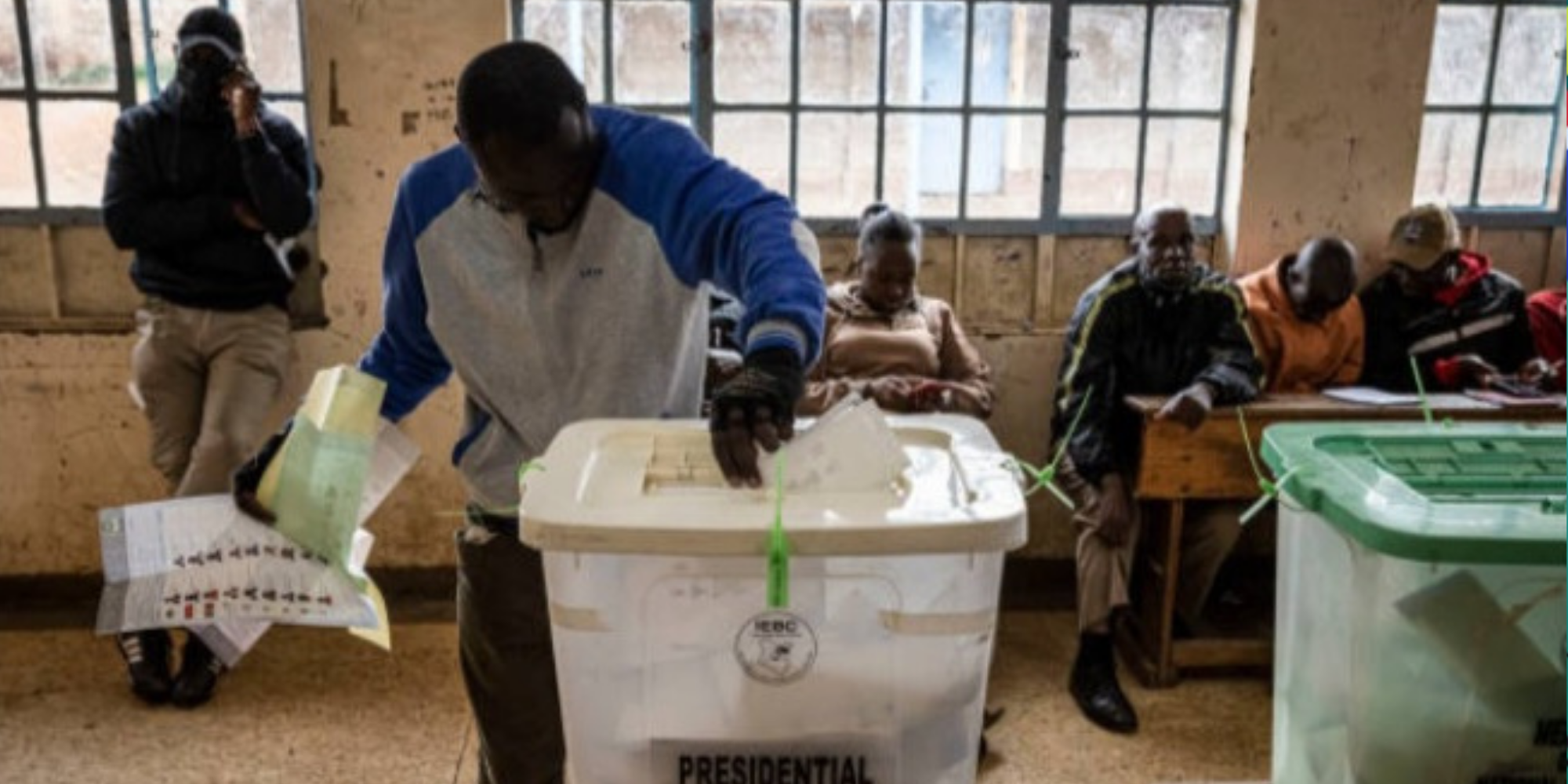
Kenyans voting during the 2022 General elections. PHOTO/IEBC