OPINION: Why Online Hashtags Mislead in Election Matters
Share
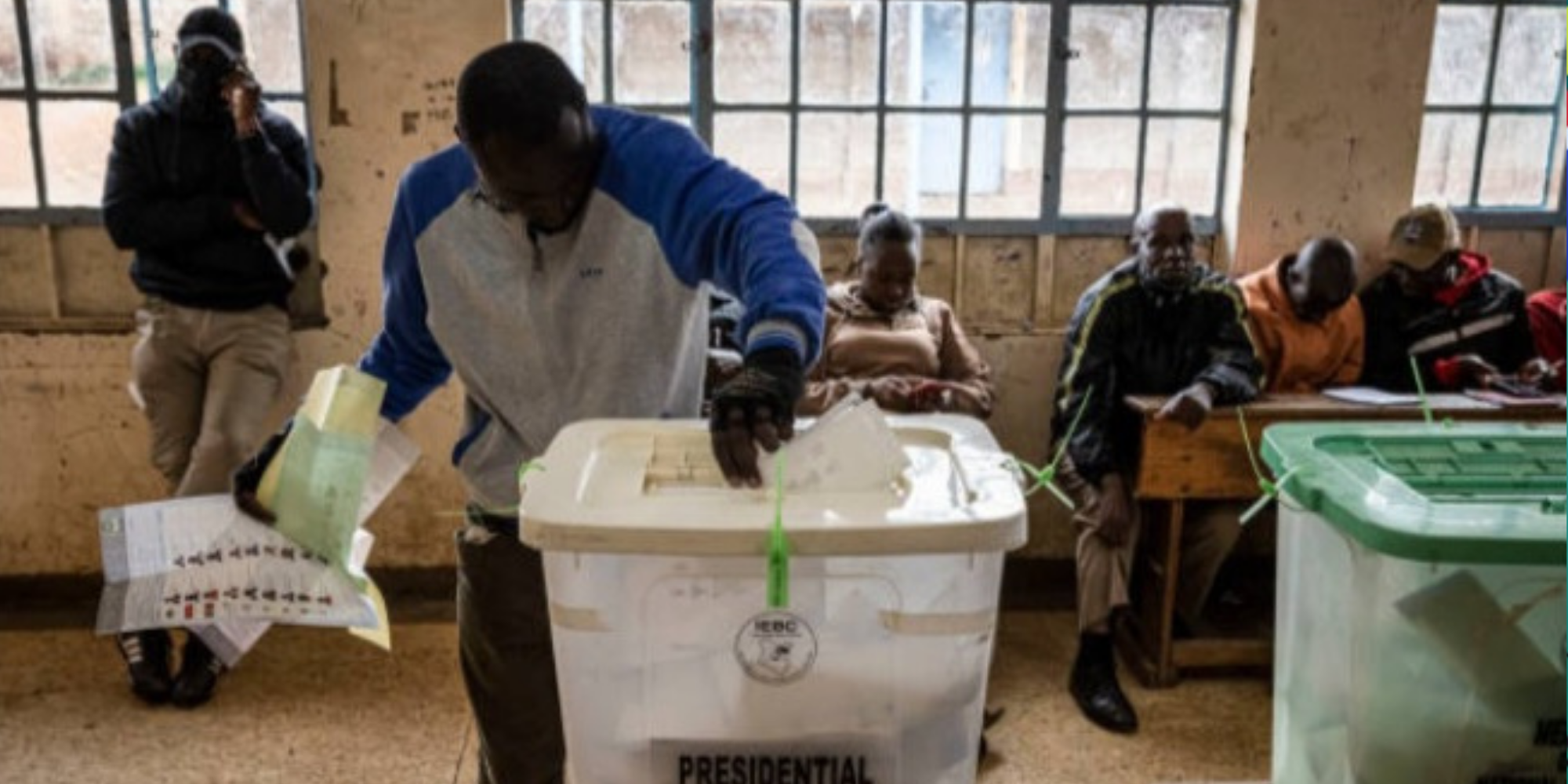
Political behavior research challenges the assumption that voters act solely as rational evaluators of policy performance.
Rather, electoral choices are often influenced by enduring social identities and group affiliations.
According to Lipset and Rokkan’s Cleavage Theory, political preferences are frequently structured around social divisions such as ethnicity, religion, class, and regional identity, leading citizens to vote as members of social groups rather than as isolated individuals (Lipset & Rokkan, 1967).
When voters step into the ballot booth, they often make decisions rooted in identity, belonging, community affiliations, collective historical experiences and perceptions of future risks and uncertainties.
Voting therefore, becomes less an assessment of incumbent performance and more an expression of social attachment, group loyalty, and the desire to safeguard perceived collective interests.
Also Read: OPINION: Mid-Term Elections Could Be the Missing Link in Kenya’s Democracy
Identity and Group Affiliation Shape Choices of Voters
Online hashtags now extend these same social divisions into digital political spaces.
Instead of presenting neutral information, hashtags signal group alignment and political identity.
Voters read them as markers that show who supports or opposes a certain side.
This shifts political conversations away from policy content and places them firmly in identity positioning.
Hashtags often simplify complex political debates into short emotional phrases that spread quickly across social platforms.
While this increases visibility, it reduces depth and pushes voters toward surface-level engagement.
Political messages gain popularity when they appeal strongly to group emotions rather than when they offer accurate or balanced information.
This dynamic encourages voters to react emotionally instead of evaluating issues critically.
Also Read: OPINION: The Fall of Sifuna, a Warrior Who Now Begs for Mercy
Reinforcement of Political Loyalty Through Online Tags
Online tags reinforce existing loyalties among voters, once a tag connects to a particular group, voters either accept or reject it based on identity rather than meaning.
This process strengthens the social cleavages described in political theory and makes political divisions more visible and emotionally charged during elections.
Ultimately, online tags do not create new voting behaviour, but they reinforce the identity-driven logic that already shapes electoral choices.
They amplify group loyalty, deepen social divisions, and make it harder for voters to judge leaders based on policy performance alone.
Follow our WhatsApp channel for instant news updates

The National Tallying Centre during the 2022 general elections where William Ruto was declared the President of Kenya. PHOTO/ IEBC