

How Shareholding Works in a Listed Company: Understanding Safaricom’s Divestiture
Share

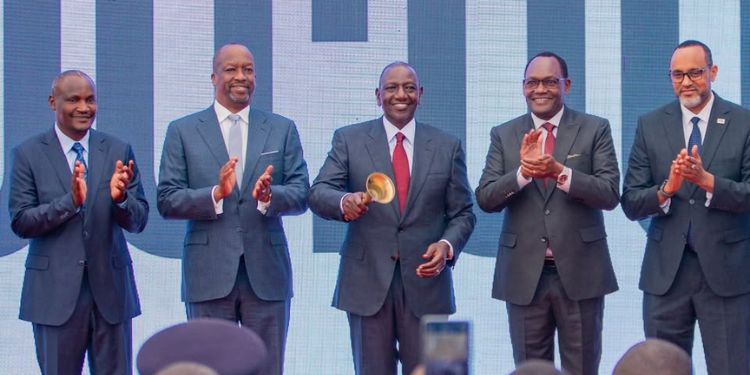
The Government of Kenya’s sale of its15% stake in Safaricom to Vodacom has sparked public debate about what it means to own shares in a listed company and whether a majority shareholder takes over the running of the business.
The transaction was completed on June 30, 2026, increasing Vodacom’s stake in Safaricom from 40% to 55%. This made Vodacom the company’s majority shareholder.
At the same time, the government’s shareholding fell from 35% to 20%, while public investors continued to own the remaining 25%.
The government received about Ksh 244 billion from the transaction. This included Ksh 204.3 billion from the sale of shares and a Ksh 40.2 billion dividend advance linked to its remaining 20% stake.
According to the National Treasury, the money will be used to fund development projects through the National Infrastructure Fund and the Sovereign Wealth Fund.
The transaction followed a Court of Appeal ruling on June 26, 2026, allowing the sale to proceed while legal challenges over the deal continue before the High Court.
The ownership changes have raised questions about how listed companies work, especially the difference between owning shares and managing a company.
Understanding the Government’s Minority Shareholding in Safaricom
Speaking in Kisumu on July 4, 2026, Treasury Cabinet Secretary John Mbadi defended the government’s decision to reduce its stake in Safaricom.
He said the government was already a minority shareholder before the sale.
“We have been minority shareholders in Safaricom even before this divestiture. A minority shareholder is one with less than 50%. We had only 35%. Now we have 20%. What’s the difference? We will continue to be minority shareholders.”
Mbadi also said that governments should create a conducive environment for businesses rather than own and run them. He added that Safaricom grew after private investors became part of the company.
His remarks have renewed public interest in how shareholding works in a listed company.
Also Read: Fact Check: What Kenyans Are Getting Wrong About the Safaricom-Vodacom Deal
What is a share?
A share is a unit of ownership in a company.
When a company is listed on a stock exchange such as the Nairobi Securities Exchange (NSE), its ownership is divided into shares that can be bought and sold by investors.
Anyone who owns shares owns a part of the company. Shareholders may also receive dividends if the company declares them.
What is a majority shareholder?
A majority shareholder is an investor who owns more than 50% of a company’s voting shares.
In Safaricom’s case, Vodacom now owns 55% of the company’s shares, making it the majority shareholder.
This gives Vodacom more voting power during shareholder meetings. It can have a greater influence on decisions such as electing directors and approving some major company decisions.
However, being a majority shareholder does not mean running the company’s daily operations.
What is a minority shareholder?
A minority shareholder owns less than 50% of a company’s voting shares.
Before the transaction, the Government of Kenya owned 35% of Safaricom. Although it was the second-largest shareholder, it was still a minority shareholder because it owned less than half of the company’s shares.
Also Read: How Safaricom Is Transforming from a Telecom Company into a Technology Leader
After selling part of its stake, the government’s ownership fell to 20%. As Mbadi explained, the government remains a minority shareholder because it still owns less than 50% of the company.
Other minority shareholders include pension funds, investment firms, and thousands of individual investors who own Safaricom shares through the Nairobi Securities Exchange.
How do voting rights work?
In most listed companies, each ordinary share carries one vote.
This means a shareholder with 55% of the shares generally controls 55% of the voting rights at shareholder meetings, while a shareholder with 20% controls 20% of the votes.
Shareholders use these votes to elect directors, appoint auditors, and approve other matters presented during Annual General Meetings (AGMs).
Does the majority shareholder run the company?
No.
Shareholders elect the board of directors, which oversees the company’s strategy and governance.
The board then appoints the Chief Executive Officer (CEO) and senior management, who run the company’s day-to-day operations.
This means that although Vodacom is now Safaricom’s majority shareholder, the company continues to be managed by its board and executive team while operating under Kenya’s laws and regulations.
Follow our WhatsApp channel for instant news updates.

Safaricom PLC Group CEO Peter Ndegwa speaking during the launch of the Citizens of the Future Programme on October 30, 2025. PHOTO/Safaricom