

7 Eritrean Players Go Missing After AFCON Match Abroad
Share

Seven players from the Eritrea national football team who helped secure a historic victory in Eswatini on March 31, 2026, have failed to return home, according to a source close to the team who spoke to the BBC.
While several teammates flew back home from neighboring South Africa, the seven players are believed to have absconded, continuing a pattern seen among Eritrean athletes competing abroad.
There have been multiple incidents in recent years in which Eritrean athletes have chosen not to return home after international competitions.
Victory Overshadowed by Disappearance
The disappearance comes just days after Eritrea celebrated a major football milestone. The team defeated Eswatini national football team 2-1 in the second leg, securing a 4-1 aggregate win.
The result marked Eritrea’s return to the qualifying group stages of the Africa Cup of Nations for the first time in 19 years, a moment many fans hoped would spark a revival of the country’s football fortunes.
However, the team’s success has now been overshadowed by uncertainty surrounding the missing players.
Only a Handful of Home-Based Players Returned
Sources in Asmara told BBC Tigrinya that only 10 of the 24-man squad were based in Eritrea, and just three of those have returned home.
Among those who made it back was team captain Ablelom Teklezghi.
Meanwhile, the whereabouts of the missing players remain unclear, although reports suggest some have been seen in South Africa.
Those believed to have absconded include goalkeeper Kubrom Solomon and veteran winger Medhanie Redie.
Muted Reception at Home
State-owned media in Eritrea have remained unusually quiet about the team’s return-an uncommon move given that such victories are typically celebrated with large public receptions.
Sources say preparations had initially been made for a grand welcome ceremony, but these plans were cancelled after news of the missing players emerged.
A spokesperson from Eritrea’s Sport and Culture Commission posted images on social media showing some returning players and officials being received by Eritrean diplomats and community members in Cairo, where they stopped en route home.
However, only those who eventually continued to Eritrea were seen in the photographs.
Also Read: CBK Publishes List of Banks Offering Cheap Loans
A Familiar Pattern of Athletes Disappearing
For many Eritreans, the latest incident echoes similar cases stretching back over two decades.
The national football system has repeatedly been affected by players disappearing before or after overseas competitions:
In 2019, seven players from the Eritrean under-20 side went missing after a tournament in Uganda.
In 2015, 10 senior players refused to return home after a FIFA World Cup qualification match in Botswana.
In 2013, 15 players and the team doctor were granted asylum in Uganda after absconding.
In 2009, nearly the entire senior squad failed to return home after traveling to Kenya, leaving only the coach and an official behind.
Also Read: CAF Vows to Prevent Repeat of AFCON 2025 Final Incidents with New Rules
Rights Concerns and Motivations to Leave
Human rights groups have long described the government in Asmara as highly repressive, allegations that authorities strongly deny.
Despite its relatively small population, hundreds of thousands of Eritreans have sought asylum abroad over the years, often citing restrictions on freedoms and mandatory national service as key reasons for leaving.
One Eritrean source explained that exposure to life outside the country plays a major role in such decisions.
“This is the first time that some were leaving the country and tasting outside,” the source said.
“The temptation was very strong, especially in South Africa.”
Follow our WhatsApp channel for instant news updates
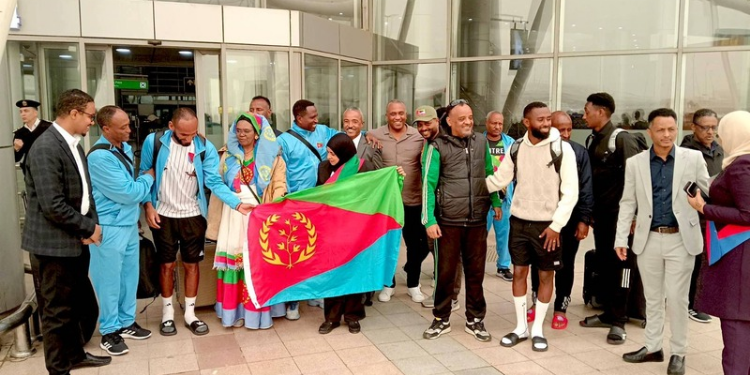
Some of the Eritrean players who did not disappear honoured after their victorious win in Eswatini
PHOTO/Ministry of Culture/Eritrea.