Kenya Met Reveals July Weather Forecast as Coldest Month Brings Rain, Strong Winds
Share

The Kenya Meteorological Department (Kenya Met) has provided the July 2026 weather forecast, offering insight into the conditions that will prevail in the country at the height of the cold season.
According to the forecast released by the weather agency, some parts of Kenya are set to have dry and sunny weather, while some other regions will see some amount of rainfall in the month of July.
The month of July is usually the coldest month of the year in Kenya, and according to the forecast, many regions of the country are likely to experience cold morning temperatures and cloudiness this time of the year.
Nonetheless, notwithstanding the cold season, most regions in the country are predicted to have warmer than usual temperatures.
As per the weather forecast for July 2026, it appears that the Coastal region is going to witness near-average to above-average rainfall in the month of July.
Expected Rainfall Pattern for Various Regions
Below normal rainfall is expected in the Lake Victoria basin region, the Highlands west of Rift Valley, the Central and South Rift Valley, and northwestern Kenya.
Although some rainfall is expected in these areas, the amounts are likely to remain below the long-term July average.
The Highlands East of the Rift Valley, including Nairobi, together with parts of the South-eastern Lowlands, are expected to experience cool and cloudy conditions.
Kenya Met says occasional morning drizzle, light rains, and a few afternoon showers may occur in these areas throughout the month.
Meanwhile, northeastern Kenya, the southeastern Lowlands, and most parts of northwestern Kenya are expected to remain mostly sunny and dry.
Dry conditions are likely to dominate these regions as July progresses.
Also Read:Kenya Met Lists Regions Expected to Receive Rainfall This Week
Temperature Forecast and Cold Season Weather
According to the temperature forecast for July, there is a higher chance that most regions in Kenya will have warm weather in comparison to other years.
However, July will still be the coldest month, with most highland areas having cold mornings, cloudy skies, and even fog.
The presence of both cold weather and clouds can make the conditions very unpleasant, especially in the morning and nighttime.
People living in high-altitude regions need to protect themselves from the cold weather.
Strong Wind Expected in Several Regions
Strong winds have also been forecast by the Kenya Met Department in several parts of the country, including the Coast, southern region, northern part and western part of Kenya.
The strong winds could affect maritime transport, road transport and other outdoor activities.
Such conditions can also cause damage to some buildings, especially those on rooftops and power cables in regions where there are strong winds.
Also Read:Kenya Met Issues Advisory Weather Forecast for Farmers
Agriculture, Travel, and Resident Adverts
Farmers in western Kenya and Rift Valley have been asked to maintain good agricultural practices because of the persisting rains.
The below average forecast rainfall may pose a problem to the crops which have not matured yet.
Frost is expected to be a threat to crops in some highlands.
To transport users, the Kenya Met has warned of poor visibility due to the fog.
Strong winds may also cause travel disruptions and affect infrastructure.
Kenya Met officials are also urging residents to take care during the cold season.
Low temperatures may contribute to increased cases of flu, asthma, pneumonia and the common cold.
People are advised to dress warmly and avoid using charcoal jikos in poorly ventilated rooms because of the risk of carbon monoxide poisoning.
Disaster risk management teams have reminded the public that lightning strikes remain possible in parts of western Kenya.
During thunderstorms, residents should avoid standing under trees or staying close to metallic structures to reduce the risk of lightning-related incidents.
Follow our WhatsApp channel for instant news updates
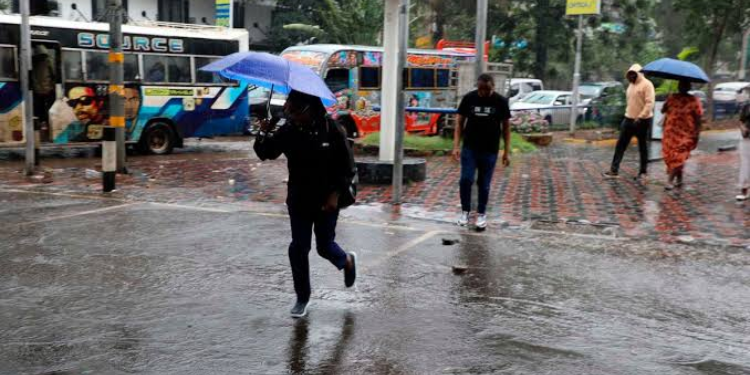
Nairobi residents shield themselves from the rain in the city centre on February 22, 2026. PHOTO/NMG