The Spectacle of Modern Sport: How FIFA Turned the 2026 World Cup into a Different Show
Share
By Journalist Owen Konzolo
“Seriously? Referee kuwa serious.” The collective groan that rippled through the small estate pub in Donholm was less about football and more about a shared sense of betrayal. I was sitting among roughly two hundred locals, watching the France vs. Spain semi-final. At that precise moment, Spanish forward Lamine Yamal collapsed onto the turf, clutching his shin in theatrical agony.
As Mikel Oyarzabal prepared to take the resulting penalty, quiet prayers were offered around the room. An almost instinctive turn toward the divine in moments of collective anxiety. When the ball hit the net, another collective howl echoed through the space, quickly met by the broadcast panning to Oyarzabal, who offered a practiced smile directly into the camera lens.
I do not count myself among the most fanatic sports enthusiasts, but the choreography of the moment was impossible to ignore. The first twenty minutes of the match felt less like elite athletics and more like an episode of Selling Sunset, a sequence of deliberate falls, desperate pleas to the referee, and players attempting to evade blame or shield themselves from another penalty. Then came the “hydration break,” a commercial pause neatly packaged under the guise of athlete welfare.
“Why are there hydration breaks all of a sudden? They’re turning this into American football,” remarked George Ambasa, a lifelong Football supporter sitting nearby. His comparison was not complimentary.
American sports culture has long embraced the spectacle, where the Super Bowl is defined as much by its commercial ad spots and halftime shows as by the game itself. While association football has never been entirely divorced from glamour, the cultural fascination with WAGs and Beckham-era celebrity culture attests to that. The showmanship historically remained secondary to the sport itself.
What we are witnessing now is an intentional pivot by FIFA to reconstruct elite players into distinct narrative archetypes:
The Social Media Heartthrob: Cristiano Ronaldo.
The Fan-Fiction Pairing: Erling Haaland and Jude Bellingham.
The Polarising Icon: Lionel Messi.
In this model, performance on the pitch is almost tertiary; the primary objective is the accumulation of fandom and the monetization opportunities that follow.
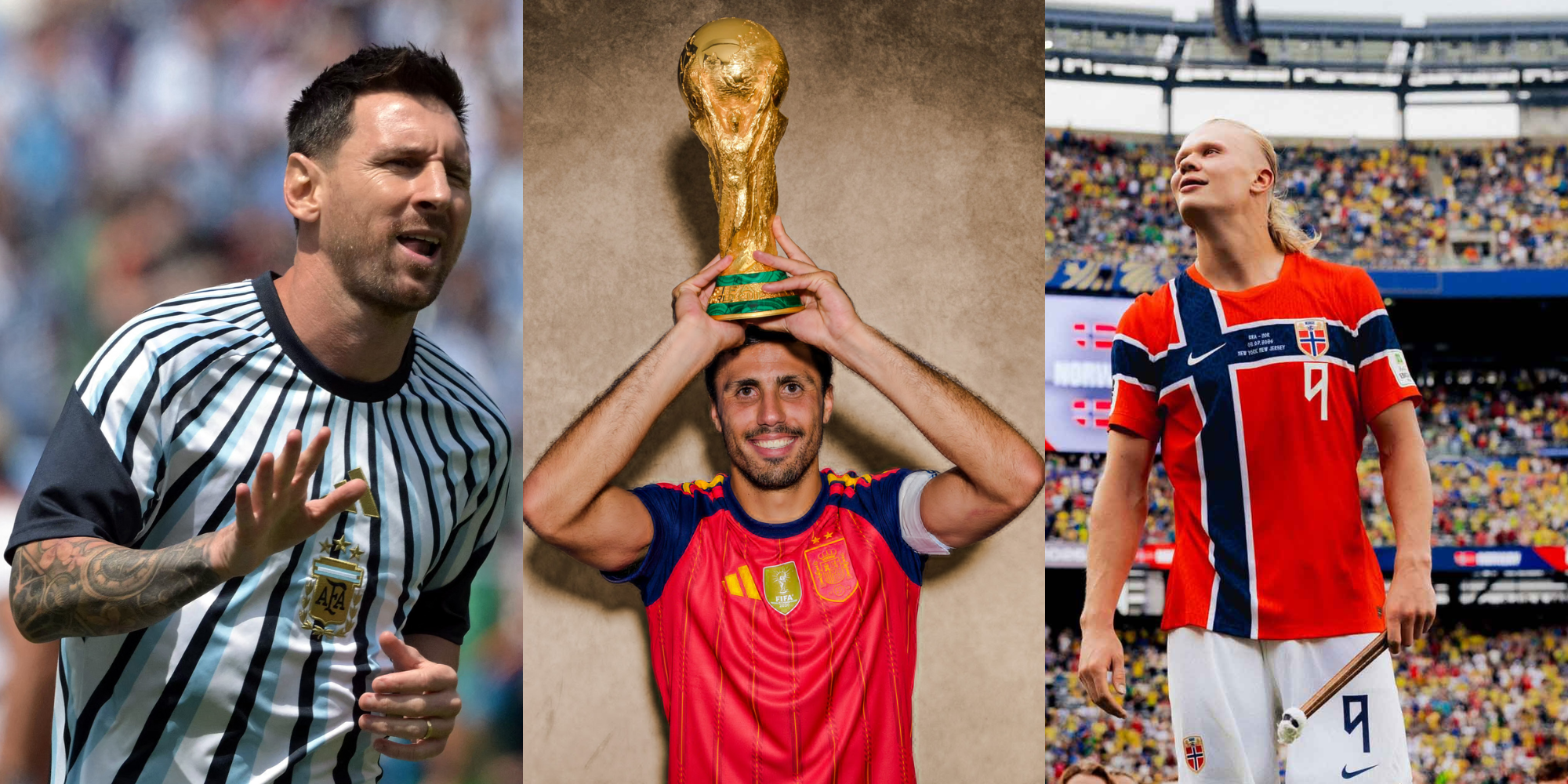
From left Lionel Messi, Rodri and Erling Haaland. PHOTO/ FIFA.
The Institutional Inertia of FIFA
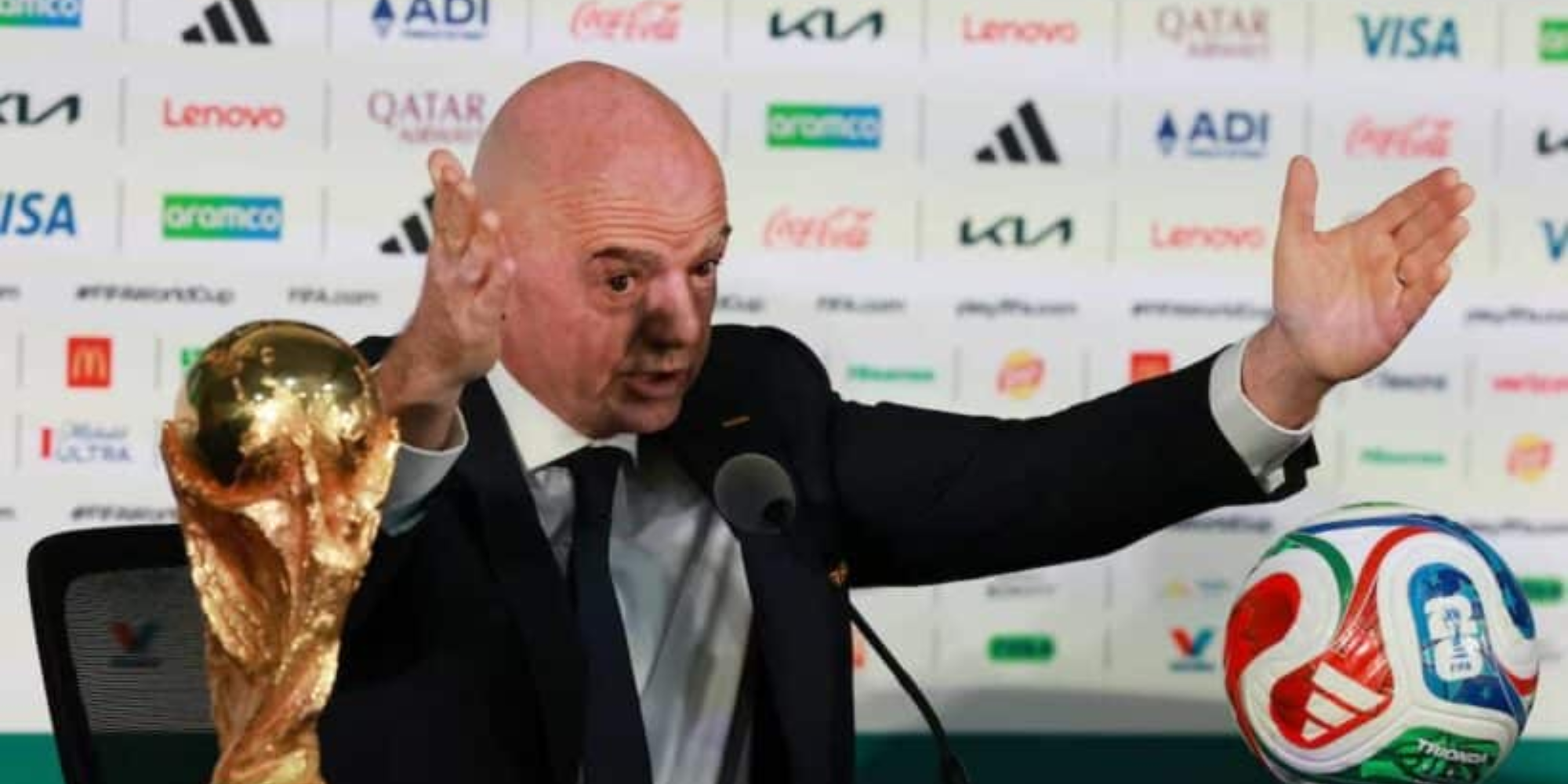
FIFA operates with the quiet impunity of an institution that has simply been grandfathered into global relevance.
As a self-regulatory international governing body, its governance challenges, accusations of favoritism, and structural corruption are widely acknowledged, yet rarely met with meaningful accountability.
The recent tournament provided a masterclass in this institutional contradiction:
- Political interventions, such as reports of Donald Trump lobbying to overturn a red card for a U.S. player.
- Diplomatic double standards, where key Iranian team staff faced entry restrictions despite players receiving visas.
- Officiating anomalies, including reversed calls and withheld penalties that systematically favored select high-profile teams.
Also Read: 2026 FIFA World Cup Prize Money: Champions, Runners-Up and Every Team’s Earnings
Sport is often romanticized as a meritocratic equalizer. a rare domain where outcome is dictated by performance.
Yet, modern football increasingly elevates individuals like Messi and Ronaldo to a status where institutional rules bend around them.
When Ronaldo received a red card and a three-match suspension for a violent conduct infraction against Ireland’s Dara O’Shea, the rulebook dictated his absence from initial World Cup fixtures.
Instead, FIFA suspended the ban after a single match, citing his historic record. That his presence directly correlates with global broadcast revenue was, predictably, treated as mere coincidence.
This commercialization reached its peak with the introduction of an official halftime concert. A fifteen-minute spectacle featuring the likes of Justin Bieber, Madonna, Shakira, and BTS. The irony was palpable, considering FIFA had previously cited “player safety and the risks of prolonged inactivity” as the sole reason for rejecting extended halftime breaks in prior tournaments.
Off the pitch, the governance theatre continued. FIFA established a previously nonexistent “World Peace Prize” and promptly awarded it to Donald Trump in December 2025, coincidentally, the sitting president of one of the host nations.
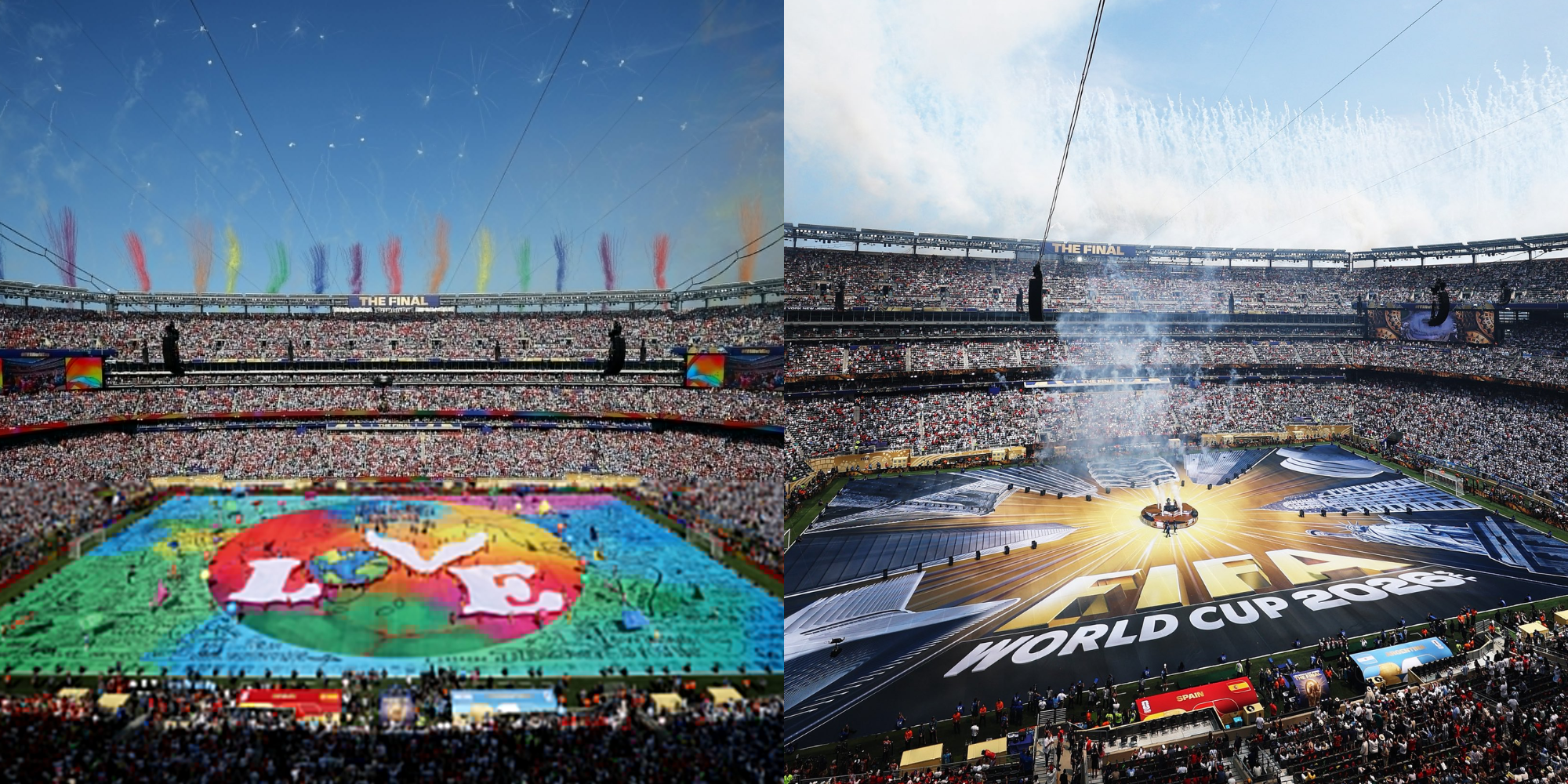
A photo of the FIFA World Cup 2026 halftime entertainment (left) and the award ceremony following the final between Argentina and Spain (right). PHOTO/ FIFA.
The Loss of the Beautiful Game
Major sporting events, much like the Olympics, are meant to showcase human excellence under extreme pressure.
At the 2022 World Cup, watching Kylian Mbappé deliver a hat-trick was a testament to raw athletic brilliance. Yet during the semi-final against Spain, that brilliance was eclipsed by frustration, culminating in a yellow card following an aggressive challenge on goalkeeper Unai Simón.
As online discussions on forums like Reddit pointed out, teams like Spain have mastered the art of gamesmanship, mainly using tactical fouls and referee manipulation to control the pace of play. By the time the final arrived, public sentiment had shifted away from Argentina, whose conduct throughout the tournament tested the patience of neutral observers.
Also Read: Most Emotional Moments That Broke Hearts at the 2026 FIFA World Cup
From Messi’s persistent badgering of referee Slavko Vincic to Leandro Paredes physically shoving Spain’s Gavi during post-match celebrations, the behavior reflected an entitlement that eroded goodwill. When Argentinian supporters drowned out Rodri’s Golden Ball acceptance speech with partisan chants, it signaled a broader decline in sporting culture.
Perhaps the only moment of genuine consensus in an otherwise over-produced tournament occurred whenever the stadium cameras focused on the VIP boxes, where the collective response of the crowd reminded us that while sports governance can be bought and packaged, the audience still reserves the right to judge the spectacle.
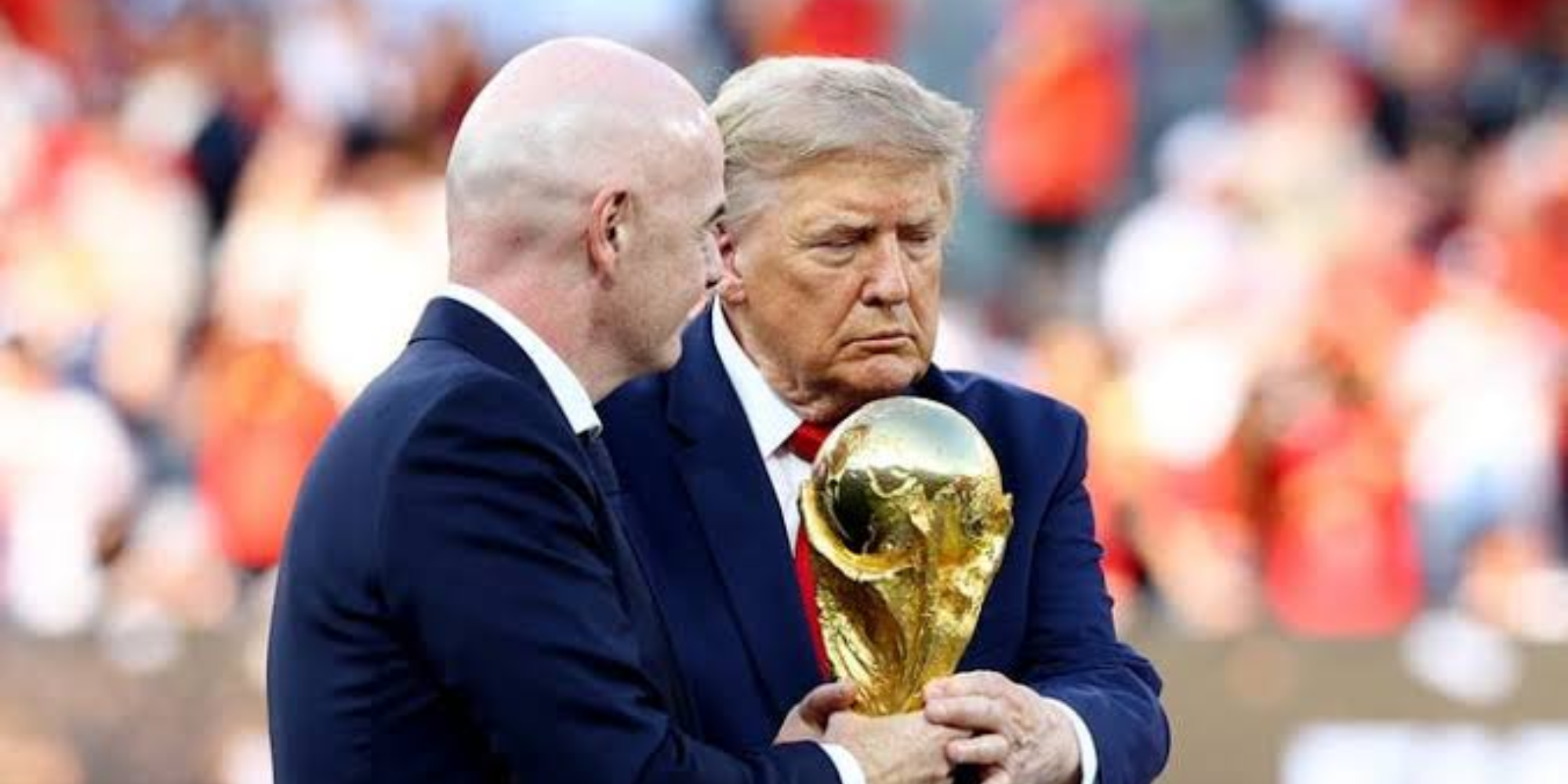
U.S. President Donald Trump and FIFA President Gianni Infantino with the trophy after the 2026 World Cup final between Argentina and Spain. PHOTT/REUTERS/Lee Smith